

By Alex Ababio
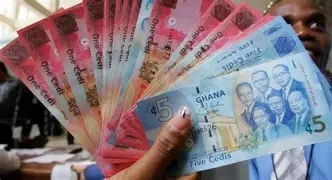
The Ghanaian cedi has emerged as the worst-performing currency in West Africa in 2026, raising fresh concerns about the country’s fragile foreign exchange market, rising import costs, and the long-term sustainability of Ghana’s economic recovery programme under the International Monetary Fund (IMF).
Market analyses published by Reuters using data from the London Stock Exchange Group (LSEG) showed that the cedi had recorded a year-to-date depreciation of about 10.28% against the US dollar by early May 2026. At the time, the local currency traded around GH¢11.36 to the dollar before weakening further to approximately GH¢11.61 by the end of last week.
The decline has placed Ghana among the weakest currency performers on the African continent this year, alongside countries facing severe macroeconomic pressures.
“Ghana’s cedi is being dragged down by persistent corporate foreign currency demand, particularly from the energy sector,” Reuters reported in its Africa FX market analysis.
Energy Sector FX Demand Driving Pressure
Currency traders and analysts say the biggest pressure on the cedi is coming from Ghana’s energy sector, where companies continue to demand large volumes of US dollars to finance fuel imports, power generation obligations, and debt repayments.
Reuters reported that strong demand for foreign exchange from importers and corporate entities has continued to outweigh supply in the interbank market.
A separate Reuters market report published in April 2026 revealed that Ghana’s central bank faced a major foreign exchange backlog during one of its FX auctions. Bids reportedly reached about $401 million, while only $110 million was supplied.
The imbalance has exposed the structural weaknesses in Ghana’s forex market despite improvements in headline economic indicators.
According to the latest Bank of Ghana Summary of Economic and Financial Data cited by Graphic Online and BusinessGhana, Ghana’s inflation rate dropped sharply to about 3.4% in April 2026 from 18.4% a year earlier. Gross International Reserves also rose to approximately $14.42 billion, equivalent to six months of import cover. Ghana additionally recorded a trade surplus of about $5.28 billion, supported by strong gold and oil exports.
Yet the cedi has continued to depreciate.
Analysts believe the contradiction reflects deeper investor concerns about capital flows, external debt obligations, and long-term confidence in the economy.
“The sustained pressure on the cedi, despite these improvements, suggests that capital outflows, portfolio adjustments and investor sentiment may be exerting greater influence on the foreign exchange market,” financial analysts quoted by Citi Newsroom said.
IMF Recovery Programme Faces Currency Test
The cedi’s continued decline comes at a sensitive period for Ghana’s economy as the country nears the completion of its IMF-supported recovery programme following the 2022 debt crisis.
Earlier this month, Citi Newsroom reported that Ghana was concluding its final IMF programme review, with authorities projecting macroeconomic stability and improved investor confidence. However, the weakening currency is threatening to overshadow those gains.
Public frustration has also grown because many Ghanaians say the reported decline in inflation has not translated into lower prices in markets and shops.
On social media platforms and online discussion forums, consumers and small business operators continue to complain about the rising cost of living.
In one discussion on Reddit’s Ghana community, users argued that even when inflation slows, prices often remain high because wages are stagnant and traders maintain existing prices.
“How would one feel a decrease in inflation? Remember, decreasing inflation doesn’t mean prices reduce, it means the rate at which they increase drops,” one contributor explained in a widely discussed thread.
The disconnect between official economic data and daily market realities has become a growing political and economic issue.
Bank of Ghana Expands Gold Strategy
In response to continued pressure on the cedi, the Bank of Ghana has intensified efforts to build foreign reserves through gold purchases.
According to a recent Reuters report, the central bank has increased its gold acquisition target from large-scale mining companies from 20% to 30% of annual output.
The programme forms part of Ghana’s broader Gold for Reserves initiative launched after the country’s debt crisis to reduce dependence on foreign currencies and strengthen reserve buffers.
Reuters reported that Ghana’s gold reserves reached about 19.2 metric tonnes by February 2026, while authorities now aim to accumulate about 157 tonnes by 2028.
Paul Bleboo, head of the Bank of Ghana’s Gold Management Programme, told Reuters that authorities want all gold deliveries made in dore form to improve traceability through state gold trader GoldBod.
However, negotiations with mining companies have reportedly faced challenges over pricing terms, refining costs, and implementation arrangements.
Economists say the gold reserve programme may help improve Ghana’s external buffers over time, but it may not immediately solve short-term dollar shortages affecting the cedi.
Why the Cedi Keeps Falling
Currency analysts point to several factors behind the cedi’s persistent weakness despite improved inflation figures and stronger reserves.
These include:
High demand for dollars by fuel importers and energy companies
External debt servicing obligations
Dividend repatriation by multinational companies
Investor concerns over Ghana’s post-IMF fiscal discipline
Limited forex supply from exports compared to demand pressures
Reuters noted that traders expect the downward pressure to continue in the coming weeks because foreign exchange demand remains elevated.
“The cedi is on a depreciating path due to persistent FX demand, with traders expecting the trend to continue,” Reuters concluded in its market outlook.
Financial market analysts also warn that global oil price volatility and geopolitical tensions could worsen Ghana’s forex pressures because the country remains heavily dependent on imported refined petroleum products.
Businesses and Consumers Feel the Impact
The weakening cedi is already affecting businesses across Ghana, especially import-dependent sectors such as manufacturing, pharmaceuticals, electronics, fuel retail, and food distribution.
Importers increasingly source foreign currency at rates above official interbank quotations, leading to higher operating costs that are eventually transferred to consumers.
Although official inflation data has declined significantly, traders continue to adjust prices upward because of forex uncertainty and replacement costs.
Some economists warn that if the cedi’s depreciation accelerates further, Ghana could face renewed inflationary pressures later in 2026 despite recent progress.
The situation has also revived debate over Ghana’s long-standing structural dependence on imports and foreign currencies.
In online discussions and policy debates, several commentators argue that Ghana’s recurring currency crises reflect deeper production and export weaknesses.
One Reddit contributor reacting to Ghana’s recent currency volatility argued that the country’s economic fundamentals remain vulnerable despite temporary improvements in reserves and inflation.
“Unless Ghana has suddenly become some super productive country, I don’t see that happening,” the contributor wrote during discussions on previous cedi appreciation trends.
Regional Comparison Raises Alarm
Among the nine currencies used across West Africa, including the CFA franc shared by eight francophone countries, the cedi has recorded the sharpest depreciation so far in 2026.
While currencies such as Kenya’s shilling and Nigeria’s naira have remained relatively stable in recent Reuters market assessments, Ghana’s currency continues to face sustained pressure.
The development has intensified scrutiny on Ghana’s monetary management strategy and the country’s ability to maintain stability after exiting the IMF bailout programme.
For millions of ordinary Ghanaians, however, the issue remains simple: the cedi’s continued decline means higher prices, rising business uncertainty, and growing anxiety about the future cost of living.