

By Alex Ababio | Special Investigative Report
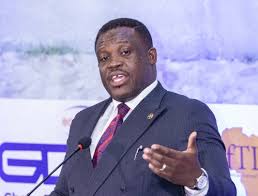
KUMASI, Ghana — The Facebook post appeared at 4:47 PM on October 12, 2026, and within hours it had exposed a fault line running through Ghana’s most ambitious technology project. Communications Minister Samuel Nartey George, standing in the same KNUST laboratory where he had just toured artificial intelligence facilities, typed a correction that would force a national reckoning with how Ghana builds, funds, and talks about AI for its own languages.
“I never asked anyone for a Twi AI language model, as reported,” George wrote, sharing video of his engagement with postgraduate researchers at the Responsible AI Lab (RAIL). The minister was responding to a JoyNews report headlined “Sam George tasks KNUST to develop Twi AI model as Ghana plans local-language artificial intelligence”. The caption, he said, misrepresented a technical discussion about code-switching research as a ministerial directive.
But the controversy, however brief, has opened a window onto a far more consequential question: In a country that has committed $270 million to become Africa’s AI hub, who actually decides which languages get built into the future—and who gets left speaking into a void?
The Video That Told a Different Story
The footage George shared shows a young PhD researcher, Ama Branoa Banful, explaining her doctoral work on English-Twi code-switching—the everyday practice where Ghanaians blend languages mid-sentence. “For my master’s, I started looking into how I can incorporate code-switching, which is when you mix two or more languages in a given sentence,” Banful says in the video. She describes building a speech-to-speech pipeline that can process multilingual conversations, noting that “most existing models are trained on one language at a time”.
The minister’s questions, according to the video and subsequent reporting, focused on available datasets, ongoing academic projects, and collaboration opportunities—not on issuing a directive. He referenced Google-University of Ghana collaborations that produced approximately 5,000 hours of data across seven indigenous languages, and a broader collection of 35,000 hours of Ghanaian language data available for research.
The distinction matters. A ministerial directive would signal top-down language policy. A technical discussion about existing research suggests something more organic—and more fragile. Ghana’s language AI ecosystem is being built not by decree, but by a handful of doctoral students and underfunded laboratories racing against the extinction of the very languages they study.
The Stakes: Extinction by Algorithm
Minister George had, in fact, warned of exactly this danger during his KNUST address. “One of the key things that AI will do, if we are not careful, is that it will create an extinction of our indigenous African languages,” he said. He illustrated the problem with a linguistic example from his own Dangme language: “If you take a word like ‘nu’, it can mean man, it can mean water, it can mean drink depending on the inflection. So if a European was building a national language model with that ‘nu’, they would not know how to place it”.
This is not abstract. AI systems trained primarily on English, Mandarin, or French perform poorly on tonal languages, code-switched speech, and African-accented English. The consequence is a widening digital divide: farmers who cannot access precision agriculture tools because they only speak Twi; patients who cannot use telemedicine because the voice interface does not understand their Dagbani; citizens locked out of public services that assume literacy in a colonial language.
Banful’s research addresses precisely this gap. “If you want someone in the village to benefit from what we are doing, we have to start getting into speech systems instead of just speech-to-text systems,” she says. Her work builds on RAIL’s broader Project Kasa, which develops automatic speech recognition for non-standard African speech, including impaired speech from stroke, cerebral palsy, and dysarthria.
The Infrastructure Gap Nobody Is Measuring
But language models require more than research. They require compute infrastructure, reliable electricity, and high-speed connectivity—resources that remain concentrated in Accra and Kumasi. The $250 million AI computing centre announced in April 2026 is meant to address this, but procurement processes and access frameworks remain undisclosed.
Meanwhile, the government’s 5G rollout, positioned as the backbone for telemedicine and digital agriculture in rural communities, has been delayed repeatedly. The One Million Coders Programme has enrolled over 1,000 students at KNUST alone, but it trains in English. The voice interfaces that would allow a farmer in Katiu to ask about crop diseases in Twi—the very application George described as the goal—remain aspirational.
The University of Ghana’s DCS HCI Lab has published open-source speech datasets covering Akan, Ewe, Dagbani, Dagaare, and Ikposo, alongside deployable ASR models for Akan and Ewe. But scaling these models beyond prototype stage requires sustained funding, institutional commitment, and—critically—a policy framework that treats language technology as public infrastructure, not academic curiosity.
What the Controversy Reveals
The JoyNews caption controversy was, in one sense, a minor media misstep quickly corrected. But it exposed a deeper truth: Ghana’s AI ambitions are outpacing its ability to communicate them clearly. A minister discussing datasets and research collaborations is reported as issuing directives. A PhD student’s code-switching research is reduced to a headline about “Twi AI.”
If Ghana is serious about building language models that serve the “man on the streets”—as Professor Jerry John Kponyo of RAIL has demanded—then the country needs more than press releases and ministerial tours. It needs a transparent strategy for how the 35,000 hours of language data will be used, who will have access to the $250 million computing centre, and how the benefits of AI will reach the communities whose languages are most at risk.
Banful’s research offers a glimpse of what is possible: a future where Ghanaians can speak to their devices in the languages they dream in. But that future will not be built by algorithms alone. It will require the political will to fund it, the infrastructure to support it, and the honesty to report on it without distortion.