

Investigative Special Report by Alex Ababio | Ghanaian Watch
Ghana’s fight against illegal mining is entering another phase, with the Minister for the Interior, Muntaka Mohammed-Mubarak, warning that National Security will launch surprise operations in districts where local authorities fail to identify, report or act against emerging security threats.
The warning raises important questions about the effectiveness of Ghana’s decentralised security system, the responsibility of Metropolitan, Municipal and District Chief Executives (MMDCEs), and why illegal mining continues to destroy rivers, forests and agricultural lands despite successive government crackdowns.
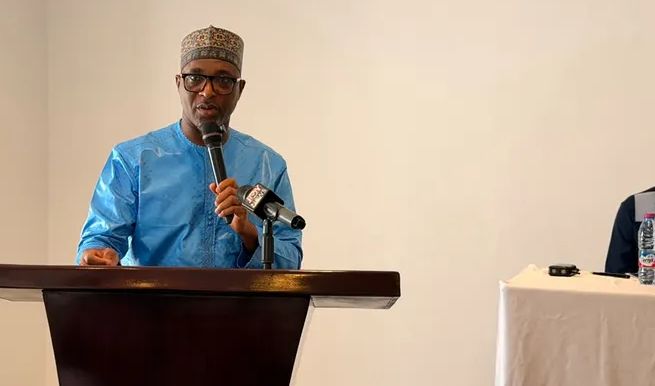
Speaking at a high-level training programme on the Security and Intelligence Agencies Act, 2026 (Act 1168), in Sekondi-Takoradi, Mr Mohammed-Mubarak told regional and district authorities that National Security would not wait indefinitely for them to act.
His message was particularly directed at MMDCEs in the Western and Western North regions, where illegal mining, chieftaincy disputes, drug trafficking, cybercrime and cross-border criminal activities present growing security concerns.
“For us, if there’s a threat in your district, you have not told us, we’ve not seen you acting, and we think that it can destabilise this country, we’ll step in and we won’t tell you. Because we don’t even trust that if we tell you, you will not mess us up. So, we’ll step in without telling you,” he stated.
The warning signals a tougher approach to local security management. However, it also raises questions about intelligence accountability, operational oversight and the ability of local authorities to prevent criminal activities before national security interventions become necessary.
National Security’s warning and the new legal framework
Mr Mohammed-Mubarak said the only circumstances under which National Security would work directly with district authorities were when local leaders demonstrated commitment and requested operational support.
“The only time you’ll see us not coming from Accra is when we see you acting, and you tell us, ‘Look, can you give us backup because there’s this challenge that we need to deal with?’ If I’m being backed up, I’ll come and we’ll do it together.”
He warned that authorities who ignored emerging threats should not expect advance notification of security operations.
“If I see the problem is festering, and you don’t even report it as a problem, you don’t see it as a challenge, and I’m going to design an operation to come in to deal with it, you said I should tell you — we won’t tell you. That one I won’t lie. We will not tell you today, we won’t tell you tomorrow. We’ll step in, we’ll carry out the operations and we’ll go back to Accra because then you have failed. But we won’t sit down for you to fail the state.”
The training was organised by the National Security Council Secretariat (NSCS) for Regional Ministers, members of the Regional Security Councils (REGSEC), and MMDCEs from the two regions.
The programme comes as Ghana implements Act 1168, which was signed into law by President John Dramani Mahama on March 31, 2026.
According to the Information Services Department, the legislation changes Ghana’s security governance structure by removing the Office of the Minister of National Security and giving the President flexibility to assign oversight of security agencies to a designated minister. It also restores the name National Intelligence Bureau to the Bureau of National Intelligence.
Parliament passed the Security and Intelligence Agencies Bill on March 18, 2026. The legislation repealed the previous Security and Intelligence Agencies Act, 2020 (Act 1030), and established the Office of the National Security Coordinator within the new security framework.
The previous Act 1030 provided for Regional and District Security Councils, with regional councils answerable to the National Security Council and district councils answerable to their respective regional councils.
The new legislation therefore places renewed attention on institutional coordination and the responsibilities of authorities operating outside Accra.
However, the government’s announcement of the new law should not be confused with proof that every operational decision is automatically authorised. The precise legal basis, oversight arrangements and safeguards governing individual security operations must remain clear and publicly accountable.
Galamsey: The real test of district security leadership
Illegal mining was one of the major concerns highlighted by the Interior Minister.
He criticised the failure of some communities to cooperate with security agencies, saying residents sometimes provide illegal miners with hiding places when enforcement operations are conducted.
“Can you genuinely step in as MMDCEs engaging the communities? I know you have your own party executives and others every day insulting you anytime you try to make effort. All of us receive the same insults. But you see, we have a responsibility and we promised to reset. You cannot claim reset and then you want to let the status quo remain,” he said.
He added:
“Sometimes, when even the security people go into the communities, you’ll see that it is the community members that are rather giving the illegal miners places to hide. They don’t know the effect of what the people are doing on them.”
His comments highlight the importance of community intelligence in tackling illegal mining. However, the problem extends beyond community cooperation.
A March 2025 Strategic Environmental and Social Assessment published by the Ministry of Lands and Natural Resources under Ghana’s Landscape Restoration and Small-Scale Mining Project identified extensive environmental damage associated with galamsey.
The assessment reported that almost all river basins in Ghana experience degradation and pollution linked to illegal mining.
It explained that wastewater, mining waste and soil erosion introduce sediments into rivers, while mining directly in riverbeds increases turbidity and damages aquatic environments.
Water-quality monitoring conducted in 2018 across 50 monitoring stations in nine galamsey-affected regions found that 50 per cent of sampled water exceeded Water Resources Commission guideline limits for total suspended solids, while all sampled locations exceeded the guideline limits for turbidity.
These findings demonstrate why illegal mining must be treated as more than a local law-enforcement problem. It threatens drinking-water supplies, agriculture, public health and the long-term economic security of communities.
In a November 10, 2026 , Professor Albert Ebo Duncan, a Professor of Civil and Environmental Engineering at the University of Cape Coast, warned that polluted water bodies could take as long as 100 years to regain their original purity, while chemically contaminated lands could require approximately 300 years to recover fully.
“Even if galamsey stops today, contaminated water may take up to 100 years to return to a safe, clean state, while chemically degraded farmlands could remain unsuitable for full ecological and agricultural recovery for roughly 300 years,” he warned.
The findings underline the potential long-term cost of failing to stop illegal mining.
Why previous anti-galamsey operations have struggled
The Interior Minister’s warning comes against a history of repeated government interventions that have struggled to eliminate illegal mining.
In a June 2025 inaugural lecture at the Ghana Academy of Arts and Sciences, Professor Frederick Ato Armah, an environmental and sustainability science expert, questioned the effectiveness of relying heavily on military crackdowns and equipment destruction.
He described such interventions as examples of the “Fixes That Fail” systems archetype.
“These actions,” he explained, “not only fail to resolve the underlying drivers of illegal mining but can also provoke resistance, especially in communities where mining is deeply embedded in cultural identity and livelihood.”
Professor Armah argued that poverty, limited economic opportunities, weak institutional frameworks and the social connections surrounding mining must be addressed alongside enforcement.
He advocated a five-pronged approach involving vision, skills, incentives, resources and coordinated action.
His argument presents an important challenge to the government’s security strategy: surprise operations may disrupt illegal mining sites, but they cannot independently address the economic and political conditions that allow the activities to continue.
Similarly, Professor Gibrilla Abass, a Water Resources Scientist and Isotope Hydrologist at the University of Environment and Sustainable Development, warned in February 2026 that political interference, bribery and weak regulation had undermined successive anti-galamsey interventions.
Speaking at the university’s Sixth Commencement Lecture, he said earlier initiatives, including Operation Vanguard, Galamstop and the Blue Water Guards, had failed to achieve their desired results.
“Without research, the fight against galamsey becomes reactionary rather than strategic,” Professor Abass stated.
His assessment raises questions about whether the new security approach will address the institutional weaknesses that have undermined earlier operations.
The overlooked responsibilities of MMDCEs
The Interior Minister’s warning places district authorities under greater pressure to demonstrate that they are actively identifying and addressing threats within their jurisdictions.
However, effective local security management requires more than occasional meetings with security commanders or announcements of enforcement operations.
MMDCEs must work with traditional authorities, assembly members, community organisations and residents to identify illegal mining activities, report threats and support lawful enforcement.
The Regional Security Councils must also strengthen intelligence-sharing between the Police, Immigration Service, military, intelligence agencies and other relevant institutions.
The Western Regional Minister, Joseph Nelson, acknowledged these challenges when welcoming participants to the training.
“I’m particularly conscious of the security responsibilities confronting us in the Western Region. Our strategic location, economic activities, natural resource endowment, and border communities present opportunities as well as security concerns that require constant vigilance and effective coordination,” he said.
He added that addressing the challenges required more than the efforts of individual security agencies.
“Addressing them requires more than the efforts of individual security agencies; it calls for effective collaboration, timely intelligence sharing, sound coordination, and a common understanding of the respective mandates and responsibilities of all institutions involved.”
The Western Region’s strategic importance makes these concerns particularly significant. Its coastline, natural resources, mining activities, oil and gas infrastructure and international boundary with Côte d’Ivoire create complex security and economic interests.
In an October 10, 2026 report, the Ghana News Agency also reported that Mr Nelson had called for sustained security attention because developments in the region could have wider implications for Ghana’s national security.
Street begging and the question of public safety
Mr Mohammed-Mubarak also identified street begging as a potential security concern that district authorities should not overlook.
He urged MMDCEs to work with the Ghana Immigration Service, Police and religious leaders to address the phenomenon.
He warned that some begging activities could be organised by criminal networks and that individuals involved might serve as informants.
However, this concern requires careful investigation. Street begging, poverty, migration and criminal activity are not interchangeable. Begging alone does not establish that an individual is involved in organised crime or intelligence gathering.
Any enforcement response must therefore distinguish genuine security threats from vulnerable people seeking assistance and protect their rights under Ghanaian law.
Will surprise operations deliver lasting results?
The Interior Minister’s announcement comes as the government seeks to strengthen intelligence-led security management across the country.
The Ministry of the Interior reported on November 10, 2026, that Mr Mohammed-Mubarak had urged security agencies in the Western Region to move away from reactive policing and adopt proactive intelligence gathering.
“Criminal networks are becoming more sophisticated, technology is changing the nature of crime, and threats increasingly extend beyond traditional institutional boundaries. We must therefore be proactive, not reactive,” he stated.
The government must now demonstrate how this approach will translate into measurable results.
For MMDCEs, the immediate challenge is to demonstrate that they are identifying threats, reporting intelligence and working with communities rather than waiting for interventions from Accra.
For security agencies, the responsibility is to ensure that operations are intelligence-led, lawful, proportionate and subject to appropriate oversight.
For the government, the larger test is whether the new security framework can address the political interference, institutional weaknesses and economic pressures that have repeatedly undermined anti-galamsey campaigns.
The central question is no longer simply whether National Security can conduct surprise operations.
It is whether those operations will dismantle the networks protecting illegal mining, restore damaged water bodies, strengthen local accountability and prevent the activities from returning after security personnel leave.
Without sustained enforcement, credible intelligence, community cooperation and institutional accountability, surprise operations risk becoming another temporary intervention in Ghana’s long-running fight against galamsey.