

By Alex Ababio
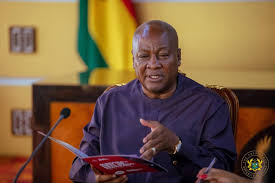
President John Dramani Mahama has turned to Egypt for technical lessons as Ghana advances plans for a new capital city and a major expansion of social housing.
The decision follows a bilateral meeting between President Mahama and Egyptian President Abdel Fattah el-Sisi on October 5, 2026, on the sidelines of the Eighth African Union Mid-Year Coordination Summit and the maiden Alamein Africa Forum in Egypt.
The Ghanaian Presidency said the two leaders discussed cooperation in infrastructure, trade, security, pharmaceuticals and social housing. On urban development, Ghana expressed interest in learning from Egypt’s experience with its New Administrative Capital.
“As Ghana plans a new capital city and expands social housing, we look forward to leveraging Egypt’s technical expertise and experience from the New Administrative Capital,” President Mahama said in a social media post on Monday, October 5.
But behind the diplomatic announcement is a much bigger question: Can Ghana build a new administrative and commercial city without reproducing the financial, housing, land, transport and environmental problems that have accompanied large-scale urban development elsewhere?
Accra’s congestion is already carrying a heavy economic price
The case for relieving pressure on Accra is not difficult to establish.
Ghana is urbanising rapidly. The World Bank said in July 2026 that 57 per cent of Ghana’s population was living in cities and towns, with the urban population projected to more than double by 2050.
Madhu Raghunath, the World Bank’s Urban Resilience and Land Practice Manager, said Ghana faces a major infrastructure financing gap.
“There is a huge infrastructure gap,” she said, adding that Ghana’s Infrastructure Plan estimates that US$37 billion is needed annually to build infrastructure supporting economic growth and quality of life by 2047.
The cost of doing nothing is also rising.
A 2026 study by Glima Research estimated that traffic congestion costs Ghana more than GH¢4.5 billion every year. About GH¢3.2 billion of the estimated loss was attributed to time wasted in traffic.
That makes the proposed city more than a question of relocating ministries. It is potentially a major urban, transport and economic restructuring project.
President Mahama previously said government was preparing design and feasibility studies for the proposed city.
Speaking at a grand durbar in Dodowa in May 2025, he said the city could be located on the Accra plains, beginning around Bundasi and stretching across the Greater Accra, Eastern and Volta regions.
“I believe that this city will be located somewhere on the Accra plains from Bundasi, straddling across Greater Accra, Eastern Region and Volta regions. The city will straddle three regions,” he said.
He also said the city would stretch towards the Volta River and have a railway link and an expressway connecting it to Accra.
That proposal, if implemented, would make land-use planning, transport, water, sanitation, energy and environmental protection central to the project’s success.
Egypt offers a working example—but also a warning
Egypt’s New Administrative Capital provides Ghana with something valuable: an example of what it takes to construct an entirely new administrative centre at enormous scale.
The project was launched in 2015, east of Cairo. Egyptian government investment material describes the New Administrative Capital as covering about 170,000 feddans, while other Egyptian government sources put the area at roughly 700 square kilometres. It was conceived as a political, economic and cultural centre incorporating government offices, residential districts and smart-city infrastructure.
The relocation of government has already occurred on a substantial scale.
In July 2023, Egypt’s Presidency said more than 100 government agencies, including 30 ministries, had relocated to the new capital, involving about 40,000 employees and workers.
Egypt’s Ministry of Planning and Economic Development had also begun operating from its new headquarters in March 2023.
For Ghana, this provides a practical reference point on how government relocation, administrative infrastructure and new urban districts can be coordinated.
But the Egyptian experience also demonstrates why Ghana’s feasibility studies cannot focus only on roads, government buildings and property development.
Reuters has described Egypt’s New Administrative Capital as part of a $58 billion state-led infrastructure programme, while noting concerns about Egypt’s rising debt, economic pressures and the dominance of the military in the economy.
A peer-reviewed assessment by urban-design researchers Julian Bolleter and Robert Cameron also found serious questions around the model.
Their study concluded that the project could worsen water-supply pressures, encourage car dependence and isolate ordinary Cairo residents from government institutions.
Another academic assessment published in Sustainability raised concerns about the project’s environmental sustainability, affordability, social equity and enormous financial requirements.
These criticisms do not mean Egypt’s project has failed. Rather, they demonstrate that building a new city is not automatically the same as creating a successful city.
Ghana’s first challenge may be financing affordable homes
Housing could become the most immediate test of the Ghanaian plan.
The National Homeownership Fund says Ghana’s housing deficit was approximately 1.8 million units in 2024, while more than 30 per cent of existing housing stock is considered inadequate. It also identifies high construction costs, expensive mortgages, land-acquisition bottlenecks and inadequate trunk infrastructure as major constraints.
Prosper Hoetu, Chief Executive Officer of the National Homeownership Fund, has repeatedly warned about the weakness of housing finance.
In an interview with the Ghana News Agency, he said only about 5 per cent of Ghanaians could independently afford a home, while 60 per cent required some form of government assistance and 35 per cent required social housing.
He also said mortgage interest rates often exceed 30 per cent and that Ghana’s mortgage-to-GDP ratio remains below 0.3 per cent.
Those figures expose a potential contradiction.
A new city may create thousands of apartments and houses, but if ordinary workers cannot afford them, the project could increase the supply of buildings without solving the housing crisis.
President Mahama has already acknowledged this problem.
In August 2026, he announced a broader National Housing Programme to increase housing supply, expand homeownership and reduce pressure on rents. Government has also allocated GH¢500 million in the 2026 Budget to support a District Housing Scheme.
The strategic opportunity is therefore to link the new city to this housing programme rather than treating the capital as a separate mega-project.
Land could become another fault line
The proposed location also makes land governance critical.
A World Bank assessment says approximately 80 per cent of Ghana’s land is under customary ownership, creating challenges for implementing land-use plans. The same assessment identifies weak spatial planning, limited local planning capacity, political interference and complex land tenure arrangements as barriers to integrated urban development.
The problem is not theoretical.
A 2025 peer-reviewed study of large-scale government land acquisitions in Ghana found recurring problems including overlapping land claims, unclear boundaries, unpaid compensation and inadequate resettlement.
The study, which included interviews and focus-group discussions with affected stakeholders, was co-authored by Michael Poku-Boasiah of the Kwame Nkrumah University of Science and Technology.
For a new city covering parts of three regions, the government will therefore need more than a master plan.
It will need transparent land acquisition, proper valuation, compensation, resettlement arrangements and early engagement with traditional authorities and affected communities.
The new city must not simply move congestion
Transport is another critical issue.
The World Bank has previously warned that road expansion alone has not solved Ghana’s urban mobility problems. Its assessment found that urban sprawl has increased travel distances and that poor urban transport disproportionately affects low-income residents.
This is particularly important because President Mahama’s proposal includes both an expressway and a railway link to Accra.
If the railway becomes a reliable mass-transit system, it could help prevent the new city from becoming another car-dependent satellite settlement.
If transport planning is dominated by private vehicles, however, Ghana could simply move congestion outward and create a new daily commuting corridor between the new city and Accra.
Ghana now has a policy framework—but implementation will decide the outcome
The government launched the National Urban Policy 2026–2035 and the National Slum Upgrading and Prevention Strategy 2026–2035 in July 2026.
The policies focus on inclusive and resilient cities, affordable housing, climate resilience, spatial planning, sustainable financing and improved urban governance.
Alhaji Amin Abdul-Rahman, Chief Director of the Ministry of Local Government, Chieftaincy and Religious Affairs, cautioned that the success of the frameworks would depend on implementation rather than simply the quality of the policy documents.
His warning is directly relevant to the proposed new capital.
The project will also have to account for flooding, drainage and climate resilience. Greater Accra has already required major investment in flood resilience, including metropolitan planning, storm-water regulation, drainage infrastructure and flood zoning.
The real test: what will Ghana learn from Egypt?
President Mahama’s decision to seek Egypt’s technical experience could be valuable if Ghana studies both sides of the Egyptian experience.
The lesson should not simply be how to build monumental government districts, highways, towers and smart-city infrastructure.
It should also be how to finance them sustainably, connect them to affordable housing, protect communities, integrate public transport, secure land rights and prevent environmental costs from being transferred to future generations.
Ghana’s own experts and institutions are already identifying the central constraints: expensive housing finance, weak land administration, inadequate infrastructure, rapid urbanisation and limited public resources.
The World Bank’s US$37 billion annual infrastructure estimate underscores the scale of the challenge.
Egypt can provide technical knowledge. But Ghana cannot simply import Egypt’s model.
The proposed city will need a Ghanaian financing model, Ghanaian land-governance safeguards and a housing strategy designed around the incomes of Ghanaian households.
Most importantly, the feasibility study must answer a question before construction begins:
How much will Ghana pay, who will pay for it, who will own the resulting land and infrastructure, and how many ordinary Ghanaians will actually be able to live and work there?
Those answers—not the height of the buildings or the size of the expressway—will determine whether Ghana’s proposed new capital becomes a productive second urban centre or another expensive monument to urban ambition.