

By Alex Ababio
Vice President says the Mahama administration is gradually steering Ghana out of the severe economic difficulties it inherited when it took office. But as new inflation, growth and currency data emerge, a deeper examination of the government’s claim shows a more complicated picture: significant progress in some key indicators, continuing pressure on the cedi, and unresolved questions about whether macroeconomic recovery is yet translating into sustained relief for ordinary households.
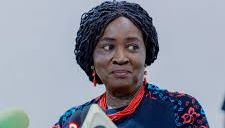
Speaking to members of the Ghanaian community during a visit to Kigali, Rwanda, on Tuesday, August 25, 2026, Professor Opoku-Agyemang said the country had inherited an economy marked by high inflation, a weakened local currency and other serious challenges.
“We are slowly but surely getting our way out of that difficulty. Inflation was high. Our local currency was in a bad shape, and so on and so forth,” she said.
The Vice President’s remarks came during a visit to Rwanda for the Africa Mindset Forum, an event that brought together political leaders, academics, business figures and other stakeholders to discuss governance, leadership and Africa’s development trajectory.
Her comments raise an important question for Ghanaian households, businesses and investors: How far has Ghana actually travelled from the economic crisis, and how secure is the recovery?
Inflation: The Strongest Evidence of Improvement
On inflation, the latest official data provide substantial support for the Vice President’s argument.
The Ghana Statistical Service reported that headline inflation fell to 4.6 percent in July 2026, down from 5.3 percent in June and substantially lower than the 12.1 percent recorded in July 2025. Food inflation declined to 3.1 percent, while non-food inflation stood at 6.1 percent. Month-on-month inflation was just 0.1 percent.
For a country that experienced years of severe price instability, the decline represents an important macroeconomic development. Inflation affects virtually every household because it determines how quickly the purchasing power of salaries, savings and pensions is eroded.
However, falling inflation does not mean prices have returned to their old levels. It means that prices are rising more slowly. For many families who have already absorbed substantial increases in food, transport, rent, school-related expenses and healthcare costs over previous years, the distinction remains important.
The latest data also show that pressure persists in some areas of the economy. Services inflation remained significantly higher than goods inflation, while the Ghana Statistical Service has pointed to continuing price pressures in sectors including transport, housing, health and education.
That means the government’s economic recovery narrative may be reflected in national indicators without automatically translating into an immediate reduction in the everyday cost of living.
Growth Data Offer Another Positive Signal
Economic growth figures also provide evidence that Ghana’s recovery is not confined solely to inflation.
According to the Ghana Statistical Service’s latest economic indicators, the economy recorded 6.4 percent year-on-year growth in the first quarter of 2026, while annual growth for 2025 was recorded at 6.0 percent.
Strong growth can expand employment opportunities, increase government revenues and improve the ability of the state to finance social programmes and infrastructure. But economic growth alone does not guarantee that benefits are equally distributed.
Ghana’s unemployment rate was reported at 13 percent in the Ghana Statistical Service’s latest Labour Force Survey data highlighted on its national indicators platform.
The challenge for the Mahama administration, therefore, is not simply to demonstrate that the economy is growing. It must show that growth is creating jobs, strengthening household incomes and reducing economic vulnerability.
The Cedi: Recovery Meets a New Test
The Vice President specifically mentioned the condition of Ghana’s local currency, saying, “Our local currency was in a bad shape.”
That assessment reflects one of the defining economic concerns of recent years. Currency depreciation increases the domestic cost of imported goods, raises pressure on businesses dependent on foreign inputs and can contribute to higher consumer prices.
But the cedi remains one of the areas where the government’s recovery narrative faces a continuing test.
A recent Reuters report published on August 20 said the cedi had again come under pressure, with strong corporate and offshore demand for US dollars exceeding available supply. Reuters reported that the currency had weakened from about GH¢10.90 to GH¢11.00 against the dollar over the period covered by the report.
The development is a reminder that stabilising inflation and achieving stronger economic growth do not automatically eliminate foreign-exchange pressures.
For businesses, a volatile currency affects the cost of imports, machinery, industrial inputs and debt servicing. For consumers, depreciation can eventually filter into the prices of imported goods and locally produced products that depend on imported raw materials.
The question is therefore whether the government’s broader fiscal and economic reforms can produce durable currency stability rather than temporary improvements.
‘Fixing the Rules of the Economy’
Professor Opoku-Agyemang said the administration is focused on “fixing the rules of the economy” while directing resources towards sectors that directly affect the welfare and productive capacity of citizens, particularly healthcare and education.
The government’s official 2026 Budget describes its programme as one focused on growth, jobs and economic transformation. The Ministry of Finance’s budget documents place social-sector investment within the broader strategy for national development, including education, health, poverty reduction and employment.
The real test, however, will be implementation.
Ghana has often produced ambitious policy documents and development plans. The more difficult task has been ensuring that budget commitments are released on time, projects are completed efficiently and spending produces measurable results.
The Ministry of Finance’s 2026 budget documentation and implementation instructions provide the formal framework for how ministries and public institutions are expected to execute the year’s economic policy.
For the government, economic recovery will ultimately be judged not only by policy announcements but by execution.
MahamaCares and the Cost of Chronic Disease
One of the Vice President’s major points in Rwanda concerned healthcare, particularly the financial burden created by chronic illnesses.
She said the government is investing heavily in healthcare equipment as part of efforts to address chronic diseases under the MahamaCares initiative.
The Ghana Medical Trust Fund, widely known as MahamaCares, is designed to support people living with chronic diseases and other conditions requiring specialised care. According to the Fund’s official information, its areas of focus include cancer, cardiovascular diseases, kidney diseases, stroke and diabetes, among other chronic conditions determined by its governing structure.
The Ministry of Health says the programme is intended to complement the National Health Insurance Scheme by supporting aspects of chronic disease care that are not fully covered. It also includes plans to support health infrastructure, medical equipment, specialist training and research.
That is significant because chronic and non-communicable diseases can impose devastating financial pressure on Ghanaian households, particularly where patients must repeatedly pay for specialised treatment, medicines, diagnostic tests or travel to major hospitals.
President John Dramani Mahama has described the Fund as part of a wider effort to strengthen healthcare and social protection. In July 2026, he urged senior citizens to take advantage of the programme, saying it had been established to support people dealing with non-communicable and age-related health conditions.
The policy’s long-term credibility, however, will depend on how transparently the Fund is managed, how beneficiaries are selected and whether financing can be sustained.
Why Basic Education Remains Central
Professor Opoku-Agyemang also placed education at the centre of Ghana’s development challenge, arguing that attention must be directed at the earliest stages of learning rather than focusing only on secondary education.
“For us, our major concern is before you get to the secondary school, because that’s where it begins. When things don’t go right there, you may not even get up there,” said the Vice President.
Her argument reflects a fundamental concern in education policy: weaknesses in foundational literacy, numeracy and learning can follow children throughout their academic lives.
The 2026 Budget includes measures intended to strengthen education and training and identifies literacy and numeracy as priorities, including support for learning initiatives and efforts to improve teacher professionalism.
The Vice President said the government is also paying attention to underperforming schools while providing science and vocational equipment to strengthen learning.
The challenge is substantial. Supplying equipment is important, but effective education also requires qualified teachers, functioning classrooms, reliable learning materials, effective assessment systems and strong school leadership.
The Bigger Question: Recovery for Whom?
The strongest message from Professor Opoku-Agyemang’s speech is that the Mahama administration sees economic stabilisation and social investment as inseparable.
The argument is straightforward: an economy cannot be considered fully recovered if inflation falls while families remain unable to afford healthcare, if growth rises without sufficient jobs, or if children continue to enter secondary school without strong foundational education.
The latest data provide evidence of progress. Inflation has fallen sharply. Growth has remained strong. Government policy is increasingly focused on health, education and social services.
But risks remain.
The cedi is still vulnerable to renewed foreign-exchange pressures. Producer inflation rose to 4.0 percent in July 2026, up from 3.5 percent in June, signalling that cost pressures within the productive economy cannot yet be ignored.
For Ghanaian businesses and households, the next phase of recovery will therefore matter as much as the initial improvement.
Can inflation remain low? Can the cedi avoid renewed instability? Can growth create more jobs? Can MahamaCares genuinely reduce the catastrophic financial burden of chronic diseases? And can investment in basic education produce measurable improvements in learning?
For now, Professor Opoku-Agyemang’s phrase — “slowly but surely” — may be the most accurate description of Ghana’s current economic moment.
The country appears to have made measurable progress from the depths of its recent economic difficulties. Yet the evidence also suggests that recovery remains a process rather than a completed achievement.
For the Mahama government, the task now is to convert improving macroeconomic statistics into something more tangible: stable prices, stronger incomes, better jobs, accessible healthcare and a school system capable of giving Ghanaian children a stronger start.
That, ultimately, is the standard by which Ghana’s economic recovery will be judged.