

By Alex Ababio
ADDIS ABABA, Ethiopia — Africa must move from reacting to global climate decisions to actively shaping the rules, financing systems and development pathways that will determine the continent’s economic future, the Chair of the African Group of Negotiators on Climate Change (AGN), Nana Dr Antwi-Boasiako Amoah, has warned.
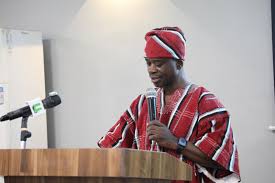
Speaking at the 14th Conference on Climate Change and Development in Africa (CCDA-14) in Addis Ababa on September 9, 2026, Dr Amoah said Africa’s influence in global climate governance must extend beyond attending negotiations and responding to proposals developed elsewhere.
“Africa must move from reacting to global climate decisions to actively shaping international governance to advance climate development priorities,” he said.
His intervention came as Africa confronts a difficult contradiction: the continent remains highly vulnerable to climate shocks while receiving only a small share of global climate finance. At the same time, governments are attempting to industrialise, expand energy access, reduce poverty and exploit opportunities in the emerging green economy.
The resulting battle is no longer simply about emissions reductions. It is increasingly about who controls climate finance, technology, carbon markets, critical minerals, industrial policy and the rules of the global green economy.
The financing gap behind Africa’s climate diplomacy
Africa’s negotiating position is strengthened by a fundamental imbalance.
The African Development Bank (AfDB) says the continent contributes less than four per cent of global greenhouse-gas emissions but bears a disproportionate share of climate impacts. The Bank has also repeatedly highlighted the mismatch between Africa’s adaptation needs and the finance reaching the continent.
At a 2024 World Bank-IMF Spring Meetings climate-finance roundtable, former AfDB President Akinwumi Adesina said Africa was receiving about US$30 billion a year for climate adaptation against estimated needs of US$277 billion annually.
“Africa is not getting what it needs to adapt to climate change,” Adesina said, describing the resulting financing gap as enormous.
More recent analysis continues to demonstrate the scale of the problem.
A 2025 OECD report found that Africa receives only around three per cent of global climate finance and estimated adaptation finance needs at approximately US$53 billion annually, compared with average annual flows of about US$13 billion in 2021–22.
The Global Center on Adaptation and Climate Policy Initiative similarly reported that adaptation finance flows to Africa have increased but remain far below what countries require to implement their climate plans.
The issue therefore extends beyond the size of financial pledges. African negotiators must also contend with the terms, accessibility, predictability and composition of that finance.
This is particularly important for heavily indebted economies. If climate investment is delivered predominantly through loans rather than grants or highly concessional finance, countries already facing fiscal constraints can face additional debt pressures.
An IMF working paper published in 2025 found that debt accounted for a significant proportion of adaptation finance in Sub-Saharan Africa and warned that countries need a combination of grants, concessional finance and private investment while maintaining debt sustainability.
From promises to enforceable delivery
Dr Amoah said Africa must strengthen accountability in implementing climate agreements so that commitments by developed countries translate into tangible support for adaptation, mitigation and sustainable development.
That argument now sits against the backdrop of the climate-finance agreement reached at COP29 in Baku.
Under the New Collective Quantified Goal on Climate Finance, developed countries are expected to take the lead in mobilising at least US$300 billion annually by 2035 for developing countries. The agreement also calls on all actors to work towards scaling climate finance from public and private sources to at least US$1.3 trillion annually by 2035.
The distinction matters.
The US$300 billion figure is a goal led by developed countries, while the US$1.3 trillion represents a broader mobilisation objective involving multiple sources of finance. For African governments, the challenge will be determining how much of this money actually reaches African economies, on what terms and for which projects.
UN Trade and Development has argued that the COP29 finance target remains below the level required, estimating that the appropriate figure should have been substantially higher.
This is the financial terrain on which Africa’s proposed leadership will be tested.
Why the African Common Platform matters
Dr Amoah has proposed the development of an African Common Platform to guide the continent’s long-term participation in international climate negotiations.
The proposal is designed to protect policy space for industrialisation, economic transformation and poverty reduction while allowing African countries to pursue climate-resilient development.
The idea is already moving beyond rhetoric. AGN preparatory work in 2026 has referred to the African Common Platform as a framework for coordinating African negotiating positions across issues including adaptation, climate finance, loss and damage, just transition and Article 6 carbon-market negotiations.
The need for such coordination is significant because African economies do not all have identical interests.
Oil and gas producers, mineral-rich countries, small island states, agricultural economies and least-developed countries can face different immediate priorities. A common platform therefore has to reconcile national interests without weakening the continent’s collective negotiating position.
Research published on the African Group of Negotiators has found that the bloc has, particularly since 2009, strengthened Africa’s ability to develop common positions despite the continent’s diverse political and economic interests.
Climate policy is becoming industrial policy
Dr Amoah’s argument is also connected to a much larger economic transformation.
In February 2026, he warned that climate diplomacy, energy security and industrialisation could no longer be treated as separate policy questions.
“These global shifts are reshaping Africa’s development options faster than our institutions are adapting,” he said.
The warning is significant because the global transition to renewable energy is increasing demand for minerals and technologies that many African countries possess or could potentially produce.
The question for Africa is whether the continent will merely export raw materials needed for batteries, renewable-energy systems and other technologies, or whether it will use the green transition to develop processing industries, manufacturing capacity, technology and skilled employment.
Dr Amoah made the same connection in August 2026 when he argued that Africa’s just transition should create opportunities for industrialisation, value addition and employment rather than leave the continent primarily supplying raw materials.
That places climate negotiations directly inside Africa’s industrialisation debate.
Trade, finance and climate can no longer operate separately
Dr Amoah has therefore called for stronger coordination between climate, finance and trade policy.
The reason is increasingly clear.
Climate regulations can affect exports. Carbon-market rules can affect investment. Green industrial subsidies in wealthy economies can influence African manufacturing. Critical-mineral policies can determine where value chains are established. Financing conditions can determine whether African countries can compete in the emerging green economy.
A fragmented negotiating strategy could therefore leave African countries addressing these issues separately even though they are interconnected.
The United Nations Office to the African Union has already stressed the importance of stronger African coordination. In February, UN Special Representative Parfait Onanga-Anyanga told Dr Amoah that African leadership in carbon markets and climate negotiations strengthens the continent’s collective capacity to respond to climate and development challenges.
COP32: Africa’s opportunity — and its accountability test
Ethiopia’s hosting of COP32 in 2027 gives Africa a significant diplomatic opportunity.
The UNFCCC confirmed that Parties accepted Ethiopia’s offer to host COP32 in 2027 following COP30. COP31 will take place in Antalya, Türkiye, from November 9–20, 2026.
Dr Amoah described COP32 as an opportunity for Africa to demonstrate leadership and advance a united continental agenda.
He urged African countries to use the summit to push for greater climate finance, operationalise equity principles and pursue implementation of commitments relating to adaptation finance and a just transition.
But hosting a COP does not automatically translate into influence.
The real test will be whether African governments arrive in Addis Ababa with coordinated demands, credible projects, financing proposals, measurable implementation targets and mechanisms for holding governments and international institutions accountable.
At CCDA-14, the broader debate was explicitly framed around moving from climate priorities to climate agency. The Economic Commission for Africa’s programme included a session led by Dr Amoah on precisely that question, alongside discussions on rebuilding the global climate-finance compact and strengthening African carbon markets.
The Pan-African Parliament has separately called for stronger legislative oversight, arguing that climate commitments must be translated into laws, budgets and programmes that produce measurable outcomes.
The leadership test is what happens after the summit
Africa’s climate leadership, therefore, cannot be measured solely by the number of African delegates at international conferences or the strength of speeches delivered from COP platforms.
It will ultimately depend on whether negotiations produce predictable finance, whether countries can develop investment-ready projects, whether communities benefit from adaptation investments and whether African economies capture greater value from the global green transition.
Dr Amoah’s broader position is that Africa must strengthen its narrative and agenda-setting capacity, increase its institutional influence in international processes and make stronger legal and normative contributions to global climate frameworks.
His argument is also consistent with his earlier call for urgent and predictable funding. During the June 2026 Bonn climate negotiations, he said Africa could not afford delays while climate impacts intensified, stressing that negotiations must defend the continent’s right to development, poverty reduction and fair treatment.
The AGN Chair has also emphasised that adaptation must move from promises to implementation. In May, he called for a transition from general commitments to measurable progress and from fragmented pilot projects to scaled, financed and country-owned resilience programmes.
That is ultimately the central question facing Africa.
The continent has already established a collective negotiating structure. It has articulated demands around finance, adaptation, equity, loss and damage and just transition. It is developing a common platform and preparing for a COP to be hosted on African soil.
What remains is converting diplomatic coordination into economic leverage.
Africa’s ability to influence global climate governance will depend on its capacity to maintain unity, strengthen regional cooperation and pursue a development-centred climate agenda reflecting the continent’s realities and aspirations.
COP32 may provide the stage.
But the harder work — securing finance, protecting industrial policy space, developing green value chains, strengthening institutions and ensuring that climate investments reach vulnerable communities — must begin long before delegates arrive in Addis Ababa.
For Africa, climate leadership is no longer simply about having a seat at the negotiating table.
It is about having sufficient collective power to help determine what is decided at that table, how it is financed, who benefits, and whether the resulting commitments are actually implemented.