

By Alex Ababio
Ghana’s Narcotics Control Commission (NACOC) has opened a potentially far-reaching investigation into how a massive cocaine shipment originating from Ghana reached the French port of Dunkirk, after French authorities intercepted nearly 3.9 tonnes of cocaine concealed in a container of plastic waste.
The seizure has triggered arrests in Ghana and brought renewed scrutiny to the country’s maritime supply chain, port controls and possible connections between West African logistics networks and one of Europe’s most wanted cocaine traffickers, Dutch fugitive Jos Leijdekkers, popularly known as “Bolle Jos.”
NACOC announced on September 14, 2026 that it had arrested three suspects allegedly representing and facilitating Leijdekkers’ activities in Ghana.
The arrests followed the French seizure, with NACOC saying the suspects were in its custody and assisting investigators as authorities examined their alleged roles in the trafficking operation.
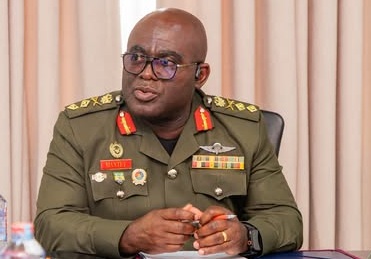
The commission’s Acting Director of Public Affairs and International Relations, PNCO Francis Opoku Amoah, said NACOC was seeking further information from French authorities to establish the shipment’s full trail.
For now, he said, investigators were concentrating on the three suspects and determining their individual roles.
That international evidence trail could prove more important than the seizure itself. The central unanswered question is not simply how French customs discovered the cocaine, but how almost four tonnes of cocaine were inserted into a legitimate commercial container in Ghana, cleared for export and moved through an international maritime supply chain without being intercepted before leaving the country.
The shipment that exposed the route
French customs said the cocaine was discovered on September 7 at the Port of Dunkirk.
According to France’s Directorate-General of Customs and Indirect Taxes, a customs detection dog first marked the container, after which officers used a mobile X-ray scanner. A subsequent physical search found eight bags containing 167 cocaine packages hidden among bags of recycled plastic.
The French authorities estimated the illicit-market value of the cocaine at approximately €225 million.
The container had arrived from Ghana and was initially destined, at least in part, for Antwerp, Belgium, one of Europe’s major maritime centres and a major cocaine-trafficking destination. French reporting based on information from the national organised-crime prosecutor’s office confirmed the Ghana-to-Dunkirk movement and the intended onward connection to Antwerp.
The scale of the seizure changes the significance of the case.
This was not a courier carrying a few kilograms through an airport. It was an industrial-scale maritime consignment concealed within apparently legitimate cargo.
And the latest case comes against a background of repeated warnings that West African container routes are being exploited by international cocaine networks.
A 2026 study by the Global Initiative Against Transnational Organized Crime (GI-TOC) found that growing connections between West African and European ports are creating opportunities for criminal contamination of legitimate containerised trade. The study specifically cited a 4.5-tonne cocaine seizure in Amsterdam in 2025 from a shipment originating at Ghana’s Tema Port as evidence of the vulnerability of these maritime connections.
That earlier case makes the Dunkirk seizure particularly significant for Ghana.
NACOC had already identified the port-security problem
The latest investigation also raises questions about whether warnings issued by Ghanaian authorities were translated into sufficient preventive controls.
In April 2025, NACOC held a high-level engagement with the Ghana Ports and Harbours Authority (GPHA) specifically to strengthen port security and combat illicit drug trafficking.
The two institutions discussed streamlining operations at export points, reinforcing container inspections and improving intelligence sharing. NACOC described the objective as a more aggressive approach to tackling drug trafficking through Ghana’s ports.
Months later, NACOC Director-General Brigadier General Maxwell Obuba Mantey publicly acknowledged the maritime dimension of the threat.
In December 2025, he said intelligence assessments confirmed the use of Ghana’s maritime routes as transit points for cocaine and emerging synthetic drugs.
“The Commission’s intelligence assessments confirm the use of Ghana’s maritime routes as transit points for cocaine and emerging synthetic drugs,” Mantey said.
He called for stronger maritime intelligence and real-time information exchange, warning that criminal networks were increasingly exploiting vulnerabilities in the Gulf of Guinea.
The Dunkirk shipment therefore appears to fit into a threat pattern that Ghanaian authorities had already publicly recognised.
The Bolle Jos connection
The most politically and internationally sensitive element of the investigation is the alleged connection to Leijdekkers.
Dutch police describe Leijdekkers as a key player in international cocaine trafficking. On June 25, 2024, the Rotterdam District Court sentenced him in absentia to 24 years in prison for six cocaine shipments totalling nearly 7,000 kilograms, as well as a violent robbery and ordering a murder. Dutch authorities continue to offer a €200,000 reward for information leading to his arrest.
Dutch police subsequently said they were certain that Leijdekkers was in Sierra Leone, where he has reportedly remained a fugitive. A Belgian court also sentenced him in 2024 over drug-related offences.
International reporting has now placed the Ghana arrests within that broader network.
Dutch media reported that one of the three suspects is Desmond C., aged 34, described by sources as an important associate of Leijdekkers. Ghanaian Business News identified him as Desmond Curiel. However, NACOC’s official statement did not publicly name any of the three suspects, so the identification should remain treated as media reporting rather than an official Ghanaian disclosure.
Leijdekkers’ lawyers have also denied his involvement in the latest French cocaine seizure, according to OCCRP, which reported that lawyers Jan-Hein Kuijpers and Guy Weski said their client denies any connection to the consignment.
That denial is important because the Ghana arrests establish an investigative lead—not a judicial finding that Leijdekkers personally ordered or controlled the Dunkirk shipment.
Why Ghana’s ports matter
The investigation is unfolding within a wider transformation of the West African cocaine market.
GI-TOC Director of the West Africa Observatory Lucia Bird has warned that sophisticated criminal networks are increasingly using West Africa as a logistical and storage hub for cocaine destined for Europe.
In a 2026 analysis, Bird and colleagues found evidence of growing use of West African ports and containerised trade by international trafficking organisations.
Bird has also explained the vulnerability in blunt terms: “ports are key infrastructure and therefore important targets for traffickers.”
Her assessment is particularly relevant to the Ghana case because the criminal challenge is not necessarily the complete takeover of a port. Instead, traffickers can attempt to penetrate legitimate logistics systems through intermediaries, corrupt facilitators, compromised cargo documentation or weaknesses in container-risk profiling.
The economic implications extend beyond narcotics enforcement.
Captain Georgina Jopap, a retired maritime captain and maritime safety and security consultant, has warned that maritime crime affects trade, livelihoods and economic stability through higher insurance costs, cargo delays and increased security risks. She identified smuggling and trafficking among the threats confronting the Gulf of Guinea’s maritime economy.
For Ghana, the issue is therefore also about supply-chain integrity, port competitiveness, insurance risk and the reputation of legitimate exporters.
Ghana’s enforcement challenge
Ghanaian security agencies have continued to demonstrate that large consignments can be detected domestically.
In March 2025, NACOC and other security agencies were involved in the seizure of approximately 3.3 tonnes of cocaine, valued at about US$350 million, intercepted on the Cape Coast-Accra route.
NACOC has also acknowledged operational challenges.
During a 2025 engagement with Parliament’s Defence and Interior Committee, officials highlighted concerns including malfunctioning body scanners, inadequate facilities, overcrowded detention areas and deteriorating vehicles.
At the same time, the commission has been expanding inter-agency cooperation.
In July 2026, NACOC and the Ghana Navy agreed to deepen intelligence sharing, operational support and capacity-building to confront evolving drug-trafficking threats.
The latest investigation will test whether those partnerships can move beyond reactive seizures toward identifying the people, companies, financial transactions and logistics infrastructure behind international consignments.
The questions NACOC now needs to answer
The French seizure gives investigators an unusually valuable starting point.
French customs have physical evidence from the container, including packaging, concealment methods and shipping documentation. Investigators can potentially compare those records with Ghanaian export declarations, customs documentation, container movements, shipping-line records, port access logs and company ownership information.
The critical questions include:
Who packed the plastic-waste cargo? Who owned or controlled the exporting company? Who booked the container? Who had access to it before departure? Was the container physically inspected or scanned in Ghana? Which officials or private actors handled its documentation? Who paid the freight and related logistics costs? And where did the money originate?
Those questions could turn the case from a drug seizure into a financial-crime investigation.
NACOC has said it wants to disrupt not only traffickers but also “the people, the financing and the infrastructure sustaining the illicit drug trade.”
That is the real test.
The three arrests may provide investigators with human intelligence. The French seizure provides physical evidence. Shipping and financial records could provide the connective tissue.
The commission has also indicated that the suspects would be taken before the appropriate court as investigations progressed. Separately, Parliament’s Defence and Interior Committee has previously proposed establishing a specialised court dedicated to narcotics-related cases, highlighting the growing institutional concern surrounding drug prosecutions.
But arrests alone will not answer the central question.
The bigger investigation is whether an international criminal organisation was able to exploit Ghana’s legitimate maritime trade to move a €225 million cocaine consignment toward Europe—and, if so, who made that possible.
For Ghana, the stakes go beyond one container at Dunkirk.
They involve the security of Tema and other maritime gateways, the credibility of Ghana’s export-control system, the integrity of legitimate businesses and the country’s standing as a trusted participant in global trade.
The French seizure has stopped one shipment.
The deeper question for Ghanaian investigators is whether they can now expose the network that made the shipment possible.