

INVESTIGATIVE SPECIAL REPORT | CLIMATE DIPLOMACY | COP31 | AFRICA | CLIMATE FINANCE
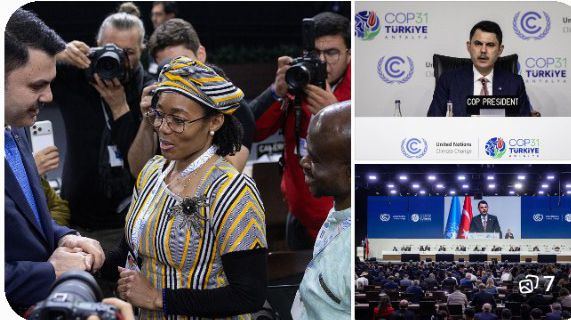
Ghana’s Environment Minister was interrupted while delivering Africa’s negotiating position at COP31, prompting a protest from the African Group of Negotiators’ chair and a subsequent apology from the conference president. But the confrontation unfolded against a much bigger dispute over adaptation finance, accountability, Africa’s influence in global climate decision-making and the gap between international promises and funding reaching vulnerable communities.
By Alex Ababio | Ghanaian Watch
The interruption of Ghana’s Environment Minister during the closing plenary of the 31st United Nations Climate Change Conference (COP31) in Antalya, Türkiye, has raised fresh questions about diplomatic respect, procedural fairness and the ability of African countries to influence decisions on the climate crisis.
Dr Zanetor Agyeman-Rawlings, Ghana’s Minister for Environment, Science and Technology, was delivering a statement on behalf of the African Group of Negotiators (AGN), which Ghana chairs, when COP31 President Murat Kurum interrupted her.
The incident triggered an objection from Nana Dr Antwi-Boasiako Amoah, the AGN chair, who drew attention to the conference’s Code of Conduct and the need to respect delegations participating in negotiations.
Although the minister subsequently returned to the floor and completed her statement, the confrontation exposed tensions surrounding Africa’s participation in negotiations where climate finance, adaptation and economic development remain contested issues.
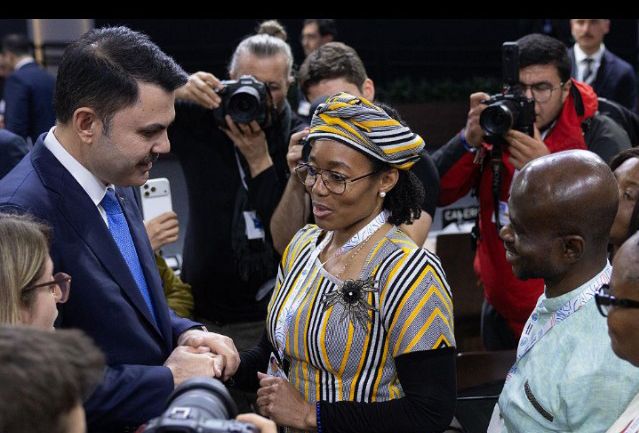
Kurum later apologised to the Ghanaian minister and the African negotiating group, saying he had not intended to disrespect her or Ghana.
But beyond the apology, the incident raises a more consequential question: when African countries are demanding billions of dollars to protect their populations from climate impacts, how much influence do they have over the decisions determining whether those funds are delivered?
The interruption, protest and diplomatic apology
The incident occurred during the closing plenary as delegates considered the conference’s final political outcome.
Dr Agyeman-Rawlings was presenting the AGN’s position when Kurum interrupted her. The interruption prompted Antwi-Boasiako Amoah to challenge the conference president, drawing attention to the treatment of the African negotiating group.
The minister subsequently returned to the floor and completed the statement, reiterating the importance of multilateralism and ensuring that countries have meaningful opportunities to participate in decisions affecting their climate futures.
Kurum later apologised, saying there had been no intention to interrupt “a valuable lady like you” or the country she represented. He also referred to Ghana and Türkiye’s longstanding relationship.
Accepting the apology, Dr Agyeman-Rawlings said:
“At forums like this, it is easy to get frustrated, and I understand. I hope there is still room for one another so COP31 will be memorable.”
The apology helped ease the immediate diplomatic tension. However, the episode brought renewed attention to the importance of fair participation in international climate negotiations, particularly when disagreements arise over the allocation of speaking time and the treatment of negotiating groups.
The AGN is a coalition of African countries that coordinates common positions on climate change negotiations under the United Nations Framework Convention on Climate Change (UNFCCC).
Its role is critical because African countries often negotiate collectively to strengthen their influence on financing, adaptation, loss and damage, technology transfer and the implementation of climate commitments.
Why the incident matters beyond diplomatic protocol
International climate negotiations operate through multilateral processes in which governments negotiate, submit proposals, challenge draft decisions and attempt to build consensus.
For Africa, the process is particularly important because climate change threatens agriculture, water security, infrastructure, public health, coastal settlements and economic development.
The continent faces increasing droughts, floods, extreme heat, changing rainfall patterns and rising coastal risks, yet many African countries have limited domestic financial resources to fund adaptation.
Consequently, participation is not simply a diplomatic courtesy. The opportunity to present, defend and negotiate positions can influence the language of agreements, the financing arrangements and the commitments that countries are expected to implement.
The AGN’s collective position allows African countries to push common demands rather than negotiate independently against more financially powerful countries.
The interruption therefore became sensitive because the minister was speaking on behalf of a regional negotiating group, not simply delivering a statement representing Ghana alone.
The subsequent protest and apology demonstrated the importance African negotiators attach to the integrity of the negotiating process.
Climate finance: Africa’s central battle at COP31
The confrontation occurred amid disagreement over climate finance, particularly the financing of adaptation in developing countries.
Adaptation includes measures such as flood protection, drought-resistant agriculture, early-warning systems, resilient infrastructure, water management and protecting communities against extreme weather.
These investments are increasingly urgent, but developing countries continue to face a substantial financing gap.
The United Nations Environment Programme’s (UNEP) 2026 Adaptation Gap Report estimates developing countries’ adaptation financing needs at approximately US$305 billion annually by 2035.
International public adaptation finance remains substantially below that level.
UNEP Executive Director Inger Andersen warned that adaptation efforts remain insufficient, saying:
“The world is not ready to adapt to current climactic conditions, never mind what overshoot of 1.5°C will bring.”
She said governments must intensify efforts to increase adaptation finance while recognising that funding requirements will continue to rise as climate impacts worsen.
UNEP estimates that even if the international public adaptation finance goal of tripling funding by 2035 is achieved, it would cover only about 20–29 per cent of developing countries’ estimated needs.
That shortfall provides context for the demands African negotiators carried into Antalya. UNEP – UN Environment Programme +1
### The $120 billion question: What Africa wanted and what remained unresolved
African negotiators pushed for a clearer financial pathway to deliver the commitment to at least triple adaptation finance by 2035.
The central concern was not simply the announcement of a target. It was whether countries would agree on a baseline, funding trajectory, sources of finance, delivery mechanisms and accountability arrangements.
An African policy analysis published by CARE Climate Change in November 2026 argued that the tripling commitment remained an aggregate aspiration without an agreed baseline, delivery trajectory or accountability framework.
The organisation said adaptation finance should be anchored in developed countries’ obligations under Article 9.1 of the Paris Agreement, with public, grant-based and highly concessional finance forming the foundation.
The dispute became particularly important after earlier draft proposals containing a quantified adaptation-finance target were revised.
The final presidency-led text reaffirmed efforts to at least triple adaptation finance by 2035 but left the baseline and implementation pathway for further work.
The text also launched the Antalya-to-Addis Ababa Roadmap on Adaptation and Resilience Finance, under the COP31 and COP32 presidencies, with a report expected for consideration in 2027.
For African countries, the concern is that a roadmap, report or future negotiation may not necessarily translate into money being made available to communities facing immediate climate threats.
The distinction between a financial aspiration and actual delivery remains at the heart of the climate finance debate. unfccc.int +2
### Loss and damage, trade and the just transition
Adaptation finance was not the only concern raised by the African negotiating group.
The AGN also highlighted the need for stronger commitments on loss and damage, trade-related climate measures and the just transition.
Loss and damage refers to climate-related harm that occurs when impacts cannot be avoided through mitigation or adequately managed through adaptation. It can include destroyed infrastructure, lost livelihoods, damage to homes, displacement and economic losses arising from extreme weather or slow-onset climate change.
African countries have argued that financing arrangements must be accessible, predictable and capable of responding to actual needs.
Trade is another growing area of concern. Climate-related trade measures, carbon standards and border adjustment mechanisms could affect African exporters, particularly industries dependent on energy-intensive production or access to international markets.
A just transition, meanwhile, involves moving towards low-carbon economies while protecting workers, communities and countries whose livelihoods depend on existing industries.
For developing economies, the challenge is balancing climate action with employment, industrialisation, energy access and poverty reduction.
The AGN’s concerns reflect the need for climate policies that recognise differences in economic capacity rather than imposing identical expectations on countries with vastly different resources.
### Africa’s climate vulnerability and the financing gap
Africa’s climate vulnerability is closely linked to its development challenges.
Agricultural livelihoods remain exposed to rainfall variability, while flooding threatens settlements, roads, schools and health facilities. Coastal communities face erosion and sea-level-related risks, and extreme heat can affect productivity, health and access to water.
The financing gap makes these threats harder to manage.
According to UNEP, developing countries need around US$305 billion annually for adaptation by 2035, while the amount of international public finance currently available remains far lower.
That gap means governments often face difficult choices between climate adaptation, healthcare, education, infrastructure, debt servicing and other development priorities.
The African negotiating position therefore places considerable emphasis on grant-based and concessional finance, rather than relying heavily on loans that could increase public debt.
The issue is also about financial accountability. African countries want clear systems to establish how much climate finance is promised, how much is disbursed, where it goes and whether it reaches vulnerable communities.
Without transparent reporting, governments and citizens may struggle to distinguish between announcements, commitments, approved funding and money actually delivered. UNEP – UN Environment Programme +2
The power imbalance inside climate negotiations
The confrontation also raises broader questions about how consensus-based climate diplomacy works and whether developing countries can secure meaningful outcomes when negotiations involve governments with different economic interests, financial resources and geopolitical influence.
UN climate negotiations are conducted through the UNFCCC framework and its associated decision-making processes. Many major decisions require consensus, giving negotiating groups considerable importance in shaping and defending common positions.
However, consensus can also make negotiations difficult when countries disagree over fossil fuels, climate finance, trade, emissions reduction responsibilities and the wording of political commitments.
The disagreements at COP31 reflected these divisions. Countries were unable to reach agreement on the main political cover decision, with disagreements over fossil fuels, climate finance and other elements of the proposed outcome.
The European Union and several other countries objected to the proposed text, particularly its omission of explicit language on fossil fuels.
The failure to reach agreement demonstrates that even after extensive negotiations, climate diplomacy can remain vulnerable to competing national interests and political compromises.
For Africa, whose countries are often seeking stronger financial commitments and recognition of their development needs, the credibility of multilateral negotiations depends not only on the final agreements but also on how participating countries are treated throughout the process. Premium Times Nigeria +2
Ghana’s responsibility as AGN chair
Ghana’s position as chair of the African Group of Negotiators gives it a responsibility to coordinate continental priorities and represent the interests of African countries during climate negotiations.
This responsibility extends beyond making statements at plenary sessions. It requires negotiating technical language, building alliances, communicating positions to other negotiating groups, following up on commitments and ensuring that African priorities remain visible throughout the process.
The interruption involving Dr Agyeman-Rawlings also placed Ghana in the position of defending the right of the AGN to be heard without undermining the wider diplomatic process.
The minister’s decision to return to the floor and complete her statement, followed by her acceptance of Kurum’s apology, helped prevent the confrontation from overshadowing the African group’s substantive demands.
But Ghana’s leadership will ultimately be judged by whether it can help translate the continent’s negotiating priorities into measurable outcomes.
These include accessible climate finance, stronger adaptation programmes, meaningful loss-and-damage support, technology transfer, capacity-building and climate policies that do not undermine African development.
The challenge is particularly significant because climate negotiations are not confined to diplomatic statements. Decisions taken at international conferences can influence national investment, infrastructure planning, energy policy, agricultural development and access to climate-related funding.
From apology to accountability
The apology from Kurum addressed the immediate disagreement with the Ghanaian minister and the AGN. However, the broader questions surrounding COP31 remain unresolved.
How will adaptation finance be increased? What baseline will be used to measure progress? How will funding be tracked? Will developing countries receive more grants and concessional financing? How will loss-and-damage support reach communities affected by climate disasters?
These are questions that cannot be answered by diplomatic apologies or declarations of solidarity alone.
They require concrete decisions, financing arrangements, transparent reporting and accountability mechanisms.
Africa’s negotiating groups have repeatedly stressed that climate commitments must be accompanied by the resources needed to implement them. The challenge is to ensure that future climate agreements are measured not only by the language adopted in conference halls but also by the results delivered to countries and communities.
The COP31 confrontation may have ended with an apology and a handshake. But the issues that brought African negotiators to the negotiating table remain far from resolved.
For Ghana, the AGN and the wider African continent, the next phase of climate diplomacy will require sustained engagement, stronger negotiating alliances and a clear demand that promises made under the multilateral climate process translate into measurable financial and practical support.
The real test of international climate cooperation is not whether countries can agree to speak about resilience, solidarity and shared responsibility. It is whether those principles are reflected in the decisions made, the money delivered and the communities protected.