

By Alex Ababio
The problem: malaria and a growing waste burden
When Gilbert Yaw Sonny was in his final year of senior high school, his friend Francis died from malaria. They had just finished their examinations and gone to play football. That evening, Francis was rushed to hospital after showing symptoms of malaria. A few hours later, he was pronounced dead by doctors.
“I don’t understand how something as small as a mosquito could kill a human being,” Sonny says. “That was part of the inspiration that kept me going.”
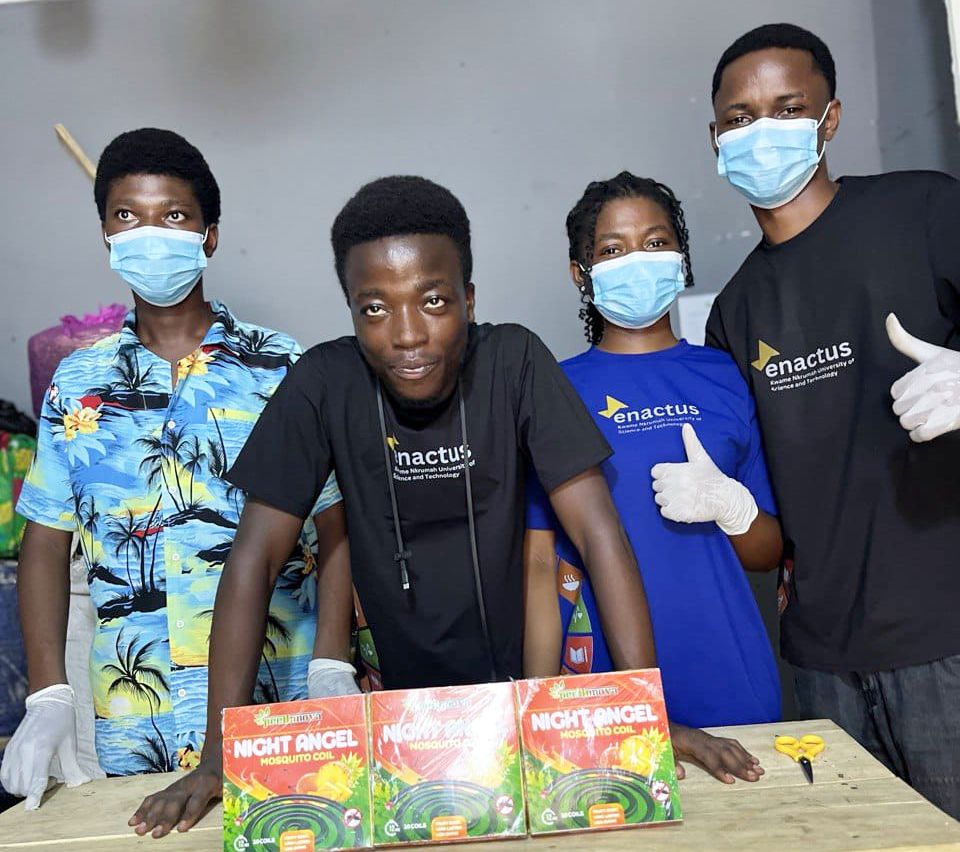
Today, Sonny is the founder and Chief Executive Officer of Peellnnova Limited, a startup founded by students from the Kwame Nkrumah University of Science and Technology (KNUST).
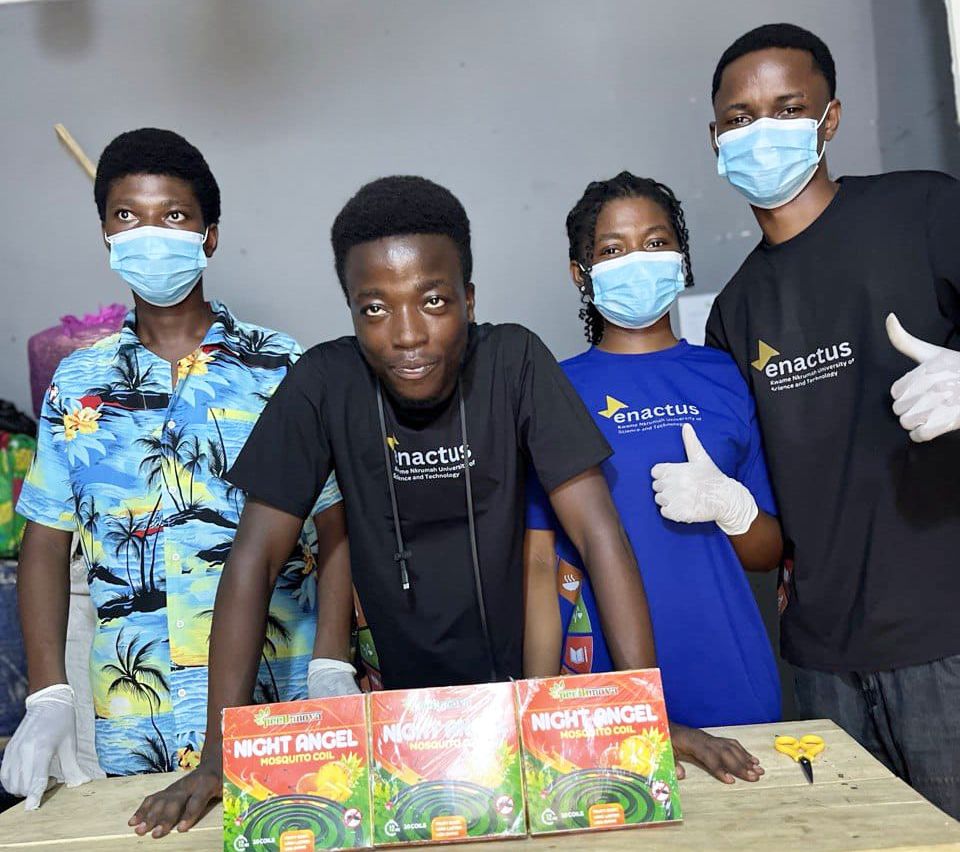
The company is attempting to address two problems at once: malaria and agricultural waste. It converts discarded orange peels, pineapple peels, and wood waste into mosquito-repelling coils, aerosols, creams, and sprays.
The challenge remains huge. According to the Ghana Health Service, malaria-related deaths fell from about 3,259 in 2011 to 52 in 2025, a decline of more than 98 per cent. The National Malaria Elimination Programme (NMEP) reported that malaria admissions fell from 379,338 in 2024 to 334,538 in 2025.
However, confirmed malaria cases barely changed, falling from 5,334,849 in 2024 to 5,312,410 in 2025.
“The reduction was not significant,” said Dr Nana Yaw Peprah, Deputy Programme Manager of NMEP.
Globally, the WHO’s 2025 World Malaria Report estimated 282 million malaria cases and 610,000 deaths in 2024, with about 95 per cent of deaths occurring in the WHO African Region. “The global situation is stalling,” the report warned.
Ghana also generates more than 300,000 tonnes of fruit waste annually, according to a 2025 report by the ALBATROSS Project, a scientific partnership that includes KNUST. Much of this waste is burned or sent to landfills, contributing to air pollution and greenhouse gas emissions.
Peellnnova’s response is to turn some of that waste into mosquito-repellent products.
The response: turning discarded peels into mosquito repellents
Professor Samuel Asamoah Sakyi, Professor of Molecular Medicine at KNUST’s School of Medical Sciences and the team’s scientific coordinator, says the idea draws partly on traditional knowledge.
“Growing up in the evenings, when the mosquitoes were at our front doors, my mother would say we should put some orange peels in the fire, and it would drive the mosquitoes away,” he says. “So it is about testing some of our traditional stuff.”
The formulation contains lemongrass, orange peels, pineapple peels, Centurila peels, seed oil, sawdust, and starch.
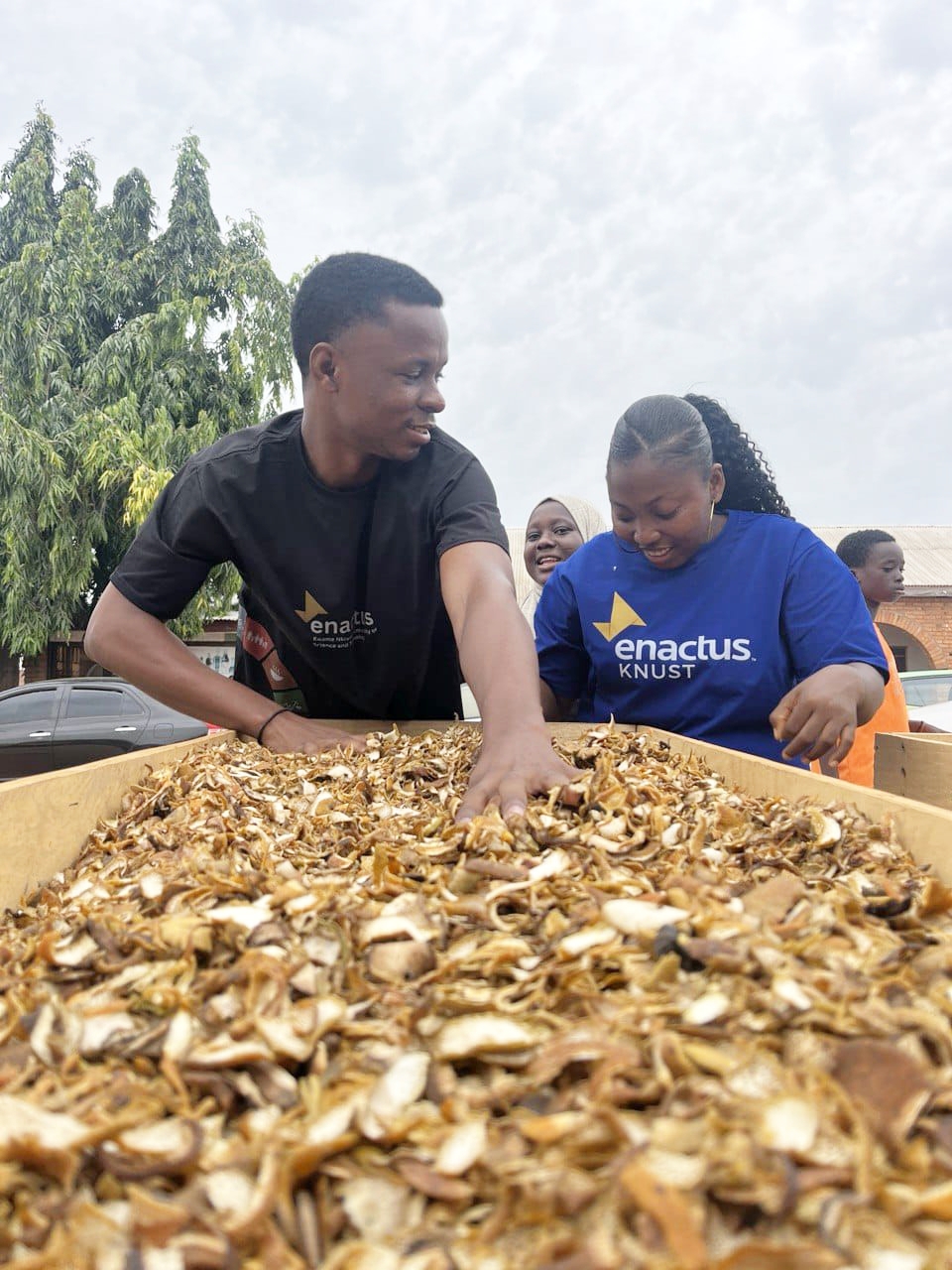
The peels are sun-dried for three to five days, ground into powder, mixed with lemongrass extract, starch, and sawdust, pressed into coils using a manual machine and air-dried for 48 hours before packaging.
At KNUST, the team exposed mosquitoes in cages to different concentrations of the product to measure mortality and repellency.
“We conducted the experiment where we put a set of mosquitoes in a cage and exposed them to the repellent to see how many would die and how many would move away,” Sakyi explains.
He declined to disclose the specific technical data.
“For the sake of avoiding copyright infringement, I cannot disclose specific scientific and technical details of our innovation,” he said. “What I can tell you is that we have conducted reproducible experiments, and the results demonstrate efficacy.”
Peellnnova’s journey began through the Kosmos Innovation Centre (KIC), which brought together students with different skills.
“One person from finance, one from economics, one from graphic design, and myself from pharmaceuticals,” Sonny says.
Nafisah Hamidu Dauda handles procurement, Benedette Naame manages finances, and Enoch Siekaah leads customer interactions.
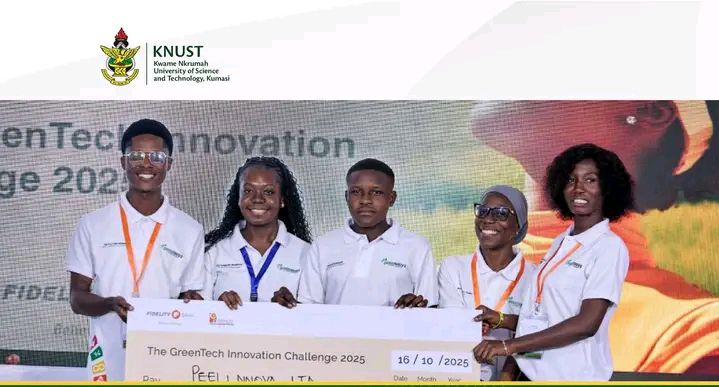
The startup won a bronze medal at the SDG Olympiad 2025 in Geneva, received GH¢100,000 from the GreenTech Innovation Challenge and, in July 2025, was honoured by President John Dramani Mahama at Jubilee House, where the team presented its innovation.
The evidence: promising, but not yet conclusive
Independent research supports the broader idea of using fruit-peel extracts for mosquito control.
A 2025 study published in the Jurnal Agroindustri Halal found that a lotion containing 6 per cent pineapple peel extract achieved an 88.64 per cent mosquito protection rate. Another formulation using 6 per cent sweet orange peel extract recorded 85.7 per cent efficacy. The study identified tannins, saponins, flavonoids, alkaloids and essential oils among compounds with repellent properties.
But evidence from other research also shows why laboratory performance should not automatically be treated as proof of field effectiveness.
A 2015 field study conducted at the University of Ghana (Chukunwendu, 2015) tested three pyrethroid-based mosquito coils. The study found that their repellency rates ranged from 26.9 per cent to 51.4 per cent.
A peer-reviewed journal article that reported the same research (Adu-Acheampong et al., 2014) warned that these coils could not provide full protection in areas where malaria vectors had developed pyrethroid resistance. The study also found the West African kdr mutation in 59 per cent of the surviving Anopheles gambiae samples.
A 2025 study in Biochemical Systematics and Ecology similarly warned that some laboratory studies overlook formulation and environmental effects that influence bioavailability, volatility and synergistic action, making the translation from laboratory to field conditions difficult.
Peellnnova also reports encouraging community feedback. Sonny says positive responses have increased from 75 per cent to about 90 per cent.
But he acknowledges the limitation.
“We distributed samples to community members and collected feedback through informal conversations and follow-up visits,” he says. “We did not conduct a formal survey with statistical sampling.”
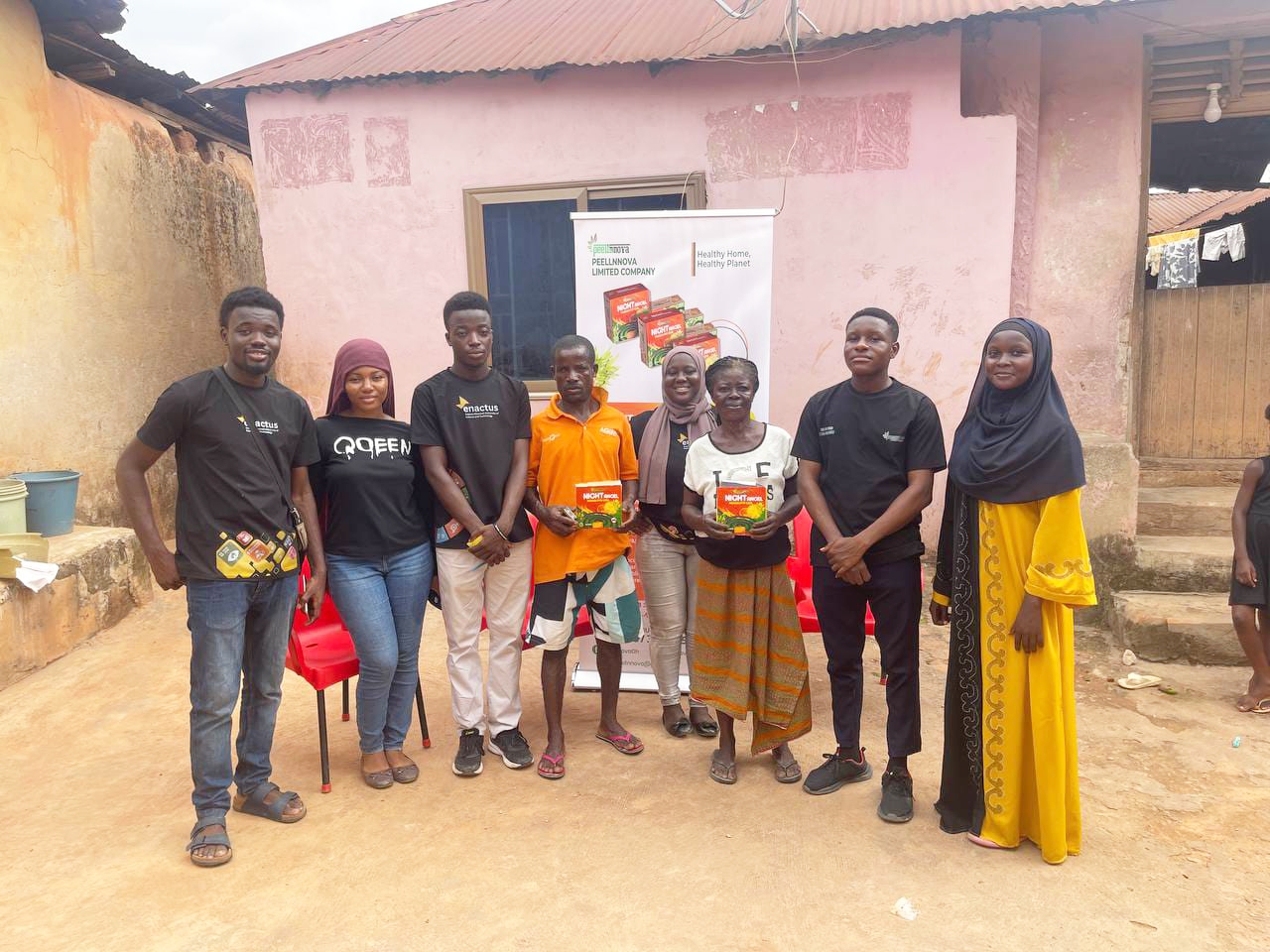
The distinction is important: community acceptance is useful evidence of user experience, but it is not independent scientific proof of malaria-prevention effectiveness.
What the community says
In Ankaase, in the Afigya Kwabre South District of the Ashanti Region, farmers have been trained to collect discarded fruit peels.
Akosua Serwaa, a 54-year-old farmer, says she used to burn the peels.
“They don’t pay us much for the peels—maybe a few cedis for a large sack. But it is something. And it keeps the compound clean.”
Yaa Mansah, 45, a trader who received samples through her children’s school, says: “The mosquitoes did not come. I was impressed.”
But she sees a supply problem.
“The problem is, I cannot sell what I cannot get in bulk. If Peellnnova wants people like me to sell their products, they must have a depot. Right now, they only gave us samples.”
Kwame Osei, 63, a retired teacher and community elder, says the team has returned three times, trained farmers and distributed samples.
“They are serious. But being serious is not the same as being ready.”
He asks: “Will there be a factory here? Will there be jobs? Or is this just a project for a few people?”
The limitations: certification, evidence and machinery
Peellnnova’s biggest obstacles are now less about the idea and more about proving the product works, securing certification and producing at scale.
Isaac Appiah Kusi, Ashanti Regional Director of the Ghana Standards Authority (GSA), confirmed that the company has not submitted an application for product certification.
“Regarding the Peellnnova mosquito repellent, we have not received any application from them to begin the process,” Kusi said.
GSA certification involves standardisation, conformity assessment and metrology, including laboratory testing and production-facility inspection.
Small-scale manufacturers pay about GH¢150 per product, excluding analysis costs of GH¢500–GH¢2,000, while standards documents can cost GH¢100–GH¢500.
The Food and Drugs Authority (FDA) requires registration of household chemical products, a process that normally takes one to six months.
Requirements include a certificate of analysis, material safety data sheet, product labelling and stability data.
Peellnnova estimates that establishing a GSA-compliant production facility would cost about GH¢200,000, twice its current funding.
Kusi says the GSA is willing to assist.
“We would want to work with every inventor, especially startups by students and graduates from our tertiary institutions, to help them standardise their products.”
Sonny says the company has engaged the GSA and FDA.
“Once that is done, we hit the street and go to market,” he says.
Machinery is another barrier.
“It is very difficult to get the right machinery, and they are so expensive.”
The company currently uses a manual machine.
“We have a lot of calls and people reaching out to us, but we are not able to meet the demand.”
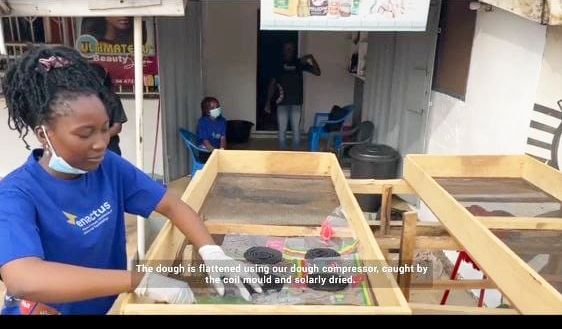
(Photo source: Peellnnova Start Up)
The team says the mosquito-coil market is worth GH¢9.5 billion and is seeking investors. It has also invested in easier-to-produce products such as sprays and air fresheners.
What could make the response work?
Professor Sakyi sees a possible partnership with the Ministry of Health, which distributes mosquito nets.
“The Ministry of Health has a program where they distribute mosquito nets for free to citizens, especially those in remote areas. We can tell them: in addition to distributing mosquito nets, you can have these mosquito coils as well.”
He acknowledges that large-scale production would come first.
Sonny is appealing to government and investors.
“I want to appeal to the government, specifically the Ministry of Health and Ministry of Environment, and to any investor, private or public. We have the test reports, we have laboratory results, and everything a business needs to put in place. We need your support at this current moment.”
A possible next step would be a controlled pilot in high-malaria-burden communities, with independent evaluation of mosquito exposure and malaria incidence. The Ministry of Environment, Science, Technology and Innovation could also explore support for businesses that convert agricultural waste into useful products.
Development partners could assist promising student innovations with certification and manufacturing costs, while the GSA and FDA could provide early-stage regulatory guidance without reducing safety standards.
The insight: from samples to structures
Peellnnova’s experience offers a broader lesson for Ghana’s youth-led innovations: awards do not replace certification; community acceptance is not scientific proof; and a promising prototype is not a market-ready product.
Its approach brings together malaria prevention, waste reduction, youth entrepreneurship, and the circular economy. But its most important claims—including the reported week-long protection provided by its coil—remain unverified, while published research generally reports much shorter protection periods for mosquito coils.
Peellnnova is therefore a solution in progress, not yet a proven malaria intervention.
For the innovation to move beyond samples, it needs independent evidence, regulatory approval, manufacturing capacity, investment, and a sustainable route to communities.
Kwame Osei’s vision captures that challenge:
“When they succeed—and I believe they will—they should not forget Ankaase. They should build something here. A collection centre. A small production unit. Something that will remain.”
“That is how you change a community. Not with samples. With structures.”
For Peellnnova, the next test is whether those structures can be built—and whether the evidence will ultimately show that the innovation can deliver a safe, affordable and scalable contribution to malaria prevention while reducing Ghana’s waste burden.