

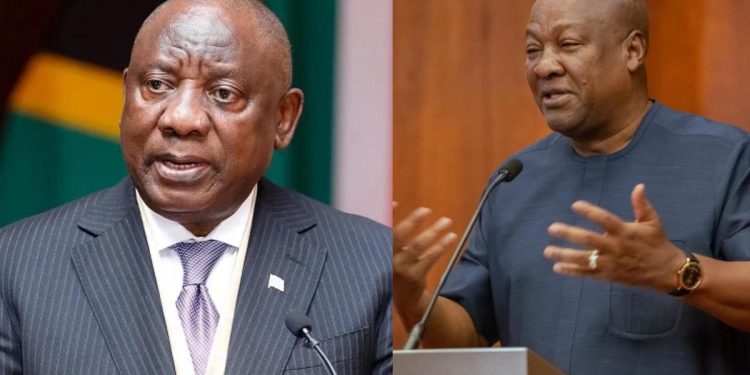
By Alex Ababio
A reported killing of a Ghanaian national in South Africa has pushed relations between two of Africa’s most influential economies into an unexpected diplomatic storm, forcing difficult questions about migration, xenophobia, misinformation, and the protection of African citizens living beyond their borders.
At the centre of the controversy is the death of 40-year-old Ghanaian national Bashiru Isak, an incident Ghanaian authorities say occurred during renewed anti-immigrant demonstrations in South Africa.
The Ghanaian government has described the incident as part of broader concerns about attacks targeting foreign nationals, particularly African migrants living and working in South Africa.
The development reportedly influenced Ghana’s decision to put on hold a planned visit by South African President Cyril Ramaphosa, signalling the seriousness with which Accra views the safety of its citizens abroad.
But South Africa has rejected Ghana’s characterisation of the events, creating a diplomatic dispute over facts, responsibility and the wider debate about xenophobia.
The disagreement has exposed deeper tensions that have existed for years between African unity ideals and the reality of migration pressures, economic hardship and social frustration.
The Bashiru Isak case: Two governments, two narratives
According to Ghanaian officials, Bashiru Isak was killed during demonstrations linked to attacks against foreign nationals in Cape Town’s Khayelitsha township.
Ghana’s position is that the killing represents another troubling example of violence faced by African migrants in South Africa.
The government reportedly formally protested to South African authorities, demanding attention to the safety of Ghanaian citizens and accountability over the circumstances surrounding Isak’s death.
However, South African authorities have disputed Ghana’s description of the incident.
The South African government has argued that claims linking the death to xenophobic protests were inaccurate and risked creating a misleading international image of the country.
Justice Minister Mmamoloko Kubayi has previously warned against what South African officials describe as misinformation surrounding migration-related incidents.
The dispute highlights a growing challenge in modern diplomacy: when two governments interpret the same event differently, public trust and bilateral relations can quickly come under pressure.
Xenophobia in South Africa: A long-running crisis
The controversy surrounding Isak’s death has revived international attention on xenophobia in South Africa, a problem that has repeatedly affected migrants from across Africa.
South Africa remains one of the continent’s largest economies and a major destination for migrants seeking business opportunities, employment and better economic prospects.
However, high unemployment, inequality and competition for limited resources have frequently been identified by researchers as factors contributing to anti-foreigner sentiment.
The Institute for Security Studies has examined violence, governance and social tensions in South Africa, including issues linked to migration and community conflict.
Researchers have repeatedly warned that blaming migrants for economic challenges can deepen social divisions rather than address structural problems such as unemployment, poverty and weak service delivery.
South Africa’s unemployment crisis has been among the highest globally, creating fertile ground for political arguments that sometimes target migrants.
The economic cost: Why Ghana is watching closely
Beyond the diplomatic disagreement, the issue has significant economic implications.
Thousands of Ghanaians live, trade and operate businesses in South Africa. Many are involved in retail, manufacturing, professional services and informal economic activities.
South Africa is one of Ghana’s important commercial partners, with economic relations covering investment, trade and financial services.
A diplomatic dispute between Accra and Pretoria could potentially affect confidence among businesses operating between both countries.
For Ghanaian entrepreneurs in South Africa, concerns about safety are not only humanitarian issues but also economic issues.
A trader who fears violence, harassment or discrimination may reconsider investment decisions, expansion plans or long-term residence.
Migration researchers have often noted that diaspora communities contribute significantly to both host and home economies through employment creation, remittances and investment.
Ghana and South Africa: A relationship built on history
The relationship between Ghana and South Africa carries historic significance.
Ghana was one of the first African countries to gain independence from colonial rule in 1957 and played a major role in supporting liberation movements across Africa.
During apartheid, Ghana maintained strong solidarity with South Africans fighting racial oppression.
Following South Africa’s democratic transition in 1994, relations between the two countries expanded through trade, diplomacy and continental cooperation.
Both nations have worked together through organisations including the African Union to promote African economic integration.
However, migration disputes have periodically created tensions.
Previous xenophobic attacks in South Africa have affected citizens from countries including Ghana, Nigeria, Zimbabwe, Mozambique and others.
The misinformation debate: A new battlefield in diplomatic disputes
One of the most sensitive aspects of the current disagreement is the battle over information.
South African officials have criticised what they describe as inaccurate portrayals of migration issues, arguing that exaggerated claims can damage the country’s reputation.
Ghanaian authorities, on the other hand, have insisted that protecting citizens abroad is a legitimate responsibility of government.
The challenge for journalists and policymakers is separating verified facts from political narratives.
Experts in conflict reporting and migration studies have repeatedly emphasised the importance of independent investigations, official documentation and evidence-based reporting when covering sensitive issues involving nationality and violence.
A single unverified claim can inflame tensions between communities, while ignoring genuine grievances can also deepen mistrust.
What does this mean for African unity?
The controversy raises a difficult question: how can African countries promote free movement and continental integration while protecting citizens from discrimination?
The African Continental Free Trade Area aims to increase economic connections across Africa, but successful integration requires trust among citizens.
If African migrants face hostility in other African countries, public support for regional integration could weaken.
Migration experts have argued that governments must address the root causes driving migration, including unemployment, inequality and poor economic opportunities.
At the same time, countries must enforce laws against violence and discrimination.
The diplomatic road ahead
The immediate priority for both Ghana and South Africa is establishing the facts surrounding Bashiru Isak’s death.
A transparent investigation would help determine what happened and prevent speculation from dominating public debate.
For Ghana, protecting citizens abroad remains a constitutional and diplomatic responsibility.
For South Africa, addressing concerns about xenophobia is important for maintaining its reputation as a continental leader.
The disagreement does not erase decades of cooperation between the two nations, but it demonstrates how quickly migration issues can test even strong diplomatic relationships.
The bigger challenge is not only resolving one incident but confronting the wider questions behind it:
Why do African migrants continue to face hostility in other African countries?
How can governments address unemployment without blaming foreigners?
And how can Africa build deeper unity when citizens still face barriers and insecurity across borders?
The answers will determine whether Ghana–South Africa relations emerge stronger from this crisis or whether the controversy leaves a lasting mark on one of Africa’s most important partnerships.