

By Alex Ababio
The Ghana–UK Investment Summit 2026 has concluded in Accra with renewed calls from government officials for global investors to deepen engagement with Ghana’s expanding economy. The summit, which brought together policymakers, diplomats, private sector leaders, and development partners, was positioned as a strategic platform to unlock new investment flows into key sectors including agribusiness, manufacturing, energy, technology, and infrastructure.
At a time when Ghana continues to navigate fiscal reforms, debt restructuring efforts, and industrial diversification ambitions, the summit’s messaging was clear: Ghana is open for business, and the government is actively seeking long-term partnerships to accelerate economic transformation.
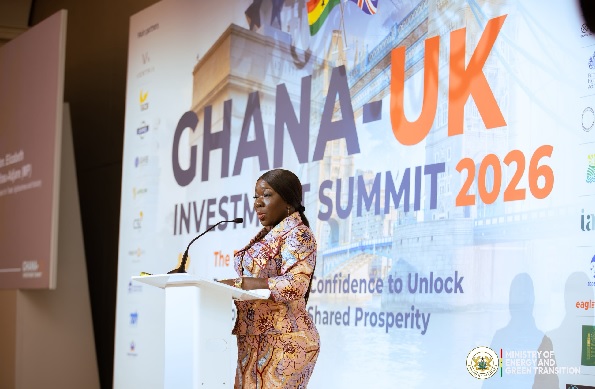
Delivering the closing address on behalf of President John Dramani Mahama, the Minister for Trade, Agribusiness and Industry, Elizabeth Ofosu-Adjare, emphasized Ghana’s commitment to creating a predictable and investor-friendly environment. Her remarks reinforced the government’s broader industrial policy direction, which prioritizes value addition, export competitiveness, and private-sector-led growth.
She also used the platform to frame Ghana as a strategic entry point into the African Continental Free Trade Area (AfCFTA), one of the world’s largest emerging trade blocs.
A Summit Designed to Convert Dialogue Into Deals
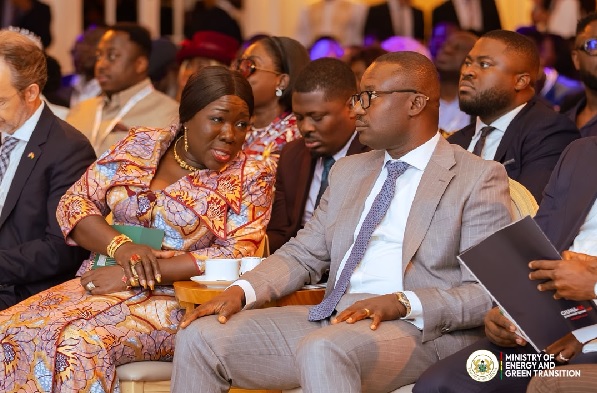
The Ghana–UK Investment Summit 2026 was structured not only as a diplomatic engagement but also as a transactional platform aimed at converting interest into investment commitments. Discussions reportedly centered on trade facilitation, agribusiness scaling, renewable energy expansion, digital transformation, logistics infrastructure, and industrial manufacturing corridors.
While official communiqués highlighted optimism, the underlying objective was more strategic: reposition Ghana within global capital markets as a stable and scalable destination for foreign direct investment (FDI), particularly from UK-based institutions, development finance actors, and private equity firms.
Ghana’s economic relationship with the United Kingdom remains historically strong, shaped by trade flows, development cooperation, and private sector investments across banking, telecommunications, extractives, and services. The summit sought to deepen this relationship within a post-Brexit UK trade strategy that increasingly emphasizes partnerships with African growth economies.
“Africa’s Moment Is Now”: Minister Signals Investment Acceleration Strategy
In her closing remarks, delivered on behalf of President Mahama, Elizabeth Ofosu-Adjare underscored Ghana’s readiness to attract investment and accelerate economic transformation through structured partnerships.
She stated:
“Africa’s moment is now, and Ghana is where it all begins,”
a declaration that reflects Ghana’s broader ambition to position itself as a regional hub for industrialization and trade facilitation within West Africa.
The Minister described the summit as a reflection of strengthening economic ties between Ghana and the United Kingdom, while reaffirming government efforts to maintain a business-friendly policy environment. These efforts include regulatory reforms, industrial incentives, and institutional coordination aimed at improving investor confidence.
She also expressed appreciation to stakeholders involved in the summit’s organization, including Ghana and UK High Commissioners, sponsors, development partners, speakers, panelists, and participating investors.
“On behalf of His Excellency John Dramani Mahama, we commend our two High Commissioners, the staff, sponsors, partners, speakers, panelists, and above all, you the potential investors and participants for gracing this summit with your presence,” she stated.
Her final remarks formally closed the summit:
“On behalf of His Excellency the President, the Government and people of Ghana, it is my singular honour to declare the Ghana-UK Investment Summit 2026 officially closed.”
Strategic Sectors at the Center of Investor Attention
Although official deal figures were not disclosed at the closing session, the summit placed strong emphasis on several high-growth sectors that continue to attract international capital interest in Ghana.
1. Oil, Gas, and Energy Transition
Ghana’s upstream petroleum sector—anchored in offshore production—remains a key revenue generator. However, global energy transition pressures are pushing the country to diversify into renewables, particularly solar and hybrid energy systems. Investors are increasingly looking at Ghana’s energy mix as a dual opportunity: traditional hydrocarbons alongside green energy expansion.
2. Agribusiness and Value Addition
Agriculture remains Ghana’s largest employer, and the government has repeatedly emphasized agro-industrialization. Investment opportunities discussed at such forums typically include cocoa processing, shea butter industrialization, grain storage systems, irrigation technology, and export-oriented agro-parks.
3. Infrastructure and Urban Development
Urbanization pressures in Accra, Kumasi, and secondary cities are driving demand for transport systems, housing, water infrastructure, and logistics corridors. Public-private partnership (PPP) models remain central to financing these projects.
4. Digital Economy and Fintech Expansion
Ghana has emerged as one of West Africa’s digital innovation hubs, with fintech adoption, mobile money penetration, and startup ecosystems expanding rapidly. Investors continue to explore opportunities in digital payments, cloud infrastructure, cybersecurity, and AI-driven services.
UK–Ghana Economic Relations: A Deepening but Competitive Landscape
The United Kingdom remains one of Ghana’s longstanding economic partners, with cooperation spanning trade, education, governance support, and private investment. However, Ghana is also competing for capital with other African economies such as Kenya, Nigeria, Rwanda, and Egypt—each positioning itself as a regional investment gateway.
Institutions such as the UK’s Department for Business and Trade and development finance actors like British International Investment (BII) have historically played roles in supporting investment flows into African markets, particularly in infrastructure, financial services, and climate-related projects.
Within this context, summits such as the Ghana–UK Investment Summit serve as diplomatic and commercial platforms aimed at aligning investor priorities with national development strategies.
The Investigative Lens: Opportunity vs. Structural Constraints
While the tone of the summit was overwhelmingly optimistic, Ghana’s investment environment continues to face structural challenges that shape investor decision-making.
Key issues often raised by economists, policy analysts, and development finance observers include:
Fiscal stability concerns following periods of debt restructuring and macroeconomic pressure
Energy sector arrears and legacy debts affecting long-term utility sustainability
Regulatory bottlenecks that can slow down project approvals
Foreign exchange volatility, which impacts repatriation of profits
Infrastructure gaps, particularly in transport logistics and industrial zones
Ghana’s investment promotion efforts, coordinated through institutions such as the Ghana Investment Promotion Centre (GIPC), continue to focus on improving the ease of doing business. However, international investors typically weigh these improvements against macroeconomic indicators, legal certainty, and policy continuity.
From an investigative standpoint, summits like this often serve a dual function: projecting confidence to attract capital while simultaneously signaling reform intent to global markets.
What Investors Are Really Watching
Beyond speeches and diplomatic messaging, investors attending such summits typically evaluate three critical factors:
1. Policy Predictability – Whether regulatory frameworks remain stable across political transitions
2. Return on Investment (ROI) – Sector-specific profitability, especially in energy, infrastructure, and agribusiness
3. Risk Mitigation Mechanisms – Currency stability, sovereign guarantees, and dispute resolution framework
Ghana’s positioning as a gateway to the AfCFTA remains one of its strongest selling points. The ability to access a continental market of over 1.4 billion people provides a strategic incentive for multinational corporations considering West African expansion.
Conclusion: A Familiar Message, But Higher Stakes
The Ghana–UK Investment Summit 2026 ultimately reinforced a familiar but increasingly urgent message: Ghana is actively competing for global capital in a rapidly shifting investment landscape.
While government officials emphasized optimism, partnership, and opportunity, the real test lies in implementation—translating summit discussions into measurable investments, job creation, and industrial expansion.
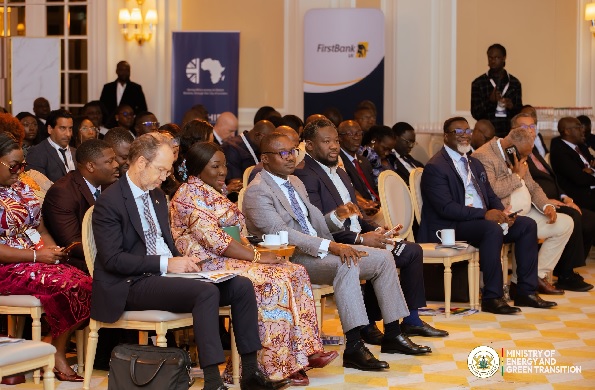
As Ghana continues its economic transformation agenda under President Mahama’s administration, the pressure remains on policymakers to ensure that investor confidence is not only rhetorically reinforced but structurally secured through reforms, transparency, and macroeconomic stability.
For investors, the message from Accra is clear. Ghana is open for business—but the decision to invest will ultimately depend not on speeches, but on sustained policy credibility, risk management, and long-term economic performance.