

By Alex Ababio
KUMASI, GHANA — Prempeh International Airport in Kumasi erupted into a spectacle of royal pageantry, cultural pride and public admiration as the aircraft carrying Asantehene Otumfuo Osei Tutu II touched down following a high-profile working tour of Poland and Canada.
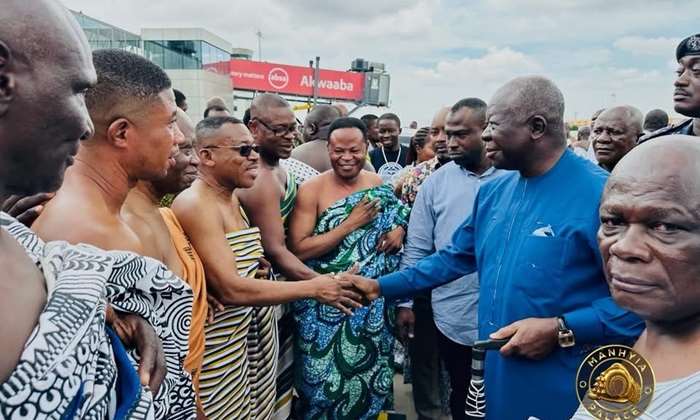
The airport was transformed into a sea of colour and tradition as hundreds of chiefs, queen mothers, traditional leaders and subjects from across the Asante Kingdom gathered to welcome their monarch home.
Clad in richly woven kente cloth and adorned with gold regalia symbolic of Asante royalty, chiefs lined the tarmac while traditional drummers and fontomfrom ensembles filled the air with rhythms that have echoed through centuries of Asante history.
Excited residents waved flags, sang traditional praises and celebrated the return of the King, turning what could have been an ordinary arrival into a powerful demonstration of cultural identity and unity.
The grand reception underscored the enduring influence of Otumfuo Osei Tutu II, who since his enstoolment in 1999 has become one of Africa’s most internationally recognised traditional leaders through his work in education, peacebuilding, healthcare, investment promotion and cultural diplomacy.
Following his arrival, the Asantehene was escorted in a grand procession through the principal streets of Kumasi to the Manhyia Palace amid heightened security.
Thousands of residents lined the roads hoping to catch a glimpse of the monarch.
Chiefs and elders who spoke during the celebrations said the overwhelming turnout reflected the deep respect, admiration and affection the people of Asanteman continue to have for their King.
“We will continue to remain united and committed to peace and development as Asanteman continues to push for progress on both local and global fronts,” a local chief stated.
Beyond Ceremony: What Was the Real Purpose of the Tour?
While the colourful homecoming attracted public attention, the significance of Otumfuo’s trip extends far beyond symbolism.
According to information presented during an emergency meeting of the Asanteman Council before his departure, the working visit to Poland and Canada was designed to strengthen cultural, diplomatic, educational and developmental partnerships between the Asante Kingdom and international partners.
Sources at Manhyia Palace indicated that attracting development partnerships, investment opportunities and educational collaborations formed a central part of the mission.
The tour comes at a time when traditional institutions across Africa are increasingly positioning themselves as facilitators of development and investment, complementing the work of national governments.
For Asanteman, this strategy is not new.
Over the years, Otumfuo Osei Tutu II has leveraged his international reputation to build relationships with universities, investors, governments, development agencies and diaspora communities around the world.
Poland Engagement Opens New Economic Possibilities
One of the most significant moments of the trip occurred in Poland, where the Asantehene engaged senior government officials and participated in discussions focused on future Ghana-Poland cooperation.
According to Poland’s Ministry of Foreign Affairs, Otumfuo met Deputy Foreign Minister Wojciech Zajączkowski on May 29, 2026.
During the meeting, both sides explored opportunities in agriculture, machinery manufacturing, transportation, digital technology and cybersecurity. They also discussed academic cooperation, student exchanges, scientific collaboration and cultural dialogue.
The Polish government described Ghana as a stable democratic and economic partner and highlighted the country’s strategic role as host of the African Continental Free Trade Area (AfCFTA) Secretariat. Officials noted growing interest among Polish companies seeking expansion opportunities in Africa.
These discussions are particularly significant for the Ashanti Region, which continues to seek increased industrial investment, value-added agriculture, manufacturing opportunities and technology partnerships.
In Warsaw, Otumfuo also participated in high-level international engagements that brought together political leaders, business executives, philanthropists and development stakeholders.
Reports from Poland indicated that the visit attracted considerable attention among policymakers and investors interested in expanding engagement with Ghana and West Africa.
Canada Visit Focused on Business, Diaspora and Global Partnerships
After Poland, the Asantehene proceeded to Canada where he embarked on a series of engagements involving business leaders, diaspora groups and international development stakeholders.
According to reports, the monarch arrived in Canada on June 15 and was received by Ghana’s High Commissioner to Canada, Ambassador Dora Francisca Edu-Buandoh, alongside Canadian officials and distinguished members of the Ghanaian community.
One of the major highlights of the Canadian leg of the trip was his participation in activities linked to the 2026 FIFA World Cup Business Summit.
The summit, organised by the Canada-Ghana Chamber of Commerce and its partners, brought together business leaders, investors and policymakers seeking to deepen economic cooperation between Ghana and Canada.
According to information published ahead of the event, the Asantehene was invited as Special Guest of Honour, reflecting the growing international recognition of his leadership and influence beyond traditional governance.
His itinerary reportedly included business meetings, diaspora engagements, participation in the opening of Ghana Sports Village—also known as Sankofa Square—and interactions with members of Ghana’s national football team.
Why Experts Say Traditional Diplomacy Matters
Development experts increasingly recognise that traditional leaders can play a meaningful role in attracting investment and promoting development.
Professor E. Gyimah-Boadi, co-founder of the Ghana Center for Democratic my Development (CDD-Ghana), has repeatedly highlighted the influence traditional institutions continue to exercise in local governance, conflict resolution and community mobilisation.
Similarly, governance scholars at institutions including the University of Ghana and Kwame Nkrumah University of Science and Technology have argued that traditional authorities remain important actors in development planning because of the trust they command among local populations.
The Asantehene’s international engagements fit within a broader global trend in which cultural and traditional leaders are increasingly participating in what policy analysts describe as “soft diplomacy”—the use of culture, heritage, education and social influence to strengthen international partnerships.
In Ghana, Otumfuo’s mediation roles in national disputes, educational initiatives through the Otumfuo Foundation and advocacy for development have further strengthened his reputation as a bridge between traditional governance and modern development priorities.
The Economic Stakes for Asanteman
The Ashanti Region remains one of Ghana’s most important economic zones, contributing significantly to mining, agriculture, trade, manufacturing and services.
However, development advocates continue to call for increased investment in industrialisation, transport infrastructure, digital technology, education and youth employment.
Against this backdrop, international outreach missions such as the Poland-Canada tour are viewed by many observers as strategic efforts to attract partnerships that can complement public-sector development programmes.
Although no major investment announcements were made public during the trip, officials and observers note that many international partnerships begin through relationship-building engagements before evolving into concrete projects.
This approach mirrors the Asantehene’s longstanding development philosophy, which has emphasised long-term collaboration, education and institution-building.
A Homecoming Rich in Symbolism
For many residents of Kumasi, however, the significance of the day was not measured in policy discussions or investment projections.
It was measured in tradition.
As drums echoed through Prempeh International Airport and thousands lined the streets leading to Manhyia Palace, the celebrations reflected the enduring bond between the Asante people and their monarch.
For supporters, the return of Otumfuo Osei Tutu II represented more than the conclusion of an overseas trip.
It symbolised the return of a leader many regard as a custodian of culture, a promoter of peace and a global ambassador for Asanteman.
As the royal convoy moved through Kumasi amid cheers and traditional songs, one message resonated across the city: Asanteman’s influence is increasingly extending beyond Ghana’s borders, and its King continues to place the kingdom on the global stage through diplomacy, education, investment promotion and cultural engagement.