

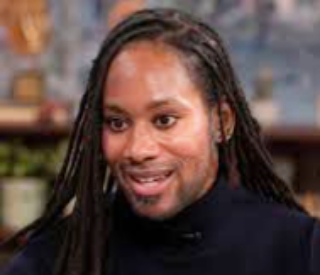
By Alex Ababio | Special Report | Academic Integrity, Race, Reputation and Institutional Accountability
Professor Jason Arday, the former University of Cambridge sociologist whose extraordinary rise from a difficult childhood to one of Britain’s most prominent Black academics became the subject of an increasingly bitter plagiarism and credibility controversy, has been found dead in south London.
Arday, 41, was found unresponsive at an address in Battersea on Friday afternoon, 14 August 2026, after emergency services were called by the London Ambulance Service. The Metropolitan Police said his death was unexpected but not believed to be suspicious. No cause of death had been publicly established at the time of reporting.
His death came only days after he resigned from Cambridge, where he had served as Professor of Sociology of Education and became, in 2023, the university’s youngest Black professor.
His family said they were “in shock to have lost this amazing father, partner, brother, uncle and son”, adding that “the campaign of misinformation was too much for Jason”.
The family’s statement is an allegation about the pressure he experienced, not evidence establishing that the controversy caused his death. That distinction is critical as institutions, journalists and the public confront the circumstances surrounding the final days of a scholar whose career had become a battleground over academic integrity, race, disability and diversity.
Cambridge Vice-Chancellor Professor Deborah Prentice said: “We are desperately saddened to hear this tragic news.”
Education Secretary Lucy Powell also expressed shock and urged the public to remember that “there are real people with loved ones involved”.
From extraordinary breakthrough to Cambridge controversy
Arday’s professional journey had once been presented as one of the most remarkable stories in British higher education.
Born in London to Ghanaian parents, he described a childhood in which he was diagnosed with autism and developmental delay. His publisher, Simon & Schuster, says he was non-verbal as a child and did not learn to read and write until 18. His recently released memoir, Great and Unfortunate Things, recounts his journey from those early difficulties to Cambridge.
He initially worked as a physical-education teacher before completing his doctorate at Liverpool John Moores University in 2015. He subsequently held academic positions at Durham University and the University of Glasgow before joining Cambridge.
Cambridge’s own archived biography described his research as focusing on race and higher education, intersectionality and education, mental health and education, neurodiversity and cultural studies.
His appointment was significant beyond his personal achievement. HESA’s latest figures show that only about 1% of UK professors were Black in 2024/25, with 270 Black professors among 26,110 professors.
At Cambridge, the proportion was even smaller. The Financial Times reported that Black professors represented only about 0.4% of the professoriate in 2025.
That context helps explain why Arday’s appointment carried symbolic weight — and why the subsequent controversy became larger than one professor.
What triggered the plagiarism allegations?
The allegations centred initially on Arday’s 2015 doctoral thesis.
Former Cambridge academic Nathan Cofnas published comparisons between passages in Arday’s thesis and a 2009 doctoral dissertation by Paula Zwozdiak-Myers, a reader at Brunel University of London. The allegations were subsequently examined and discussed by other academics and specialist publications.
Retraction Watch reported that Times Higher Education had prepared a 63-page dossier examining alleged textual similarities before the story was ultimately not published. David Sanders, a professor of biological sciences at Purdue University who researches scientific misconduct and has worked extensively on plagiarism and research-integrity cases, reviewed the dossier.
His assessment was blunt: “There is no question that there is extensive plagiarism.”
That is an expert assessment of the evidence he reviewed, however, and not a formal institutional finding against Arday.
Indeed, the institutional record is considerably more complicated.
Liverpool John Moores University, which awarded Arday his PhD, previously concluded that he had not committed plagiarism. Cambridge also said earlier investigations had cleared allegations concerning his thesis and some journal publications.
Arday himself denied deliberately plagiarising. He acknowledged errors and argued that his autism and learning difficulties affected the way he processed information. In an interview with The Times, he said that he had relied on mimicry to understand information and that inadequate supervision had contributed to mistakes.
“We’re talking about academia here. I didn’t murder somebody,” he told the newspaper. “I think the cruelty that I’ve experienced and the positioning of me as this kind of liar and fantasist is totally unacceptable.”
A controversy that expanded beyond plagiarism
The investigation did not remain confined to academic citations.
Questions were raised about aspects of Arday’s professional biography, research, charity claims and sporting achievements. Media reports examined whether some of the extraordinary accomplishments associated with his public profile could be independently substantiated.
Retraction Watch also reported concerns about one of Arday’s research papers, including questions about descriptions of participants and ethical approval. Dave Harris, an emeritus professor at Plymouth Marjon University, had previously raised questions about aspects of Arday’s published research.
The distinction between proven misconduct, disputed claims and allegations requiring investigation became increasingly important.
That distinction was sometimes blurred in public debate.
Arday argued that he was being portrayed as a fraud when, in his view, some issues represented mistakes rather than deliberate deception.
“I am not a liar,” he said in his defence.
He also argued that criticism of his work had become intertwined with hostility towards a Black academic associated with diversity and race scholarship.
Critics rejected that framing and maintained that academic standards should be applied irrespective of race, political controversy or institutional diversity goals.
The result was a deeply polarised debate in which the underlying academic questions sometimes became inseparable from Britain’s wider culture war over race and diversity.
Cambridge’s institutional dilemma
Cambridge initially defended Arday strongly.
But the pressure eventually forced the university to confront a more fundamental question: How did its appointment and vetting processes assess a candidate whose previous academic work and professional claims later became the subject of such extensive scrutiny?
On 12 August, Cambridge agreed to an independent investigation into Arday’s appointment and the circumstances surrounding it. The university said the investigation would involve senior academics from inside and outside Cambridge.
Professor Prentice acknowledged that the controversy had created legitimate concerns across the university and beyond.
Arday resigned shortly before that investigation could fully run its course.
In his resignation statement, he said the “personal cost” had become too great.
“While criticism is an inevitable part of academic life, what I have experienced has gone far beyond scholarly disagreement,” he said.
He added that “the relentless accusations, speculation and public commentary have taken a profound toll on me and on those I love”.
Crucially, he said his resignation should not “be mistaken for an acceptance of the narratives that have surrounded me”.
That means several major questions remain unresolved.
The wider academic-integrity lesson
The case exposes an uncomfortable weakness in modern higher education: universities can simultaneously have legitimate diversity ambitions and legitimate obligations to maintain rigorous standards.
Those objectives should not be treated as opposites.
Professor David Sanders’ wider work on research integrity illustrates the importance of that principle. Purdue’s Sanders Lab says academic authors must properly distinguish their own words and ideas from those taken from others, while warning that institutional and journal systems are essential parts of the integrity process.
In Arday’s case, the public dispute demonstrates what can happen when institutional investigations, media scrutiny and social-media campaigns collide before all the facts have been conclusively established.
Cambridge now has to investigate not simply whether particular allegations were correct, but whether its systems for recruitment, due diligence, research oversight and responding to complaints worked as they should.
It also has to confront the opposite danger: allowing the controversy surrounding one Black professor to become an argument against the broader goal of improving racial representation.
HESA data make clear that underrepresentation remains real. Black professors constituted only around 1% of the UK professoriate in 2024/25.
The appropriate lesson is therefore neither that diversity appointments are inherently suspect nor that diversity considerations should shield academics from scrutiny.
The lesson is that representation and rigorous standards must coexist.
A career ending before the questions were settled
Arday’s final weeks were marked by an extraordinary collision of personal triumph and professional crisis.
His memoir, Great and Unfortunate Things, was published in the United States on 11 August, with the UK edition scheduled for 27 August. The publisher described it as the story of a non-verbal autistic child who eventually became one of Cambridge’s youngest professors.
He cancelled a promotional event shortly before his death.
His career had once symbolised extraordinary social mobility. His final months instead became a test of academic accountability, media responsibility and institutional transparency.
Jolyon Maugham of the Good Law Project called his death “a tragedy” and questioned the public-interest justification for continuing to pursue Arday after his resignation.
Yet there remains an equally important public-interest question on the other side: allegations of academic misconduct cannot simply disappear because the individual at their centre has died.
The proper response is not a posthumous conviction — nor a posthumous exoneration.
It is evidence.
Cambridge’s independent inquiry, reviews at institutions where Arday previously worked, and any relevant journal investigations should therefore be allowed to establish what can still be established from documentary evidence.
That process must be transparent, proportionate and respectful of Arday’s family.
And the media must resist the temptation to convert an unresolved academic controversy into a definitive explanation for a death whose cause has not been publicly established.
Jason Arday’s story now ends with more questions than answers.
A boy once described as unlikely to speak or read became a Cambridge professor at 37. A scholar celebrated as a symbol of progress later became the centre of a fierce argument over plagiarism, professional credibility and institutional vetting. He resigned while maintaining that he had been unfairly portrayed.
Now, at 41, he is dead.
The final responsibility belongs not to the loudest defenders or the harshest critics, but to institutions capable of separating what is established, what is disputed and what remains unknown.
That is the standard academic integrity demands — and the standard journalism must meet.