

*By Alex Ababio | Ghanaian Watch | October 30, 2026*
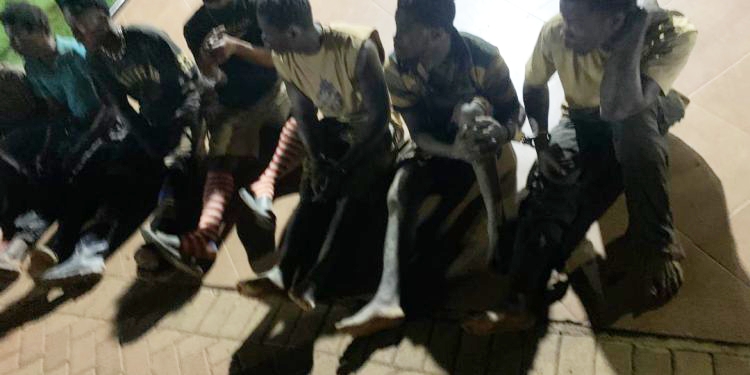
Ghana’s fight against illegal mining is facing another test after the National Anti-Illegal Mining Operations Secretariat (NAIMOS) arrested 11 suspected illegal miners in coordinated operations across the Western and Eastern Regions, exposing renewed mining activities in environmentally sensitive locations.
The operations, conducted on October 29, targeted three locations: the Cape Three Points Forest in the Ahanta West Municipality, Abrokyire-Krobo in the Wassa Amenfi East Municipality, and Apapam-Asikem in the Abuakwa South Municipality.
Beyond the arrests, the enforcement exercises resulted in the destruction of several chanfang machines, water pumps, generator plants and makeshift structures allegedly used for illegal mining.
However, the operations have raised a broader environmental enforcement concern: how can authorities prevent miners from returning to locations that have already been cleared?
The concern is particularly significant because the targeted areas include forest ecosystems and river systems that support agriculture, biodiversity and local water supplies.
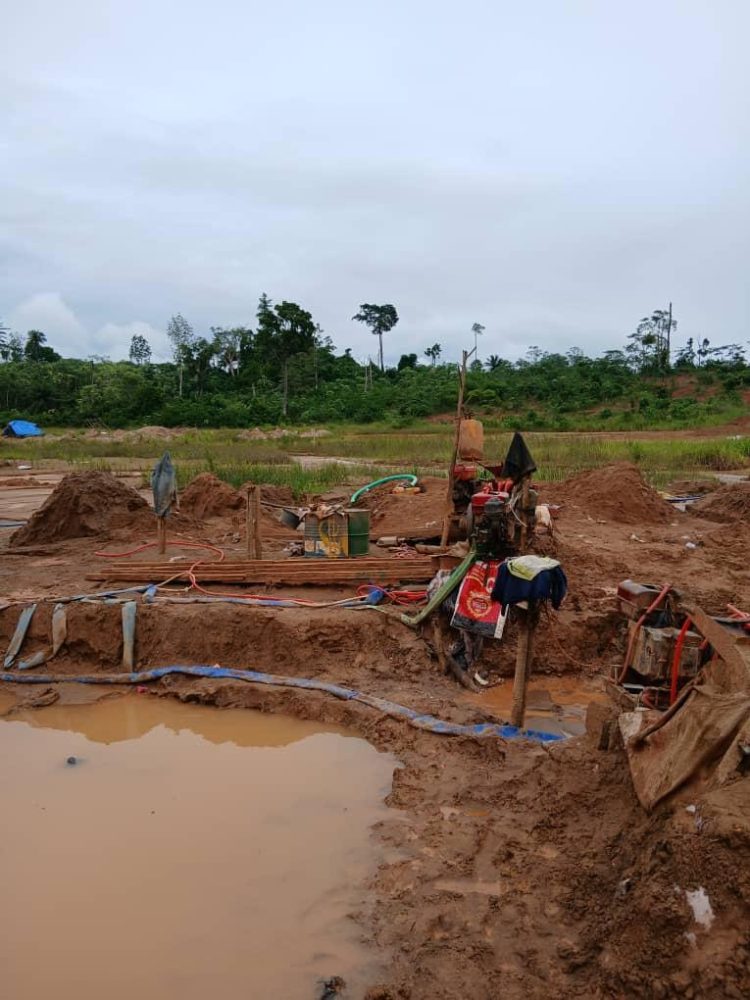
Mining operations uncovered inside Cape Three Points Forest
At the Cape Three Points Forest in the Ahanta West Municipality, NAIMOS personnel arrested four suspected illegal miners after discovering mining activities at multiple locations within the forest.
At the first location, the task force destroyed four chanfang machines and seven water pumps.
Further patrols took personnel to another mining location, but the operators had fled before the officers arrived.
Two excavators were discovered at the second location, although their monitors had been removed. The task force destroyed three additional chanfang machines, four water pumps and four makeshift structures. It also recovered a critical component from one of the excavators.
The discovery of excavators with their monitors removed raises questions about the movement, ownership and monitoring of heavy equipment used in illegal mining.
Ghana introduced the Minerals and Mining (Tracking of Earth Moving and Mining Equipment) Regulations, 2020 (L.I. 2404), to strengthen the monitoring of earth-moving and mining equipment.
The regulation provides an important legal framework for tracking equipment. However, the discovery of excavators at the mining location demonstrates why equipment monitoring must be supported by effective field inspections, identification systems and enforcement.
Establishing who owns the excavators, how they entered the forest and whether their movements were recorded would provide important evidence for investigators.
Abrokyire-Krobo exposes the problem of returning miners
A separate operation at Abrokyire-Krobo in the Wassa Amenfi East Municipality also exposed the difficulties facing enforcement teams.
NAIMOS personnel raided an illegal mining site after operators reportedly fled upon spotting the task force.
The operation resulted in the destruction of five chanfang machines, five water pumps, seven generator plants and two makeshift structures.
An additional chanfang machine and a water pump were recovered.
More concerning was the task force’s observation of signs of renewed mining activity in some areas.
The development highlights a recurring challenge in Ghana’s anti-galamsey campaign: dismantling mining infrastructure does not necessarily prevent operators from returning.
A sustainable enforcement strategy requires more than periodic raids. It also requires monitoring cleared locations, identifying the individuals financing mining operations and investigating the supply chains that provide excavators, generators, fuel and processing equipment.
Without addressing these supporting networks, the destruction of equipment could offer only temporary relief.
Birim River and Atiwa Forest face additional pressure
In the Eastern Region, NAIMOS arrested seven suspected illegal miners during an operation in the Apapam-Asikem area of the Abuakwa South Municipality.
The exercise targeted illegal mining activities along the Birim River and its tributaries, as well as locations bordering the Atiwa Forest Reserve.
Personnel destroyed two chanfang machines, three water pumps and three makeshift structures.
The location is environmentally significant because the Birim River forms part of Ghana’s major river systems, while the Atiwa Forest landscape supports important biodiversity and water-related ecological functions.
Mining along riverbanks can introduce suspended sediments into water bodies, increase turbidity and potentially expose aquatic ecosystems to chemicals associated with gold processing.
These effects extend beyond the immediate mining sites. Communities that depend on rivers for domestic activities, agriculture and other livelihoods can also experience the consequences.
Scientific evidence highlights the water pollution problem
The environmental implications of the latest arrests are consistent with scientific findings on illegal mining and water pollution in Ghana.
A June 2026 review published in *Scientific African*, titled *Water Pollution and Treatment Challenges from Artisanal Gold Mining in Ghana: A Decade Review (2014–2024)*, examined research on the effects of artisanal and small-scale gold mining on water quality.
The researchers identified recurring contamination involving mercury, cyanide and heavy metals, including arsenic, lead and cadmium.
The review also documented increased turbidity, electrical conductivity and total dissolved solids in mining-affected rivers, including the Pra, Ankobra and Birim river basins.
It explained that severe sediment and contaminant loading creates additional challenges for conventional water treatment systems.
According to the review, some treatment plants experience operational difficulties when raw-water turbidity exceeds approximately 2,000 nephelometric turbidity units (NTU), compared with typical design limits of 500 NTU or less.
This creates additional pressure on treatment processes, including chemical use, sediment removal and filtration.
The implications are economic as well as environmental. Increased treatment requirements can raise operational expenditure for water suppliers and ultimately place pressure on the cost and reliability of potable water services.
Dr Owusu Fordjour Aidoo, an academic researcher and lecturer at the University of Environment and Sustainable Development, highlighted these concerns in an interview with the Ghana News Agency on May 20, 2026.
He said: “These rivers used to provide drinking water for millions of people and support farming, fishing and transportation in many communities, but today many of them are under serious threat.”
He identified the Pra, Birim, Ankobra and Offin rivers among the water bodies facing serious pollution challenges.
Dr Aidoo also warned that illegal mining was damaging forests and fertile farmlands, threatening agricultural production and the livelihoods of farming communities.
His assessment demonstrates why enforcement operations around the Birim River and other affected water bodies must be connected to long-term water-quality monitoring and environmental restoration.
Legal framework provides for tougher punishment
Ghana already has legislation providing for punishment for illegal mining.
The Minerals and Mining Act, 2006 (Act 703), as amended by the Minerals and Mining (Amendment) Act, 2019 (Act 995), strengthened penalties for illegal mining and related offences.
The 2019 amendment introduced stricter provisions, including substantial custodial sentences for certain mining offences. It also criminalised activities such as providing mining support services in prohibited circumstances and the use of floating platforms for illegal mining along natural water bodies.
The law therefore provides enforcement authorities with mechanisms to pursue not only people operating at mining sites but also other individuals involved in facilitating unlawful mining activities.
Separately, the Environmental Protection Act, 2025 (Act 1124), provides the Environmental Protection Authority with regulatory and enforcement responsibilities.
On January 28, 2025, the Environmental Protection Agency, now operating under the Environmental Protection Authority framework, issued a directive requiring unauthorised mining activities in and around water bodies to cease immediately.
The directive was signed by the then Acting Chief Executive Officer, Professor Nana Ama Browne Klutse.
The existence of these legal provisions raises an important accountability question: are enforcement agencies investigating the wider networks responsible for financing and sustaining illegal mining, or are operations concentrating mainly on workers found at mining sites?
The identities of the 11 suspects arrested in the latest operations, the specific charges being considered and the status of their cases have not been disclosed in the available reports.
Experts question the effectiveness of enforcement
The economic consequences of environmental destruction have also attracted attention from Ghanaian experts.
Professor Godfred Bokpin, an economist, raised concerns about the country’s response to illegal mining during the 2025 ESG Sustainability Summit in Accra.
According to a September 2, 2025 report by MyJoyOnline, he criticised the gap between government commitments and visible environmental improvements.
“If you tell me that you can destroy the environment and then later go and plant trees, look at the longevity. How long would it take to get the land to its original state? It’s not something to be contemplated,” he said.
He further argued: “We deliver wonderful speeches from government and from the president, but the action on the ground is lacking.”
His comments highlight an important distinction between removing mining equipment and restoring degraded ecosystems.
Destroying chanfang machines and dismantling makeshift structures can disrupt operations, but it does not automatically restore polluted rivers, damaged forest habitats or degraded agricultural land.
Restoration requires scientific assessment, rehabilitation plans, adequate funding and sustained monitoring.
NAIMOS promises sustained operations
NAIMOS said the simultaneous exercises form part of an expanded strategy to maintain pressure on illegal mining activities across water bodies, forest reserves, farms and other identified hotspots.
The Secretariat explained that illegal miners continue to exploit remote and difficult-to-access terrain along water bodies to evade enforcement operations.
It also said it would continue intelligence-led operations to prevent the reoccupation of cleared sites, disrupt illegal mining activities and protect critical environmental resources.
The Secretariat warned that illegal miners would not be allowed to operate in forest reserves, remote communities or along river systems.
It added that previously cleared locations would remain under surveillance and enforcement teams would return if mining activities resumed.
The unanswered questions behind the arrests
Although the arrest of 11 suspects represents an enforcement intervention, the longer-term success of the operation will depend on what happens after the raids.
Authorities must establish whether the arrested suspects were workers, operators or individuals with wider responsibilities within the mining operations.
Investigations should also establish who owns the two excavators found at Cape Three Points Forest, who supplied the mining equipment and whether any licensed operators or financiers were involved.
At Abrokyire-Krobo, the reported signs of renewed mining activity require follow-up investigations to determine how operators were able to return to previously cleared locations.
At Apapam-Asikem, independent water-quality assessments along the Birim River and its tributaries would help establish the extent of environmental damage.
The results should be made publicly available to enable residents, environmental organisations and relevant institutions to assess whether enforcement operations are producing measurable improvements.
Ultimately, Ghana’s fight against galamsey cannot be measured only by the number of arrests made or machines destroyed.
It must also be measured by the protection of rivers, the recovery of degraded forests, the restoration of farmland and the ability of communities to access safe water.
Until those outcomes become measurable and sustained, each new enforcement operation will continue to face the same difficult question: what prevents illegal miners from returning after the task force leaves?