

INVESTIGATIVE SPECIAL REPORT | ENERGY SECURITY | NUCLEAR POWER | INTERNATIONAL INVESTMENT
By Alex Ababio | Ghanaian Watch | October 30, 2026
Ghana’s ambition to generate electricity from nuclear energy has entered a new phase following President John Dramani Mahama’s announcement that the government has initiated discussions with Russia’s State Nuclear Energy Corporation, Rosatom, to establish the country’s first nuclear power station.
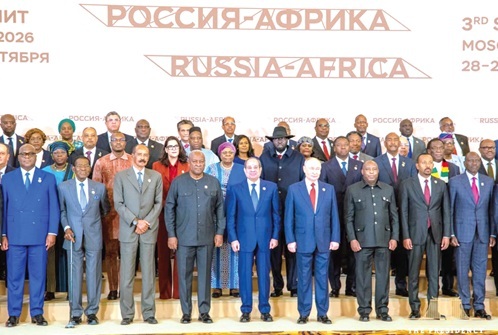
The announcement, made at the Third Russia-Africa Summit in Moscow on October 29, 2026, raises important questions about the financial cost, regulatory preparedness, technological choices and long-term safety responsibilities associated with introducing nuclear electricity generation in Ghana.
Although the proposed partnership could strengthen Ghana’s electricity supply and support industrialisation, discussions with Rosatom do not yet constitute a nuclear power plant construction agreement. Ghana must still address several institutional, technical, environmental and financial requirements before a commercial nuclear power station can become a reality.
President Mahama told African leaders and Russian officials, chaired by President Vladimir Putin, that Ghana was pursuing a diversified energy mix, including renewable energy, while advancing the peaceful use of nuclear technology.
“We have initiated discussions with Rosatom on the establishment of Ghana’s first nuclear power station,” he said.
He recalled Ghana’s historical relationship with the Soviet Union in nuclear research, saying the country had received a two-megawatt research reactor in 1964.
The announcement comes as Ghana seeks more reliable and affordable electricity to support manufacturing, mineral processing and other industrial activities.
However, the central question is whether the country can translate its nuclear ambitions into a financially sustainable, technically sound and independently regulated electricity programme.
Ghana’s nuclear programme: Progress meets funding challenges
Ghana’s nuclear ambitions are not new. The country began exploring nuclear science under its first President, Dr Kwame Nkrumah, in the early 1960s as part of efforts to strengthen scientific research and support industrial development.
The Ghana Atomic Energy Commission (GAEC), established under Act 204 of 1963, became the institution responsible for coordinating the peaceful application of atomic energy.
However, an important historical distinction needs to be made. Although Mahama recalled the Soviet Union’s involvement in Ghana’s early nuclear research ambitions, the research reactor currently operated by Ghana was acquired from China in 1994 with assistance from the International Atomic Energy Agency (IAEA).
The Ghana Research Reactor-1 (GHARR-1) is a 30-kilowatt research facility located at the National Nuclear Research Institute in Kwabenya, Accra. It is used mainly for scientific research, neutron activation analysis, education and human resource development. It is not a commercial electricity-generating reactor. IAEA
The distinction matters because operating a small research reactor does not automatically mean a country has the technical and institutional capacity to construct and operate a commercial nuclear power station.
Ghana formally entered Phase Two of its nuclear power programme on August 31, 2022, following the completion of the initial preparatory phase.
According to the Nuclear Regulatory Authority (NRA), the programme involves three stages: initial consideration, preparation for construction and implementation of the first nuclear power plant.
The NRA is responsible for independent nuclear safety regulation, while Nuclear Power Ghana serves as the owner-operator and the Nuclear Power Institute provides technical support. The Nuclear Regulatory Authority of Ghana
The IAEA’s Milestones Approach identifies 19 infrastructure issues countries must address. These include nuclear safety, financing, legal frameworks, environmental protection, emergency planning, radioactive waste management, nuclear security and human resource development. Home
This means Ghana still has considerable work to complete before construction can begin.
Funding gap threatens construction readiness
One of the biggest challenges facing Ghana’s nuclear programme is the availability of funding for essential technical studies.
Dr Stephen Yamoah, Executive Director of Nuclear Power Ghana, identified detailed site characterisation and environmental impact assessment as two urgent requirements.
He warned:
“Without these, the project cannot progress beyond Phase Two. If we are unable to conduct the site characterisation and complete the key technical studies, we are not moving beyond Phase Two.”
Dr Yamoah also explained that environmental monitoring, oceanographic and marine equipment would be needed to collect information for the design of the proposed facility.
He said procurement processes could not begin without budgetary allocations.
The project also requires a grid impact study to determine whether Ghana’s electricity transmission system can safely accommodate the additional generation capacity.
These findings raise questions about how the government intends to finance the proposed partnership with Rosatom when essential preparatory activities are still facing financial difficulties. Ghana News Agency
The concerns were also acknowledged by Dr Archibold Buah-Kwofie, Director of the Nuclear Power Institute of GAEC.
In an interview with the media on February 18, 2026,
he described Phase Two as a critical stage that would determine how quickly the country could advance towards construction.
“Are we progressing? Yes. Are we progressing at the pace that we hoped? Maybe not,” he stated.
He identified competing national priorities and funding constraints among the challenges affecting implementation.
These concerns suggest that securing an international nuclear technology partner is only one part of the process. Ghana must also demonstrate that it can finance the technical, regulatory and institutional requirements of the programme.
Rosatom partnership and Ghana’s choice of technology
Rosatom is one of the world’s major nuclear technology companies, with experience in developing and supplying nuclear power plants internationally.
However, Russia is not the only country that has been considered for Ghana’s nuclear power project.
According to the World Nuclear Association’s October 20, 2026, World Nuclear Outlook Report, Ghana has previously pursued different technology and investment arrangements.
In April 2024, Nuclear Power Ghana signed a framework agreement with China’s China National Nuclear Corporation (CNNC) for an HPR1000, also known as Hualong One, nuclear power plant.
In August 2024, Nuclear Power Ghana also signed a two-year framework agreement with US-based Regnum Technology Group for a NuScale VOYGR-12 small modular reactor project.
The association further reported that CNNC was selected in March 2025 to develop an approximately 1,200-megawatt reactor under a build-operate-transfer arrangement, alongside the proposed small modular reactor project.
The latest discussions with Rosatom therefore introduce another important dimension to Ghana’s nuclear partnership considerations.
World Nuclear Association
The government must clarify whether its discussions with Russia represent a new procurement process, an additional technology option or a potential replacement for earlier arrangements.
It must also explain how the different agreements and technology proposals will be reconciled.
The World Nuclear Association assessed Ghana’s nuclear policy, institutional infrastructure and project development readiness as low to moderate.
It noted that although the country has established an independent regulator and identified potential technology partners, final financing, licensing and contractual decisions remain outstanding.
The association also warned that Ghana’s ambition to have approximately 1,000 megawatts of nuclear capacity operational by 2034 is unlikely to be achieved. World Nuclear Association
These findings make transparency around the proposed Rosatom partnership particularly important.
Ghanaians need information about the proposed reactor technology, construction costs, financing conditions, government guarantees, fuel supply arrangements and the long-term management of radioactive waste.
Nuclear safety, environmental protection and electricity costs
Beyond construction costs, nuclear power comes with long-term responsibilities.
A commercial nuclear facility requires continuous safety monitoring, qualified technical personnel, emergency response systems, radioactive waste management and independent regulatory oversight.
Ghana’s Nuclear Regulatory Authority says it is developing the regulatory infrastructure, regulations and technical capacity required to oversee the country’s future nuclear power programme. The Nuclear Regulatory Authority of Ghana
The financial implications are also significant.
Nuclear power projects generally require substantial upfront investment and long construction periods. Their financial sustainability depends on financing costs, construction performance, electricity demand and the final price of electricity supplied to consumers.
For Ghana, the question is whether nuclear electricity can be delivered at a competitive cost without creating unsustainable public debt or exposing taxpayers to excessive financial guarantees.
The government must also ensure that nuclear investment complements rather than undermines its renewable energy commitments.
Local currency trade and economic cooperation
Beyond nuclear energy, President Mahama used the Moscow summit to advocate stronger trade relations between Ghana and Russia.
He called for mechanisms that would allow legitimate trade transactions to be settled using local currencies and digital payment systems.
“To create a more seamless environment for trade and investment, we must find appropriate mechanisms for making legitimate trade settlements that include the use of our local currencies and other digital payment systems,” he said.
He identified central banks, commercial banks and financial technology companies as important institutions in developing these arrangements.
The proposal comes amid efforts by several countries to diversify international payment systems and reduce their dependence on traditional settlement arrangements.
However, implementing local currency trade requires more than political commitments. It involves exchange-rate arrangements, banking infrastructure, liquidity, payment interoperability and safeguards against financial crime.
Ghana and Russia also need to consider international banking restrictions and sanctions-related compliance risks when developing payment arrangements.
According to the Ghana News Agency, bilateral trade between the two countries increased from $247 million in 2022 to more than $800 million in 2024. Ghana News Agency +1
Mahama identified cocoa, cashew, horticulture, mineral processing and manufacturing as areas offering opportunities for cooperation.
He also invited Russian businesses to partner Ghanaian companies in agro-processing, fertiliser production, agricultural machinery, pharmaceuticals, energy, transport infrastructure and the digital economy.
As host of the African Continental Free Trade Area (AfCFTA) Secretariat, Ghana could also provide Russian investors with opportunities to access wider African markets.
However, the President stressed the importance of partnerships that develop local expertise and create opportunities for small and medium-sized enterprises rather than arrangements that benefit only large foreign investors.
Historical friendship and international security
Mahama also highlighted his personal connection with Russia.
Having studied in Moscow on a full scholarship between 1986 and 1988, he described himself as “a symbol of the friendship of the Russian people”.
He thanked President Putin and the Russian people for their historical support for Africa during the struggles against colonialism and apartheid.
Ghana will celebrate its 70th independence anniversary in March 2027, having become the first sub-Saharan African country to gain independence from British colonial rule in 1957.
On international security, Mahama called for peaceful resolutions to conflicts around the world.
He also welcomed Russia’s willingness to resume trilateral discussions concerning the Ukraine conflict and called for international cooperation against terrorism, particularly in the territories of the Alliance of Sahelian States.
He urged summit participants to translate diplomatic relationships into practical improvements for ordinary citizens.
“The most lasting expression of our friendship will be the progress our people can see in their communities and their lives,” he said. Graphic Online +1
The accountability question facing Ghana
On October 30, 2026, the Institute of Economic Affairs (IEA Ghana), through its Nuclear Energy Centre of Excellence, announced a one-year initiative to support the completion of outstanding activities under Phase Two of the nuclear programme.
The Ghana Nuclear Phase II Completion and Investment Readiness Support Programme will focus on institutional coordination, workforce development, regulatory preparedness and investment planning.
Its launch underscores the fact that Ghana’s nuclear ambitions still require significant preparation before a construction decision can be implemented. IEA Ghana
President Mahama’s announcement could open new opportunities for Ghana’s energy sector, particularly if nuclear electricity helps address long-term power supply challenges and supports industrial development.
But the government must demonstrate that the proposed partnership offers value for money and does not expose the country to excessive financial, technological or environmental risks.
Parliament, the Nuclear Regulatory Authority, civil society organisations and affected communities must have access to relevant information about the proposed agreement.
The government must also explain the relationship between the Rosatom discussions and Ghana’s existing nuclear technology arrangements.
Ultimately, Ghana’s nuclear ambition should not be measured by the number of international partnerships announced or the scale of proposed investment.
It should be measured by whether the country can deliver safe, affordable and reliable electricity without compromising public finances, environmental protection and the interests of future generations.