

By Alex Ababio
When Smoke Becomes a Death Sentence
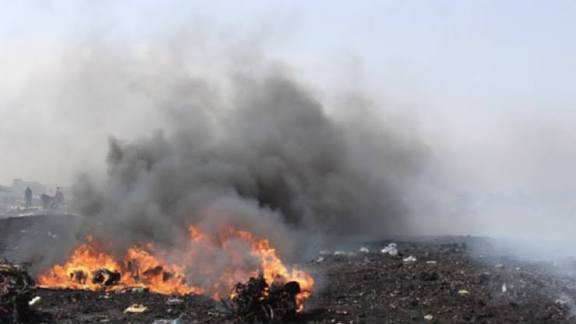
At 3:42 a.m. on a humid Wednesday in August 2025, 70-year-old Mr. Ato Atobrah stirred awake in his home in Adentan Housing, Greater Accra. He felt a burning tickle in his throat. When he opened his bedroom window, thick smoke from a neighbour’s burning waste pile poured in. He began coughing uncontrollably. By dawn, his family found him lifeless.
A post-mortem confirmed the cause: his asthma made him vulnerable, but it was the smoke that killed him.
Mr. Atobrah’s death is not an isolated tragedy. It is one among thousands that reveal a blight largely ignored: air pollution is now Ghana’s deadliest environmental killer—overtaking HIV/AIDS, malaria, and road traffic accidents. According to a study spearheaded by PSS Urbania Consult with support from the Clean Air Fund, more than 30,000 deaths annually in Ghana are now linked to air pollution.
Faces Behind the Numbers: Breathing vs. Dying
Mama Lydia and a Child Struggling for Air
In Korle Klottey Municipality, 52-year-old Mama Lydia struggles to breathe. Her small kiosk sits by a road clogged with tro-tros and taxis. Charcoal smoke rises from nearby chop bars.
“I wake up every morning with tightness in my chest,” she says. “During Harmattan, the dust is everywhere—I cannot tell which cough is mine, which comes from the air.”
Her inhaler used to last a month. Now she uses two every fortnight.
Next door, nine-year-old Joseph, the son of Mrs. Akua Boadu, has developed chronic bronchitis. His mother often misses work to nurse him. “The dust, the smoke—they don’t leave the house. We can close windows, but traffic and burning—it is everywhere.”
Experts Sound the Alarm: Weak Rules, Strong Consequences
“Our Rules, but No Teeth” – Dr. John Kingsley Krugu, EPA
At the Environmental Protection Agency (EPA), Executive Director Dr. John Kingsley Krugu admits the system is failing.
“Tiny particles smaller than 2.5 micrometres remain in the lungs and bloodstream, causing stroke, heart disease, lung cancer, and respiratory infections,” he says. “We have regulations, but enforcement is weak. Open burning, vehicular emissions, poorly maintained generators—these continue unchecked.”
Prof. Kofi Amegah, Environmental Epidemiologist
From University of Cape Coast, Prof. Adeladza Kofi Amegah adds urgency:
“Accra’s PM₂.₅ levels average 49.5 µg/m³, nearly ten times the WHO guideline. Each year, these concentrations translate into thousands of avoidable deaths. Children, the elderly, and people with asthma or heart conditions are hit hardest.”
Air vs. Disease: What the Latest Statistics Reveal on HIV/AIDS and Malaria
To grasp the scale of air pollution’s toll, a comparison with the national statistics for HIV/AIDS and malaria is essential.
HIV/AIDS (2024, Ghana AIDS Commission):
• 15,290 new HIV infections recorded in 2024.
• 12,614 AIDS-related deaths in the same period.
• 334,721 people living with HIV, of whom 68.5% (229,261) are women and 31.5% (105,460) are men.
Malaria:
Ghana recorded fewer than 300 malaria deaths in 2024.
Parasite prevalence reduced from about 28% in 2011 to roughly 9% in 2022.
Mapping the Invisible Killers: Data, Hotspots, and System Breakdown
Hotspots of Harm from Smoke
The PSS Urbania study monitored over 60 sites across Greater Accra between August 2024 and September 2025. Key pollution hotspots include:
Ablekuma Central, Ablekuma North, Ablekuma West, Ablekuma South
Adentan, Ashiedu Keteke, Okaikoi South
Ayawaso Central, Ayawaso East, Ayawaso North, Ayawaso West
Korle Klottey, La Dade Kotopon, La Nkwantanang Madina, Okaikwe North
At each site, data on PM₂.₅, PM₁₀, sulfur dioxide, and nitrogen dioxide was collected. The findings: air quality exceeded both EPA standards and WHO guidelines in nearly all locations.
Why Laws Sit on Paper: The Systemic Failures
1. Weak Enforcement – Existing laws, such as the Air Quality Management Regulation (2023), remain “paper tigers.” Burning and vehicle emissions go largely unpunished.
2. Municipal Fragmentation – With over 20 MMDAs in Greater Accra, responsibilities are blurred. Action plans differ, enforcement varies, and coordination is weak.
3. Infrastructure Deficits – Ghana produces about 12,710 tonnes of waste daily; much is uncollected or burned. Unpaved roads churn dust; public transport is underdeveloped.
4. Socioeconomic Inequity – Poorer households rely on charcoal and firewood. They live near dumpsites or busy roads, with little choice but to inhale polluted air.
5. Data Gaps – While satellite imagery provides estimates, ground-level data is sparse. Residents often do not know the risks they face.
Confrontation in the Boardroom: The Workshop Where Data Met Demand
On September 16, 2025, stakeholders gathered at a high-level validation workshop to present findings and draft Air Quality Action Plans (AQAPs) for 13 MMDAs.
Dr. Joseph Ayitio (Lead Consultant, PSS Urbania) and Frederick Otu-Larbi (Air Quality Specialist) presented the data.
Usama Iddrisu Samu, Director of Policy Planning at the Ministry of Local Government, underscored urgency:
“Air pollution causes over 28,000 deaths annually, more than malaria and HIV combined. Cleaner air must be at the heart of our national agenda.”
Jemima Lomotey, speaking for Greater Accra Regional Minister Linda Obenewaa-Akweley Ocloo, pledged regional commitment:
“We must turn plans into concrete improvements. This is not an abstract health issue; it is our lived urban reality.
Dr. Elvis Kyere Gyeabuor of the Clean Air Fund called for local ownership:
“This must not be the end of the process, but the beginning of long-term action.”
Dr. Lily Owusu of the National Development Planning Commission (NDPC) warned:
“We will not meet WHO air quality standards by 2040 unless enforcement and budgets improve drastically.”
Dr. Michael Mensah, MCE of Ayawaso West, stressed:
“Air pollution is not only a health issue but a barrier to achieving the Sustainable Development Goals.
Voices from the Edge: Real People, Real Loss
Mrs. Akua Boadu
“Every morning Joseph wakes coughing,” she says, tears in her eyes. “The doctor says it’s bronchitis, but it is also the air. My son is nine and already cannot run without gasping. We cannot move; we have no money. This is our prison.”
Emmanuel Appoh, EnviroFin Consult
“These are criminal acts,” says Appoh, a veteran environmental consultant. “Burning openly is illegal, yet it continues. Many deaths are misattributed to pneumonia or asthma. The real killer—air pollution—remains invisible.”
Hidden Costs: More Than Just Deaths
Air pollution is not just about deaths. Its fingerprints are on chronic illness, disability, and poverty cycles.
Children’s development: WHO estimates that nearly 60% of child deaths from acute lower respiratory infections are attributable to household air pollution.
Economic cost: Ghana loses US$2.5 billion annually—about 4.2% of GDP—in healthcare, lost productivity, and reduced workforce participation.
Hospitals overwhelmed: Korle Bu Teaching Hospital reports rising admissions for asthma and COPD during Harmattan months.
If We Could Reverse the Tide: Evidence of What Works
Recent studies and modelling highlight what is possible:
The WHO Urban Health Initiative modelled that meeting WHO guidelines in Accra could prevent 1,790 deaths annually.
A World Bank 2020 report estimated 16,000 premature deaths yearly from pollution—8,500 in urban areas, 7,600 rural—showing both household and ambient air crises.
New low-cost sensor networks, if scaled, could fill data gaps in hotspots like Ashiedu Keteke and Okaikoi South.
Building the Path Forward: What Must Change
Experts and community voices converge on urgent steps:
1. Enforce laws on open burning, vehicle emissions, and generators.
2. Expand monitoring networks with transparent, real-time public data.
3. Improve waste systems to prevent burning and dumpsite overflows.
4. Subsidise clean cooking fuels like LPG, biogas, and electricity.
5. Reform transport with better buses, pavements, and restrictions on old vehicles.
6. Green urban design with trees and parks in dense areas.
7. Fund municipal enforcement with audited budgets and clear accountability.
Systemic Failure Birthed from Neglect
The story of Mr. Atobrah’s final night, Mama Lydia’s struggle to breathe, and Joseph’s childhood lost to bronchitis is not coincidence. It is the direct result of policy gaps, weak enforcement, and systemic neglect.
What allows a neighbour to burn waste every night is not ignorance alone—it is the absence of waste collection. That inhalers are a luxury shows the inequities in healthcare. That laws exist but remain dormant reflects a governance failure.
Choices at the Crossroads: Survival or Silence
Greater Accra stands at a crossroads. The tools exist. The data is undeniable. The human suffering is plain.
If Ghana turns law into practice, policy into action, this could be the moment we remember as the turning point. But if plans stall, the smoke in bedrooms, the wheezing of children, and the silent funerals will multiply.
As one grieving daughter of Mr. Atobrah whispered at his burial:
“My father did not die of age. He died of the air.”
The question now is whether Ghana’s leaders will choose silence—or survival.