

By Alex Ababio
Ghana is preparing to enter a new phase of economic oversight with the International Monetary Fund (IMF) after authorities confirmed that the country’s proposed 36-month Policy Coordination Instrument (PCI) is expected to run until the middle of 2029.
The transition marks the planned end of Ghana’s current Extended Credit Facility (ECF) bailout programme, which began in 2023 during one of the country’s worst economic crises in decades.
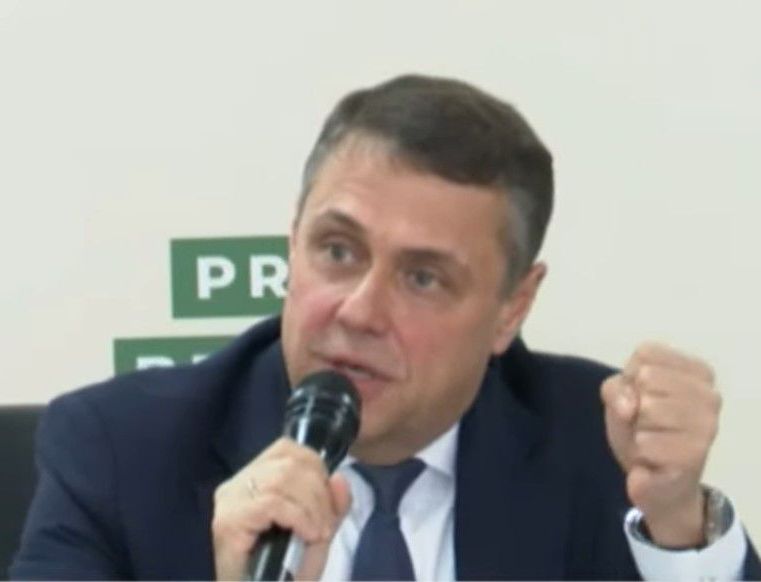
Speaking at a press briefing at the Ministry of Finance on Friday, May 15, IMF Mission Chief to Ghana, Reuben Atoyan said the IMF Executive Board is expected to consider Ghana’s PCI request by the end of July 2026, alongside the final review of the ECF arrangement.
“With the time frame for the PCI as explained is a 36-months PCI. We plan to take the request for PCI to the IMF Executive Board at the end of July at the same time with the final review on the ECF,” Atoyan stated.
“So, the both final review, ECF will be completed and new PCI will be initiated going forward and with 36 months, we hope to complete PCI sometime middle in 2029,” he added.
The proposed PCI arrangement will not provide direct bailout financing. Instead, it will focus on policy monitoring, technical assistance, institutional reforms and macroeconomic surveillance designed to sustain investor confidence after the current IMF programme ends.
Ghana’s IMF Exit Comes After Years of Economic Turmoil
The development represents a major milestone for the administration of President John Dramani Mahama, whose government says it inherited a programme that had “gone off track” by the end of 2024 before implementing corrective fiscal measures in 2025.
In a statement issued Friday, the government said aggressive fiscal consolidation, expenditure rationalisation and structural reforms helped restore macroeconomic stability and debt sustainability “ahead of schedule.”
The IMF itself previously acknowledged that Ghana’s programme performance deteriorated significantly at the end of 2024 due to election-related fiscal slippages, inflation pressures and reform delays.
According to IMF data, Ghana’s economy has since shown signs of recovery. Growth rebounded strongly in mining, agriculture, ICT, manufacturing and construction, while international reserves improved beyond programme targets.
The IMF also disclosed that Ghana’s external sector strengthened because of higher gold exports, remittance inflows and improved foreign exchange reserves.
Under the current ECF arrangement approved in May 2023, Ghana secured a $3 billion support package aimed at restoring debt sustainability after the country defaulted on most of its external debt obligations.
The programme came with painful reforms, including domestic debt restructuring, spending cuts, revenue mobilisation measures and tight monetary policies by the Bank of Ghana.
What the PCI Means for Ghana
Unlike the ECF bailout programme, the PCI is a non-financing arrangement reserved for countries that no longer need IMF loans but still want policy credibility and close economic supervision.
According to the IMF, the PCI helps countries “demonstrate commitment to a reform agenda” while signalling policy discipline to investors, lenders and credit rating agencies.
Ghanaian authorities believe the arrangement could help improve the country’s chances of regaining access to international capital markets and eventually restoring investment-grade ratings.
“The Government also expresses deep gratitude to its bilateral creditors, the Official Creditor Committee (OCC) and external and domestic investors for their collective sacrifice,” the government statement noted.
“Going forward, Ghana will engage with the IMF Policy Coordination Instrument (PCI).”
Economic analysts say the transition is symbolically important because it signals Ghana’s attempt to move from emergency financial rescue toward long-term economic stabilisation.
However, experts caution that exiting a bailout programme does not automatically end fiscal risks.
Debt Risks Still Loom Over Ghana’s Economy
Despite recent improvements, Ghana remains under intense fiscal pressure.
IMF projections show that although public debt ratios are expected to decline gradually through 2030, debt sustainability remains dependent on continued reforms, disciplined spending and successful restructuring agreements with external creditors.
The IMF noted that Ghana’s authorities are still finalising bilateral debt relief agreements under the G20 Common Framework and negotiating restructuring deals with commercial creditors.
The Fund also warned about risks from state-owned enterprises, especially in the energy sector.
“Forcefully addressing the challenges in the energy sector—including related to arrears—is critical to contain fiscal risks,” the IMF said during its fifth review assessment in December 2025.
Finance Minister Cassiel Ato Forson has repeatedly argued that sustaining reforms is critical to protecting the economic gains achieved under the IMF programme.
During the launch of the sixth review in April 2026, Forson described Ghana’s reform journey since the 2022 crisis as “transformative” but warned against complacency.
“Progress does not permit complacency,” he said.
Inflation, Cost of Living and Public Sentiment
While government officials highlight falling inflation and improving reserves, many Ghanaians continue to face severe cost-of-living pressures.
Some economic observers argue that headline macroeconomic indicators do not fully reflect conditions experienced by households and businesses.
Online discussions among Ghanaian economic commentators reveal mixed reactions to the IMF programme, with some praising fiscal discipline while others question the social cost of austerity measures.
The debate reflects a broader divide over the IMF’s long-standing role in African economies.
Critics argue that repeated IMF programmes have entrenched dependency and austerity, while supporters maintain that Ghana’s fiscal challenges stem primarily from domestic governance failures and weak public financial management.
The IMF has defended its programme in Ghana, insisting that reforms are necessary to restore confidence, reduce inflation and stabilise the cedi.
The Fund also praised the Bank of Ghana for tightening monetary policy and rebuilding reserves during the crisis period.
Investor Confidence and Credit Ratings at Stake
International investors are closely watching Ghana’s next steps after the bailout programme.
Global ratings agencies had sharply downgraded Ghana during the debt crisis, effectively shutting the country out of international bond markets.
However, the IMF recently indicated that progress on debt restructuring and fiscal reforms has already contributed to improvements in Ghana’s sovereign credit outlook.
Economists say the PCI could serve as a “policy anchor” that reassures investors that Ghana will not reverse reforms after the bailout ends.
The IMF expects Ghana to maintain fiscal discipline, improve tax administration, strengthen state-owned enterprises and sustain prudent monetary policies.
According to IMF projections, Ghana’s gross international reserves could rise steadily toward nearly $15 billion by 2030 if reforms remain on track.
A Defining Test for Ghana’s Economic Future
For Ghana, the proposed PCI arrangement may become the country’s most important economic credibility test since the debt crisis erupted in 2022.
Unlike the ECF bailout, there will be no direct IMF cash injections to cushion policy mistakes.
That means Ghana’s ability to maintain fiscal discipline, control inflation, manage debt obligations and restore investor trust will depend largely on domestic political commitment and institutional reforms.
The transition therefore represents both an achievement and a risk.
If successful, Ghana could gradually regain investor confidence, strengthen private-sector investment and restore sustainable growth without relying on another IMF bailout.
If reforms weaken, however, economists warn that the country could face renewed market pressures, financing difficulties and another cycle of debt distress.
For now, the IMF and Ghanaian authorities appear determined to present the PCI as evidence that the country is moving from economic rescue toward economic recovery.