

By Alex Ababio
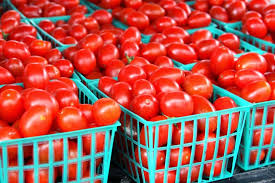
The Government of Ghana has initiated urgent diplomatic engagement with Burkina Faso following a sudden directive suspending the export of fresh tomatoes into Ghana—an action that has sent shockwaves through markets, households, and the broader agricultural value chain.
In a press release issued by the Ministry of Trade, Agribusiness and Industry, authorities confirmed that discussions would be held to address concerns surrounding the ban, which officially took effect on March 16.
But beyond the official statement lies a deeper story—one that exposes Ghana’s long-standing dependence on imported tomatoes, the fragility of regional trade under the Economic Community of West African States framework, and the persistent failure of local agricultural policies to close critical supply gaps.
Diplomatic Engagement Underway
According to the Ministry’s statement, the government’s immediate priority is to engage Burkinabè authorities to find a “mutually beneficial resolution” that safeguards trade relations while addressing the issues that triggered the restriction.
“The engagement aims to find a mutually beneficial resolution that safeguards trade relations between the two neighbouring countries while addressing the issues that prompted the restriction,” the statement noted.
Government officials emphasized their commitment to dialogue, underscoring the importance of maintaining stability in cross-border trade.
However, sources within Ghana’s agribusiness sector suggest the ban may not be arbitrary. Industry analysts point to a combination of domestic supply pressures in Burkina Faso, price controls, and efforts to stabilize local markets as potential triggers.
In recent years, Burkina Faso has periodically restricted exports of key agricultural commodities—including onions and cereals—during periods of domestic shortage or price volatility. Experts say tomatoes, a highly perishable crop with fluctuating yields, are particularly vulnerable to such policy swings.
A Lifeline Cut: Ghana’s Heavy Dependence on Burkinabè Tomatoes
For decades, Ghana has relied heavily on tomato imports from Burkina Faso, especially during off-season periods when local production drops sharply.
Data from agricultural trade observers and reports by the Food and Agriculture Organization indicate that Ghana imports tens of thousands of tonnes of fresh tomatoes annually, with Burkina Faso serving as one of its most consistent suppliers due to proximity, cost advantages, and established trade routes.
At major trading hubs such as Agbogbloshie Market and Aboabo Market, Burkinabè tomatoes dominate supply chains, often preferred by traders for their durability and pricing.
Traders interviewed in Kumasi described the ban as a “serious disruption.”
“We depend on Burkina tomatoes when local ones are scarce. If this continues, prices will go up immediately,” said a wholesale trader at Aboabo Market.
Within days of the directive, early signs of price increases began to emerge in parts of Accra and Kumasi, with retailers warning of sharper hikes if the situation persists.
Economic and Consumer Impact
Tomatoes are a staple ingredient in Ghanaian cuisine, used in everything from stews to soups. Any disruption in supply has immediate consequences for both households and food vendors.
Economists warn that the ban could contribute to short-term food inflation—an already sensitive issue given recent economic pressures.
A food systems analyst at the University of Ghana explained:
“This is not just about tomatoes. It reflects structural weaknesses in Ghana’s agricultural system. When one neighboring country’s policy decision can affect prices nationwide, it shows how vulnerable the system is.”
Small-scale food vendors, particularly those operating “chop bars” and street kitchens, are among the hardest hit. For them, rising tomato prices translate directly into reduced margins or higher food prices—both of which affect already strained consumers.
Policy Promises vs. Reality: The Local Production Gap
The government has reiterated its commitment to strengthening domestic production through initiatives such as “Feed Ghana” and “Feed the Industry.”
“These efforts are intended to boost output and ensure sufficient supply for the domestic market,” the Ministry stated.
Yet, agricultural experts argue that similar initiatives over the years—including Planting for Food and Jobs—have not fully resolved structural challenges in the tomato sector.
Key issues include:
Post-harvest losses: Up to 30–50% of tomatoes produced locally are lost due to poor storage and transportation.
Seasonal production cycles: Irrigation infrastructure remains limited, making year-round cultivation difficult.
Processing deficits: Many tomato processing factories operate below capacity or remain dormant, forcing reliance on imports.
One notable example is the Pwalugu and Wenchi tomato processing facilities, which have struggled with consistent raw material supply and operational sustainability.
An agribusiness consultant based in Accra noted:
“We have the land, we have the farmers, but we lack coordination across the value chain—from seed quality to storage to processing. Until that is fixed, these shocks will continue.”
Regional Trade Tensions and ECOWAS Implications
The export ban also raises broader questions about trade commitments under ECOWAS protocols, which promote the free movement of goods across member states.
While ECOWAS allows for temporary restrictions under specific conditions—such as food security concerns—frequent unilateral bans can undermine regional integration.
A trade policy expert familiar with ECOWAS frameworks explained:
“These kinds of restrictions, if not managed carefully, can erode trust between member states. Ghana and Burkina Faso have historically enjoyed strong trade ties, so resolving this quickly is critical.”
Diplomatic observers note that Ghana’s measured response—prioritizing dialogue over retaliation—is consistent with its broader foreign policy approach within West Africa.
Government Calls for Calm
Meanwhile, the government has urged traders and stakeholders in the tomato sector to remain calm as diplomatic efforts continue.
“Traders and stakeholders… have been urged to remain calm as diplomatic efforts continue to resolve the matter amicably,” the statement emphasized.
Behind the scenes, officials are reportedly exploring contingency measures, including boosting local supply chains and considering alternative import sources such as northern Ghana, Mali, and even greenhouse producers within the country.
The Way Forward: Lessons from a Recurring Crisis
This is not the first time Ghana has faced disruptions in tomato supply due to external factors. Similar episodes in the past have triggered price spikes, public outcry, and renewed policy discussions—often with limited long-term change.
Experts say the current crisis should serve as a wake-up call.
Key recommendations emerging from industry stakeholders include:
Investment in irrigation systems to support all-season farming
Revitalization of processing factories to absorb excess production during peak seasons
Improved storage and transportation infrastructure to reduce losses
Strengthened farmer cooperatives to stabilize supply chains
There is also growing interest in greenhouse tomato farming, which, while more capital-intensive, offers greater control over production cycles and yields.
Conclusion: Beyond Diplomacy
While the government’s diplomatic engagement with Burkina Faso may provide short-term relief, the deeper challenge lies within Ghana’s own agricultural system.
The tomato export ban has once again exposed a critical vulnerability—one that sits at the intersection of food security, economic resilience, and regional cooperation.
As negotiations continue, the outcome will not only determine the immediate availability and price of tomatoes but also signal whether Ghana is ready to confront the structural issues that have made such crises a recurring feature of its food system.
For now, consumers, traders, and policymakers alike are watching closely—hoping that this latest disruption leads not just to a resolution, but to lasting reform.