

By Alex Ababio
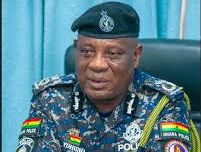
The Inspector-General of Police (IGP), Christian Tetteh Yohuno, has publicly addressed mounting controversy surrounding his decision to withdraw the Ghana Police Service’s Special Operations Taskforce—popularly known as the “Black Maria”—from the Tamale metropolis in Ghana’s Northern Region.
The move has sparked protests, allegations of political interference, and broader questions about the sustainability of Ghana’s special security operations aimed at curbing organized crime and illicit drug networks.
For the first time since the controversy erupted, the IGP has defended the decision, insisting that the elite police unit was never intended to remain permanently in one location.
The IGP Breaks His Silence
Welcoming members of the Special Operations Taskforce at the headquarters of the Ghana Police Service in Accra on March 9, 2026, the IGP addressed speculation surrounding the withdrawal.
He dismissed suggestions that the decision was influenced by political pressure and emphasized that the operational design of the unit requires mobility across regions where security threats emerge.
The team, officially known as the Special Operations Taskforce but popularly referred to as the “Black Maria,” has been deployed in several regions to respond to specific crime waves.
“When you are leaving, people don’t want you to leave,” the IGP said while addressing the officers.
“It started like Dr Gariba said, we were in the Western Region, where there was a need to contain the situation at Akinta Mines over there. After discharging your duties, you went to Ashanti South—Diaso and all the rest—and over there, it was fabulous.
“When I was withdrawing you, it was a problem. Why did I withdraw you, people from there? But you are not for one place. When you say a special team, it doesn’t become a permanent team. You go somewhere, you perform your duties, leave the rest for the local police to do, and then you move on to another place,” he explained.
His comments come amid escalating public debate in Tamale over the impact of the unit’s departure.
The Operation That Changed Tamale
The Special Operations Taskforce arrived in Tamale in November 2025 following rising security concerns in the city. Police authorities had cited increasing incidents of armed robbery, drug trafficking, and attacks on traders and mobile money vendors.
The deployment formed part of a broader security strategy initiated after John Dramani Mahama appointed Yohuno as IGP in March 2025, emphasizing proactive and intelligence-driven policing to tackle emerging crime trends.
The taskforce—made up of about 50 officers and equipped with specialized vehicles and intelligence capabilities—conducted targeted operations across Tamale and surrounding communities.
Within months, authorities reported significant enforcement outcomes.
According to regional police data, the operation generated more than GH¢938,800 in court fines, led to prison sentences for nine offenders, and dismantled multiple drug dens across the metropolis.
Residents in several neighbourhoods credited the unit with visibly reducing open drug dealing and street-level crime.
Youth Protest the Withdrawal
But the decision to redeploy the taskforce in early March triggered immediate backlash.
Hundreds of residents—many of them youth on motorcycles—converged on the Global Dream Hotel in Tamale where members of the team had been lodging, urging them not to leave the city.
Some demonstrators even attempted to physically block the officers from departing.
Residents in Tamale were up in arms after news broke of the withdrawal of the Black Maria from their community.
Most of the residents who were making allegations of political interference at some point even blocked their roads to prevent the team from leaving.
Protesters later marched through parts of the city and visited the homes of political leaders, including the Tamale Mayor, demanding intervention to reverse the decision.
Community leaders said the demonstrations reflected fears that criminal networks could quickly re-emerge.
“There is no doubt that the presence of this team helped curb the spread of drugs among our youth,” one protester told reporters during the demonstrations.
“Their withdrawal is worrying, and we call on authorities to reconsider this decision.”
Allegations of Political Interference
The withdrawal quickly became entangled in political controversy.
Rumors circulating on social media alleged that powerful political figures in the Northern Region had pressured authorities to remove the taskforce after some individuals complained about its aggressive operations.
Some commentators even pointed fingers at Tamale South Member of Parliament and Education Minister Haruna Iddrisu.
The allegations prompted a swift response from the Haruna Institute, a group associated with the minister.
“We wish to state, categorically and for the record, that the Hon. Haruna Iddrisu holds no advisory role to the Inspector-General of Police (IGP), nor is he a member of the Police Council,” the group said in a statement.
“He is, therefore, not clothed with any authority, statutory or otherwise, to direct or influence the IGP in the execution of his official duties. Any suggestion to the contrary is false, malicious, and intended to mislead the public.”
Despite the denial, the speculation highlighted deep mistrust among sections of the public regarding political influence over security operations.
Police Assure Residents of Continued Security
Following the protests, the Northern Regional Police Command moved quickly to calm tensions.
Northern Regional Police Commander DCOP Wisdom Lavoe assured residents that the withdrawal of the special unit would not create a security vacuum.
“We will never relent in that effort and no vacuum will be created,” Lavoe said.
“We are going to take over and we are assuring the public that they can go on with their normal duties without any fear.”
He warned criminals who might see the withdrawal as an opportunity to regroup that the police would intensify operations against armed robbery and illicit drug networks.
The command also announced the formation of internal operational teams to sustain the crackdown on drug trafficking and violent crime in Tamale.
Special Operations Units: A National Strategy
Security analysts say the controversy surrounding the Black Maria withdrawal reflects a broader challenge facing Ghana’s policing strategy.
Special operations teams are often deployed temporarily to stabilize high-risk areas before handing control back to local police commands.
Such deployments are common in countries facing localized crime waves, where national-level units intervene with enhanced resources, intelligence, and manpower.
However, the strategy can create public dependency.
“When communities see rapid improvements during special operations, they sometimes fear those gains will disappear once the unit leaves,” said a security analyst at the Kofi Annan International Peacekeeping Training Centre.
“The real test is whether local commands can sustain the progress.”
In Tamale, that question remains unresolved.
While some residents insist the regional police command can maintain security, others worry that the withdrawal of the elite unit could embolden criminal groups involved in drug trafficking and robbery.
A Deeper Debate About Policing
The debate has also sparked conversations about policing methods.
While many residents praised the taskforce’s effectiveness, critics accused some members of the unit of using heavy-handed tactics during raids and arrests.
Human rights advocates have urged the police to balance aggressive enforcement with respect for civil liberties.
The Ghana Police Service has not publicly responded to those allegations but has maintained that all operations were conducted within the law.
The Road Ahead
For the IGP, the Tamale controversy represents one of the most visible tests of his leadership since assuming office in 2025.
As Ghana confronts rising concerns over organized crime, cybercrime, and illicit drug trafficking, policing strategies increasingly rely on mobile, intelligence-driven taskforces capable of rapid deployment across the country.
Yet the reaction in Tamale demonstrates that such operations carry political and social consequences.
For many residents, the departure of the Black Maria unit has left lingering uncertainty.
Whether the regional police command can sustain the security gains achieved during the four-month operation will likely determine whether the IGP’s strategy of rotating special taskforces remains viable in the long term.
For now, the streets of Tamale remain calm—but the debate over policing, politics, and public trust in Ghana’s security institutions is far from over.