

By Alex Ababio
Fresh diplomatic tensions between Ghana and South Africa have reignited scrutiny over migrant safety, regional governance, and the persistent political economy of xenophobic violence, after disturbing viral videos appeared to show Ghanaian nationals being assaulted in South Africa.
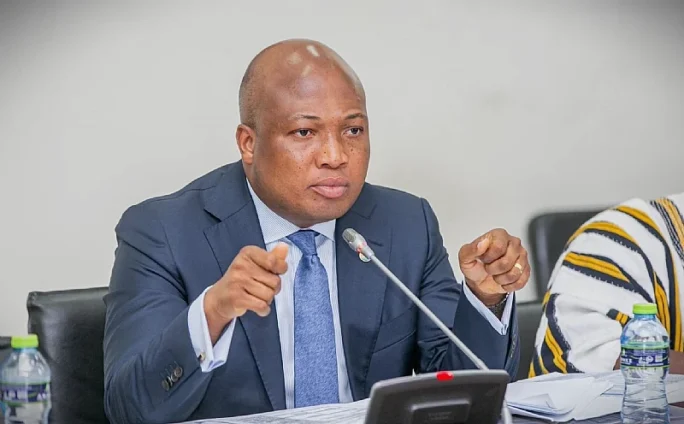
Ghana’s Foreign Affairs Minister, Samuel Okudzeto Ablakwa, confirmed he held urgent talks with South Africa’s Minister for International Relations and Cooperation, Ronald Lamola, after the videos triggered outrage across the continent.
“I called him on the trending videos about Ghanaians coming under extremely disturbing xenophobic attacks in South Africa,” Ablakwa said in a statement on April 22, preserving a tone of urgency while signaling the matter had moved beyond social media alarm into formal diplomacy.
According to Ablakwa, Lamola expressed empathy for victims and pledged “full-scale investigations” into the incidents. Pretoria, he disclosed, was also scheduled to brief African ambassadors as concerns escalated.
But beneath the diplomatic reassurances lies a deeper question: are these isolated incidents, or symptoms of a recurring structural problem South Africa has struggled to resolve for years?
Diplomatic Response Moves Fast, But Questions Persist
Ablakwa said Ghana’s High Commissioner in South Africa, Benjamin Quarshie, had already located the principal victim seen in one of the viral videos and was offering consular support.
“I am gladdened that so far colleagues in our diplomatic mission have located the main victim in the viral video and are offering consular assistance. He is doing very well,” he stated.
He further assured that no Ghanaian fatalities had been recorded.
“No Ghanaian life has been lost. We urge calm and confidence in our collective capacity to protect Ghanaians.”
The Mahama administration, he stressed, remains “uncompromising” in protecting Ghanaians abroad.
Those statements may have calmed immediate fears, but analysts say they do not answer the larger accountability gap around repeated anti-migrant violence.
South Africa has experienced recurring outbreaks of xenophobic attacks since at least 2008, with major episodes in 2015 and 2019 drawing condemnation from across Africa. Human rights monitors say anti-immigrant vigilantism has continued in different forms, even when large-scale mob violence recedes.
Experts Point to Structural Drivers, Not Spontaneous Rage
Researchers argue such incidents are often mischaracterized as sudden eruptions rather than products of deeper socio-economic pressures.
Nixon S. Chekenya, political scientist at Texas Tech University and author of Migrants and Xenophobic Attacks in South Africa: Theory and Evidence, argues xenophobic violence is often linked to ethnic polarization, economic insecurity and weak institutional responses. His study, drawing on Xenowatch data, found hostility toward migrants often grows where economic grievances are politicized.
That matters in present circumstances.
South Africa continues to face severe unemployment pressures, particularly among youth, with migration often drawn into political rhetoric over jobs, housing and informal trade. Analysts have long warned that migrants can become convenient scapegoats during economic distress.
Human Rights Watch, in its 2026 South Africa country assessment, also flagged continuing threats against migrants, including actions by vigilante-style groups obstructing access to services.
For critics, this raises uncomfortable questions: if patterns are known, why do preventive mechanisms still appear weak?
Viral Videos and Verification Challenges
The latest controversy also exposes another modern fault line — the speed at which viral footage can inflame diplomatic crises before facts are fully established.
Authorities in both Accra and Pretoria have emphasized investigations are ongoing, suggesting governments are still verifying the full scope of what occurred.
That caution is significant.
While the videos prompted outrage, experts on conflict reporting often warn that viral incidents can represent both genuine abuses and fragmented snapshots that require corroboration.
Yet even where individual videos demand verification, the broader fear they trigger is rooted in a documented history.
That historical memory is precisely what appears to have accelerated Ghana’s diplomatic response.
Ghana’s Response Carries Pan-African Stakes
Ablakwa framed the crisis not only as a consular issue but as a test of African solidarity.
“May these regrettable incidents never quench our Pan-African love and solidarity for each other,” he said. “The overwhelming majority of Africans are united and share an unbreakable bond — we shall not be divided by the hatred of a few fringe elements.”
That language carries political weight.
Ghana and South Africa have long positioned themselves as continental heavyweights, often collaborating on African Union priorities, trade diplomacy and migration discussions.
A deterioration in public sentiment between citizens of both countries would carry implications beyond bilateral relations.
Past xenophobic incidents involving Nigerian, Zimbabwean and Mozambican nationals have triggered diplomatic protests and calls for stronger African Union intervention. Critics have argued continental institutions have often condemned attacks without building enforceable early-warning protections.
This latest episode could renew those demands.
Security, Investment and Economic Fallout
There is also an underexplored economic angle.
Repeated xenophobia scares can affect diaspora remittances, labor mobility, tourism confidence and investor perceptions.
South Africa remains one of Africa’s largest investment destinations, while Ghanaian traders and professionals form part of regional commerce networks.
Security instability involving migrants can undermine those flows.
Some analysts argue the issue is no longer simply humanitarian but increasingly economic governance.
If migrants feel unsafe, regional integration ambitions under the African Continental Free Trade Area could face practical friction.
That concern may explain why Ghana moved unusually quickly at ministerial level.
What Pretoria Does Next Will Matter
South Africa’s pledge to brief African ambassadors could become a critical test.
Will it produce concrete protection measures, arrests where warranted, or policy interventions beyond routine condemnations?
That is where previous responses have often drawn criticism.
Authorities have frequently promised investigations after xenophobic episodes, but rights advocates have questioned whether prosecutions and deterrence have matched the scale of recurrence.
This is why some observers say the issue is less about whether South Africa condemns xenophobia — it routinely does — and more whether institutional responses have broken the cycle.
For now, Ghana appears to be balancing public reassurance with diplomatic pressure.
A Crisis Beyond One Viral Moment
The immediate facts remain: a Ghanaian victim identified in the footage has reportedly been reached by diplomats, no deaths have been confirmed, and both governments say they are engaged.
But the deeper story is larger than one viral incident.
It is about whether Africa’s most ambitious integration project can coexist with periodic anti-migrant violence.
It is about whether economic frustrations continue to be redirected toward vulnerable outsiders.
And it is about whether governments can move from crisis management to prevention.
For Ghana, the response appears clear: protect citizens, press Pretoria, and keep the issue within a Pan-African rather than retaliatory frame.
For South Africa, the challenge may be harder — proving this is not another familiar cycle of outrage, assurances and recurrence.
Because if the latest images have revived old fears, they have also revived an old demand:
Not only investigations after attacks, but accountability before the next one.