

By Alex Ababio & Nana Nsiah Foster
At the laboratories of the Kwame Nkrumah University of Science and Technology (KNUST) KEEP, in Kumasi, a quiet technological revolution is unfolding—one that could change the way rare diseases are detected and treated not only in Ghana but across the world.
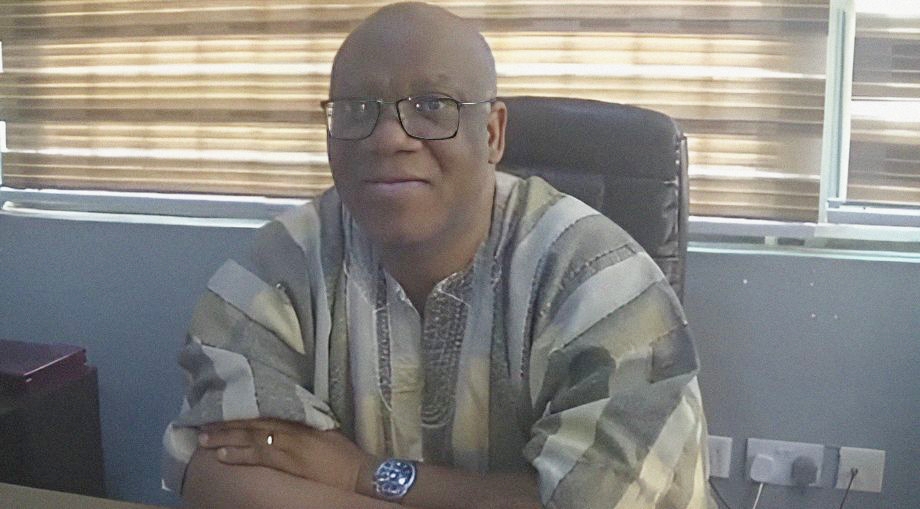
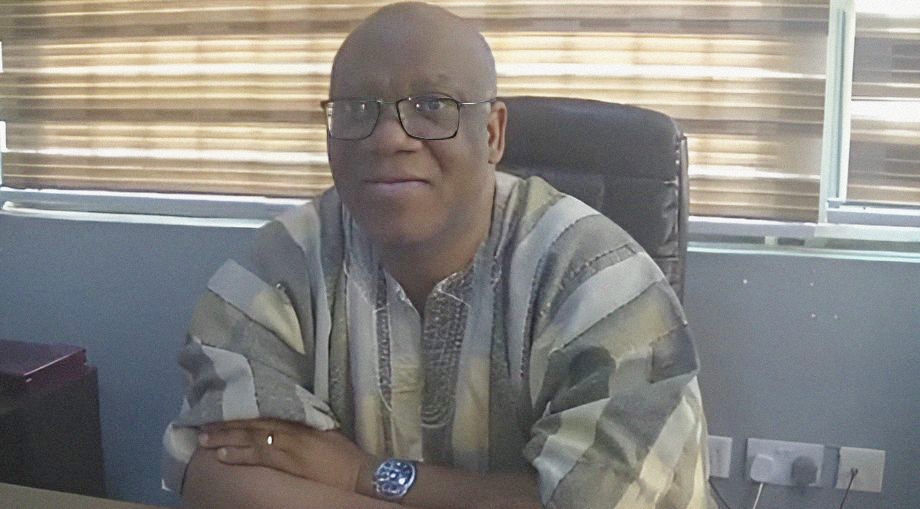
At the center of the effort is the Responsible Artificial Intelligence Lab (RAIL), led by Director of the KNUST Office of Grants and Research
Professor Jerry John Kponyo. The multidisciplinary lab is developing an AI-driven system designed to identify rare genetic diseases earlier and help doctors tailor treatment to individual patients.
For many families, especially those who have lost children to unexplained illnesses, such breakthroughs could mean the difference between life and death.
A Hidden Health Crisis in Ghana
Rare diseases often remain invisible in public health discussions. Yet experts say the problem may be far more widespread than commonly assumed.
According to
researchers at RAIL, the number of people living with rare diseases in Ghana may be around three million, nearly 10 percent of the country’s population.
“Children are born and then they exhibit certain symptoms and the doctors are not very familiar with it,” Professor Kponyo
Who is also
telecommunications engineer and artificial intelligence researcher
told Ghanaian Watch in an interview. “As a result of that, the children die.”
The challenge is not unique to Ghana. Globally, scientists estimate that between 5,000 and 8,000 rare diseases have been identified, yet treatment plans exist for only about 400 of them. Many of these conditions are genetic and often go undiagnosed because doctors encounter them so infrequently.
In many hospitals across Africa, the lack of specialized diagnostic tools means doctors must treat visible symptoms without identifying the underlying cause.
For newborns, the consequences can be devastating.
“What we have tried to do,” Prof. Kponyo explained, “is to gather data to try to understand such situations so that immediately there are symptoms that are showing up with what we have developed, doctors are now able to preempt that this is the situation.”
AI Meets Medicine
The Responsible Artificial Intelligence Lab at KNUST was established as part of a broader effort to harness artificial intelligence to address Africa’s development challenges. Supported by international partners including IDRC, GIZ and other research institutions, the lab focuses on applying AI to sectors such as agriculture, healthcare, and energy.
Professor Kponyo says the lab’s philosophy is simple: innovation must translate into real-world impact.
“At the Responsible Artificial Intelligence Lab, our major objective is to ensure that the innovative solutions that we have developed are benefiting a lot of people,” he said. “There is no point in developing a solution if nobody is using it.”
The lab’s rare disease initiative—known as “Care for Rare Disease”—is part of this mission.
“We want to partner with the Ministry of Health and the Ghana Health Service with reference to issues relating rare diseases,” Kponyo noted. “We will ensure that many more people can benefit from it, even beyond the shores of Ghana.”
How the Technology Works
At the heart of the project is an AI model designed to analyze genetic and medical data to identify disease-causing mutations.
Musah Ibrahim Ali, a research assistant at the lab and MSc Data Science student, explained how the system works.
“So what our model does is analyse all the patient’s data on their medical records or history if it available and then along with what we get from the labs,” he said.

Research Assistant
Msc Deta Science Student
RAIL
The system aggregates multiple sources of information:
hospital medical records
laboratory genomic data
environmental and lifestyle factors
international medical databases
The AI model then searches for patterns in the patient’s genes.
“One thing about rare conditions is that it usually is caused by a single gene,” Ali explained. “Once you are able to identify that particular gene causing the patient to be sick then we tailor treatment plan for the specific gene that is making them sick.”
Genetic medicine—often referred to as precision medicine—has become a growing field globally. Researchers say individuals with the same disease may respond differently to treatment depending on their genetic makeup.
“Basically what that means is that if you have two patients suffering from the same condition, one may respond to treatment and the other will not respond to treatment due to the fact that they do not have the same genomic makeup,” Kponyo said.
The Global Data Advantage
To strengthen diagnoses, the RAIL team compares Ghanaian patient data with international datasets.
Ali said the system connects to global research platforms where patients voluntarily share genetic data.
“There is approximately 29 million people who have uploaded and shared their data on the platform,” he explained.
Once the system identifies the genetic mutation responsible for a disease, the AI compares it with similar cases worldwide.
“After we identify the gene that is making them sick we compare it to the global pool and see the number of people who are affected by such conditions and if there is any clinical treatment plan that are in place and the outcome for such patients,” he said.
That information helps doctors design a more informed treatment strategy.
Beyond Single-Cell Analysis
Traditional genomic testing often analyzes only one cell sample from a patient. While useful, researchers say it can sometimes miss the broader biological picture.
“If we take one cell we have about millions of genes that you could extract from,” Ali explained.
“In genomic sequencing in the labs in hospitals they isolate just one cell and analyse it. But then it doesn’t really give you the bigger picture of what is happening with the person.”
To address this limitation, the RAIL system uses high-performance computing to analyze multiple cells simultaneously.
“This process requires more computational power,” Ali said.
By studying genetic patterns across many cells, the AI system can detect subtle variations that might otherwise be missed.
“If there is a bigger picture there is to see we are able to figure it out rather than just analysing just one cell,” he added.
A Mother’s Tragedy—and a Scientific Breakthrough
The technology’s potential impact became clear during a case handled by the research team.
“One of the patients that we identified has had four of her babies die,” Ali recounted.
Each child died shortly after birth.
Doctors initially believed the babies were suffering from convulsions. But the underlying cause remained unknown.
“The symptoms of the diseases manifested in the babies usually prevented symptoms of convulsions,” he said. “So the doctors were treating the convulsions instead of finding the root cause of the condition.”
The tragedy continued until researchers investigated the genetic history of the mother.
“So we did the initial testing and realised her condition,” Ali explained.
The problem turned out to be linked to breastfeeding in combination with the mother’s genetic condition.
“We advised that the next baby she had she didn’t breastfeed and the child survived,” he said.
The case demonstrated how genetic insights could transform medical outcomes.
Ghana’s Growing AI Ecosystem
The work at RAIL comes at a time when Ghana is investing heavily in artificial intelligence and digital innovation.
KNUST is playing a major role in shaping the country’s national AI strategy, bringing together researchers, policymakers, and industry leaders to define ethical and inclusive technology frameworks.
Professor Kponyo himself is widely regarded as one of the architects of Ghana’s emerging AI ecosystem.
He has led multiple research initiatives, including the KNUST Engineering Education Project and the AI for Sustainable Development program, which focuses on applying artificial intelligence to healthcare, agriculture, energy, and climate challenges.
With more than 80 academic publications and international research collaborations, he has helped position Ghana as an emerging hub for responsible AI research.
The Policy Gap
Despite these technological advances, experts warn that Ghana still lacks a comprehensive national framework for managing rare diseases.
Globally, many countries have established rare disease registries and dedicated treatment programs. In Ghana, however, such systems remain limited.
Without structured data and sustained funding, doctors often struggle to diagnose conditions that appear only once in thousands—or even millions—of patients.
Kponyo believes technology could help close this gap.
“And so developing a tool that can save the lives of 10% of the population is something that is worth pursuing,” he said.
But he stressed that innovation alone is not enough.
“We want to make an appeal to the relevant authorities for us to invest in situations like this so that at the end of the day many more people can benefit from it.”
The Road Ahead
Researchers say the next step is scaling the system for nationwide clinical use.
That will require collaboration with hospitals, genetic laboratories, and government health agencies.
It will also require significant investment in data infrastructure, genomic testing facilities, and AI computing capacity.
Yet the potential payoff could be enormous.
Rare diseases often take years to diagnose, and patients frequently undergo multiple misdiagnoses before receiving proper treatment.
By shortening this diagnostic timeline, AI tools could dramatically improve survival rates.
A New Frontier for African Science
For decades, much of the world’s genetic research has focused on populations in Europe and North America.
African scientists say that must change.
Africa contains the most genetically diverse populations on earth, yet remains one of the least represented regions in global genomic datasets.
The work at RAIL represents a step toward correcting that imbalance.
By combining artificial intelligence, genomic research, and local medical knowledge, Ghanaian scientists are building tools designed specifically for African health systems.
For families who have lost children to mysterious illnesses, the stakes could not be higher.
And as Professor Kponyo sees it, the mission is clear.
“Rare disease is actually one of the things that we’ve ignored,” he said. “But we actually need to pay attention to it.”
If the technology succeeds, the lab’s research could mark a turning point—not only for Ghana’s healthcare system, but for the global fight against rare diseases.