

News Desk Report
When firefighters forced their way into a modest flat on Haines Way in Watford, Hertfordshire, in October 2024, they were responding to what initially appeared to be a routine domestic fire. But what they uncovered went far beyond a kitchen accident. Inside the premises of 62-year-old Ghanaian businessman Stephen Akuoko, authorities discovered a disturbing operation—one that has since raised serious questions about food safety enforcement, migrant entrepreneurship pressures, and consumer protection in the United Kingdom.
Akuoko, who operated under the name Tribal Foods, has now been sentenced to two years in prison after pleading guilty to food hygiene offences. In addition, he has been banned for five years from running any food business and ordered to pay £2,500 in costs following proceedings at St Albans Crown Court.
A Shocking Discovery
According to details reported by The Telegraph on April 7, 2026, Akuoko had been supplying ready-made meals to supermarkets and local corner shops across parts of Hertfordshire for more than three years. His operation, however, was far from compliant with basic hygiene standards.
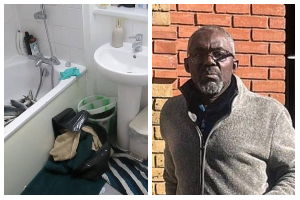
Firefighters responding to the blaze—reportedly triggered when a wok burst into flames—stumbled upon large quantities of fish, particularly mackerel, stored in highly unsanitary conditions. Some of the fish were found in the bathtub, while others were placed directly on the bathroom floor, dangerously close to the toilet.
This discovery became a turning point in an investigation that local environmental health officers had struggled to advance.
Evading Inspection
Officials from the local council’s environmental health team had reportedly been monitoring Akuoko’s activities for some time. However, gaining access to inspect the premises proved difficult. This reflects a broader challenge faced by enforcement agencies in the UK—particularly when dealing with informal or home-based food businesses operating under the radar.
The UK’s Food Standards Agency (FSA) requires that all food businesses be registered with local authorities and adhere to strict hygiene standards under the Food Safety Act 1990 and related regulations. These include proper storage, separation of raw and cooked foods, and maintaining sanitary preparation environments.
In Akuoko’s case, authorities concluded that these standards were not only ignored but grossly violated.
The Courtroom Reckoning
At St Albans Magistrates’ Court on February 11, 2026, Akuoko pleaded guilty to two food safety offences. His sentencing followed weeks later at the Crown Court, where Judge Francis Sheridan delivered a scathing assessment of his actions.
“Your little business got bigger than you could handle, and you resorted to frankly disgusting practices … fish on the floor of the bathroom, fish in the bathtub and then you cooked them and sold them,” the judge said.
He further warned of the potentially deadly consequences of such negligence:
“You must realise that food poisoning can have very serious consequences, even death and if that had happened, you would be facing manslaughter charges.”
The court’s decision to impose both a custodial sentence and a business ban underscores the seriousness with which UK authorities treat breaches that endanger public health.
Public Health Implications
Food safety experts consistently warn that improper storage of fish—especially in environments exposed to bacteria such as bathrooms—can lead to contamination with pathogens like Salmonella, Listeria, and E. coli. These microorganisms can cause severe illness, particularly among vulnerable populations including children, the elderly, and individuals with weakened immune systems.
According to guidance from the National Health Service (NHS), food poisoning can result in symptoms ranging from vomiting and diarrhoea to life-threatening complications such as dehydration and sepsis.
While no confirmed cases of illness linked directly to Akuoko’s products have been publicly reported, the court emphasized the “potential risk to public health” as a key factor in the prosecution.
A Wider Regulatory Challenge
Akuoko’s case highlights a persistent issue within the UK’s food industry: the difficulty of monitoring small-scale or informal food operations. While large manufacturers are subject to regular inspections and audits, smaller operators—particularly those working from private residences—can sometimes evade scrutiny.
Data from the Food Standards Agency indicates that local authorities are responsible for inspecting hundreds of thousands of food businesses across the UK, often with limited resources. Environmental health officers must prioritize high-risk establishments, which can leave gaps in oversight.
Industry analysts have pointed out that enforcement becomes even more complex when businesses operate without proper registration or deliberately obstruct inspections—as was reportedly the case here.
Migrant Entrepreneurship and Informal Economies
Akuoko’s story also touches on a sensitive but important dimension: the role of migrant entrepreneurs in the UK’s food economy. Many immigrants, including Ghanaians, have built successful catering and food supply businesses, contributing significantly to local economies and cultural diversity.
However, experts note that barriers such as limited access to capital, regulatory knowledge gaps, and high operating costs can push some entrepreneurs into informal or non-compliant practices.
Research from UK-based business support organizations has shown that small ethnic minority-owned businesses are more likely to operate from home kitchens, particularly during early stages. While many comply fully with regulations, others may struggle to meet standards due to financial or logistical constraints.
That said, public health officials stress that such challenges cannot justify violations that put consumers at risk.
The Role of Local Authorities
The council involved in prosecuting Akuoko emphasized that the decision was based on three key factors: the severity of the hygiene breaches, his lack of cooperation during the investigation, and the potential danger posed to the public.
Local councils across the UK have statutory powers to prosecute under food safety legislation, and recent years have seen increased enforcement actions against non-compliant operators.
Food hygiene ratings—publicly displayed scores ranging from 0 to 5—are one of the primary tools used to inform consumers and encourage compliance. However, businesses operating outside the formal system often bypass this mechanism entirely.
Lessons for Consumers
For consumers, the case serves as a reminder of the importance of vigilance when purchasing ready-made meals, particularly from lesser-known suppliers. Experts recommend checking food hygiene ratings through official council or FSA platforms and being cautious about unusually low prices or unclear sourcing.
Transparency, traceability, and proper labeling are key indicators of a legitimate food business.
A Cautionary Tale
For the Ghanaian diaspora and broader African entrepreneurial community in the UK, the case of Stephen Akuoko is likely to resonate deeply. It underscores both the opportunities and responsibilities that come with operating within a highly regulated food industry.
While many Ghanaian-owned food businesses in the UK maintain high standards and strong reputations, this incident risks casting a shadow—making compliance and accountability even more critical.
Conclusion
The fall of Stephen Akuoko from food supplier to convicted offender is not just a story of individual misconduct. It is a reflection of systemic challenges—regulatory gaps, enforcement limitations, and the pressures facing small-scale entrepreneurs.
Yet, as the court made clear, the line between survival and endangerment cannot be crossed.
In the words of Judge Francis Sheridan, the consequences of such actions could have been far worse. That they were not may be a matter of chance—but the legal and public health systems exist precisely to ensure that chance is never the last line of defense.
As authorities continue to strengthen oversight and consumers demand higher standards, cases like this serve as a stark warning: in the food business, there is no room for compromise when it comes to safety.