

By Alex Ababio & Nana Nsiah Foster
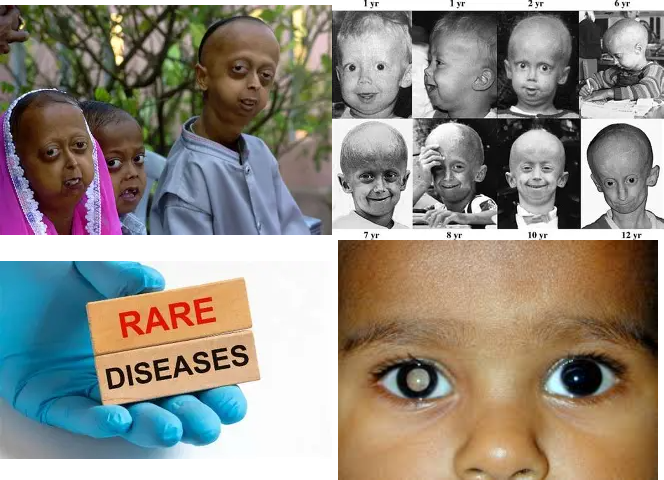
For many Ghanaian families, the search for answers to unexplained illnesses often begins with a troubling symptom and ends in a maze of uncertainty. Health experts say the country’s limited diagnostic infrastructure, weak research systems, and lack of widespread genetic testing continue to leave many rare diseases hidden, misdiagnosed, or detected too late. Leading optometrist Dr Samuel Tenagyei warns that this growing challenge demands urgent national investment in medical research. He points to conditions such as Retinoblastoma—a rare and aggressive eye cancer that primarily affects children under five—as a stark example of how gaps in research and diagnostic capacity are undermining early detection and effective treatment in Ghana’s healthcare system.
In an interview with Ghanaian Watch to mark Rare Disease Day, observed worldwide on February 28, Dr Samuel Tenagyei strongly advocated increased investment in medical research and closer collaboration among clinicians, academic institutions, and government agencies to improve the understanding and diagnosis of rare diseases in Ghana.
He cautioned that many of these conditions go undiagnosed for years because hospitals lack advanced diagnostic equipment, reliable data systems, and genetic screening tools. While the symptoms of retinoblastoma are often recognizable to trained practitioners, he noted that managing the disease becomes extremely difficult when diagnosis is delayed. Without sustained investment in research, laboratory infrastructure, and genomic medicine, he said, Ghana risks leaving thousands of patients trapped in a cycle of misdiagnosis, emotional distress, and financial hardship as families struggle to find answers in a health system still trying to keep pace with the complex realities of rare diseases.
“As an optometrist, the rare eye condition which is retinoblastoma—cancer of the eye—normally affects children below five years old,” he explained in an interview with Ghanaian Watch.
While its symptoms are well documented in medical literature, diagnosing and managing the disease within Ghana’s health system remains deeply challenging.
A Childhood Cancer Few Are Prepared For
Retinoblastoma is one of the most common eye cancers in children globally. Medical researchers estimate that roughly one child in 15,000 to 20,000 births worldwide develops the disease. Early detection can significantly improve survival and vision outcomes, but delayed diagnosis can be fatal.
According to Dr Tenagyei, the symptoms are often recognizable to trained professionals.
“Retinoblastoma symptoms are so classical that it is not difficult to diagnose,” he said.
Yet diagnosis is only the beginning of the struggle.
“It is difficult to manage because it’s a cancer and affects a child. If you are a practitioner managing cancer, you will see how harsh the issues really are. Most of the time the prognosis is not good.”
By prognosis, he explained, clinicians refer to the likelihood that treatment will restore vision or save a child’s life.
“You don’t have a high percentage of restoring vision or even saving lives,” he added.
Across many parts of sub-Saharan Africa, including Ghana, late detection dramatically worsens outcomes. In countries with advanced medical infrastructure, survival rates for retinoblastoma exceed 95 percent when detected early. But in lower-resource health systems, survival rates can fall dramatically due to delayed diagnosis and limited treatment capacity.
The Diagnostic Gap in Ghana’s Health System
Experts say the real crisis extends far beyond retinoblastoma. Ghana’s healthcare system faces structural limitations that make identifying rare diseases particularly difficult.
“In our health sector in Ghana, there are so many rare conditions that people experience that go for a very long time undiagnosed,” Dr Tenagyei said.
He attributes this gap to a lack of diagnostic infrastructure, research data, and specialized training.
“As a nation we don’t have state-of-the-art medical equipment, diagnostic materials, and even data that will put people on alert that these symptoms or differential diagnosis might push you towards considering a very rare condition.”
As a result, many cases remain medical mysteries.
“Most of the time it goes undiagnosed or is seen as ‘cause unknown,’” he said.
This diagnostic gap mirrors broader concerns raised by the World Health Organization, which has repeatedly warned that rare diseases are significantly underdiagnosed in low- and middle-income countries due to limited laboratory capacity and lack of specialized clinicians.
Globally, scientists estimate that more than 300 million people live with rare diseases, according to international health organizations.
The Role of Parents in Early Detection
Because early diagnosis is often difficult, health experts stress the importance of parental vigilance.
“Most times as a practitioner what I tell parents is that they have to be very aware of their child and how to notice things,” Dr Tenagyei said.
Small signs—unusual eye reflections, abnormal movement, persistent swelling, or unexplained developmental changes—can be critical warning signals.
“You have to be able to tell that this is different. This helps a lot so that you will be able to provide the necessary information to the practitioner.”
He also urged adults to take greater responsibility for understanding their own health.
“Be informed and educated on your own health and try to be observant,” he advised.
“Know that I am feeling this way and that this type of disease has these types of symptoms.”
According to him, open communication between patients and clinicians can significantly improve the chances of identifying rare diseases early.
The Psychological and Financial Toll
For many Ghanaian families, the journey to diagnosis is long and emotionally devastating.
Dr Tenagyei described the psychological trauma that often accompanies undiagnosed illnesses.
“Imagine if your relative is suffering from a condition that no one knows what will survive. Imagine the psychological trauma.”
Patients frequently move from hospital to hospital searching for answers.
“You’ve gone here. They think it is this. They’ve initiated treatment anyway. You’ve gone there. They do the same thing.”
The consequences extend beyond emotional distress.
“Imagine the amount of money, the fear, the loss of hope, the anxiety,” he said.
In many communities, unexplained illness often leads to spiritual interpretations.
“Of course, you know us—we will quickly resort to what? It’s a spiritual issue.”
This belief can delay medical treatment even further.
Financially, families can spend enormous sums on repeated consultations, laboratory tests, and medications.
“Financially too, it’s extremely draining,” Dr Tenagyei emphasized.
When Diagnosis Fails
Rare diseases often present symptoms that mimic more common illnesses, making them difficult to identify.
Dr Tenagyei cited a condition he referred to as MLS—a form of musculoskeletal degeneration.
“Imagine experiencing MLS, a musculoskeletal degeneration condition where you lose access to functions of your body,” he said.
Without proper diagnosis, patients can deteriorate rapidly.
“Imagine you’re experiencing that and no one is able to diagnose it.”
Cases like these highlight the urgent need for advanced diagnostic technology, including genetic testing.
The Missing Piece: Genetic Testing
One of the most significant gaps in Ghana’s health infrastructure is access to modern genetic diagnostics.
“If you have a diagnostic system that allows you to examine the genes and find out the presence or not of these conditions, it helps us become aware and put up policies and treatment procedures,” Dr Tenagyei explained.
Genetic analysis can identify inherited disorders and cancer predispositions before symptoms become severe.
“Genetic testing or diagnostic material that deals with gene analysis is very important,” he stressed.
“They represent an upgraded level of healthcare that we should aspire to get today.”
Countries with strong genomic medicine programs are increasingly using genetic screening to identify rare diseases early and guide personalized treatments.
Brain Drain and Infrastructure Challenges
Another major challenge is the shortage of specialized medical professionals.
Dr Tenagyei noted that Ghana must improve working conditions for health workers to prevent the migration of skilled professionals abroad.
“We need better facilities, more satellite facilities, more training, and better conditions for health workers so that we can stem the flow of talent outside our system—the popular brain drain.”
Improved infrastructure could also attract international specialists to work in Ghana.
“Every country benefits when specialists collaborate across borders,” he said.
Why Research Matters
Medical experts also point to the need for stronger research systems.
“We must inculcate research as a fundamental part of healthcare in Ghana,” Dr Tenagyei said.
He emphasized the importance of using hospital data to track disease patterns.
“The data that we get from hospitals must be managed appropriately and used to conduct research consistently so that we know how trends are going.”
This would strengthen Ghana’s epidemiological surveillance and guide public health policy.
He suggested financial incentives to encourage doctors to participate in research.
“Government grants or stipends can motivate practitioners who are interested in doing research with the data we currently have.”
Ultimately, prevention and early detection are far more cost-effective than treatment.
“Prevention is always less expensive than care,” he said.
Can Ghana’s Health Insurance System Cover Rare Diseases?
From a policy perspective, financing rare disease treatment poses a major challenge.
According to Muntaka Muniru, Ghana’s national insurance system already covers a large share of common illnesses.
“According to the Ghana Health Service and development partners, we have different kinds of diseases. Almost about 95 percent of diseases are covered,” he told Ghanaian Watch
The National Health Insurance Scheme currently funds many laboratory investigations and treatments.
However, rare diseases—especially cancers—can be extremely expensive
“There is something we call statistical analysis and actuarial projections,” Muniru explained.
Health insurance systems must balance coverage with financial sustainability.
“If we are not careful and bring in all these cancers and rare diseases at once, it is going to collapse the scheme.”
The Mahama Care Intervention
To address this gap, Ghana has introduced a complementary initiative known as the Ghana Medical Trust Fund.
The fund aims to support treatment for complex diseases not fully covered by national insurance.
“The Ghana Medical Trust Fund, popularly known as Mahama Care, has come to take care of other diseases that are not covered by the National Health Insurance,” Muniru said
Meanwhile, government policy is also emphasizing preventive healthcare.
Under John Dramani Mahama’s proposed Free Primary Health Care Initiative, basic medical services would be available without cost at local clinics.
“Why should people pay to access basic health care?” Muniru asked.
The goal is to detect illnesses earlier.
“It is the basic health care that we neglect that generates serious conditions requiring more expenditure.”
Primary health facilities such as CHPS compounds would become the first line of defense.
“You can walk into any health care facility to check your blood pressure or find out whether a headache is fatigue or a mild condition.”
If conditions worsen, secondary and tertiary care—including NHIS coverage and the Mahama Care fund—would intervene.
The Long Road Ahead
Despite these initiatives, experts say Ghana still faces significant hurdles in addressing rare diseases.
The country must invest in advanced laboratories, genomic medicine, research funding, and specialized training for doctors.
Public awareness is equally critical.
Without it, many rare diseases will continue to remain hidden—diagnosed too late or not at all.
For families facing these illnesses, the stakes are profoundly human.
Behind every undiagnosed disease is a patient searching for answers, a parent fearing the worst, and a health system struggling to keep up with the complexity of modern medicine.
As Dr Tenagyei put it, the path forward requires knowledge, research, and policy reform.
“If we learn, read, study, and stay connected to global research, we can update our medical knowledge and improve diagnosis,” he said.
Until then, the silent crisis of rare diseases in Ghana will continue to challenge both the nation’s health system and the resilience of the families it serves.