

By Alex Ababio | Ghanaian Watch | November 2026
The British Museum has agreed to extend its cultural partnership with the Manhyia Palace Museum in Kumasi, securing another three years for the display of 15 Asante royal artefacts in Ghana. However, the renewal also brings renewed attention to a difficult question: why must Ghana continue negotiating temporary access to royal treasures taken during British colonial wars rather than secure their permanent return?
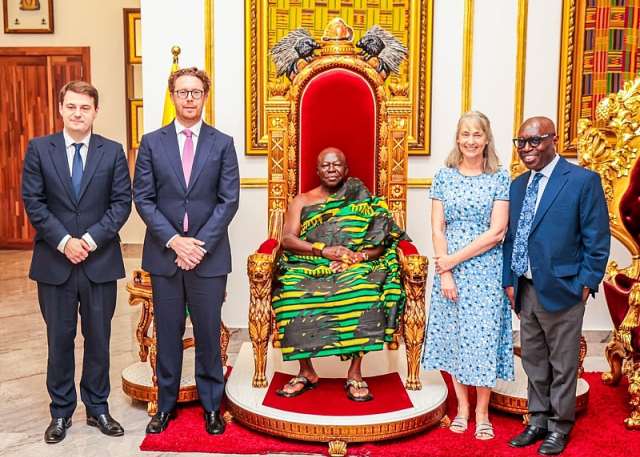
The announcement, made on November 5, 2026, follows a visit to Kumasi by British Museum Director Dr Nicholas Cullinan OBE, at the invitation of Asantehene Otumfuo Osei Tutu II.
Under the renewed arrangement, the 15 objects on loan from the British Museum will remain at the Manhyia Palace Museum for another three years when the existing agreement expires in April 2027.
The objects form part of the Homecoming exhibition, which has brought significant pieces of Asante royal regalia back to public display in Kumasi after more than 150 years outside Ghana.
The partnership also involves London’s Victoria and Albert Museum (V&A), which loaned 17 objects associated with the Asante royal court. Its loan arrangement is also expected to be renewed.
While the extension represents an important achievement for Ghana’s cultural heritage sector, it does not amount to permanent restitution. The distinction is important because many of the objects have documented connections to British military expeditions that resulted in the seizure of Asante royal property.
A partnership built on a painful colonial history
The return of the royal objects for exhibition followed years of discussions involving the Asantehene, the British Museum, the V&A and the Manhyia Palace Museum.
In January 2024, the three institutions announced a landmark cultural partnership that would enable 32 royal objects to be displayed in Kumasi. Fifteen came from the British Museum and 17 from the V&A.
Seven additional objects previously held by the Fowler Museum at the University of California, Los Angeles, were permanently returned to Asante in February 2024.
The 32 objects from the British institutions arrived in Ghana in April 2024. They were officially presented to the Asantehene before the reopening of the refurbished Manhyia Palace Museum on May 1, 2024.
The exhibition marked the 150th anniversary of the 1873–1874 Anglo-Asante War, the centenary of the return of Asantehene Prempeh I from exile, and the silver jubilee of Otumfuo Osei Tutu II.
According to the British Museum and V&A’s January 2024 announcement, many of the objects had been removed from Kumasi during the Anglo-Asante wars and subsequently dispersed among museums and private collections.
The institutions acknowledged that some objects formed part of an indemnity payment forcibly imposed on the Asantehene, while others were sold at auctions following their removal.
The V&A’s historical account provides further details. It records that British forces attacked Kumasi on February 4, 1874, under Major-General Sir Garnet Wolseley.
Following the attack and destruction of the royal palace, hundreds of pieces of Asante gold were removed. Some were subsequently sold through Garrard & Co., the British Crown Jeweller.
The V&A records that it acquired 13 pieces of Asante royal regalia at an auction in April 1874. These included a gold peace pipe, three gold soul-washers’ badges, seven sections of sheet-gold ornament, a silver straining spoon and a pair of silver anklets.
The museum also acquired other pieces in subsequent years.
These records are important because they provide documentary evidence of how some Asante royal objects entered British institutional collections.
The legal obstacle behind the restitution debate
The central challenge facing Ghana is that the renewal of cultural partnerships does not automatically resolve the question of ownership.
The British Museum is governed by the British Museum Act 1963. Section 5 restricts the circumstances under which its trustees can dispose of objects in the museum’s collections.
The law generally permits disposal where an object is a duplicate, certain printed material, or considered unfit for retention without detriment to the interests of students. It also provides for disposal of objects rendered useless through physical damage, deterioration or infestation.
The legislation does not provide a general power to return objects simply because they were acquired during colonial military operations.
Section 4, however, allows the museum’s trustees to lend collection objects for public exhibitions outside the United Kingdom, subject to specified considerations.
This legal framework helps explain why the British Museum has been able to negotiate a renewable loan arrangement rather than transfer permanent ownership of the 15 objects to Ghana.
The V&A has also explained its legal position. Its official account of the Homecoming exhibition states that the National Heritage Act 1983 does not give it a general power to return objects simply because they were acquired through imperial conflict.
In a January 2024 interview with Citi Newsroom, Dr Ivor Agyeman-Duah, Director of the Manhyia Palace Museum and an adviser to the Asantehene, explained the reasoning behind the arrangement.
He said: “The moral right to ownership does exist. But there are also the laws of antiquity in the UK.”
He further explained that discussions over the objects had continued for years because the British museums faced restrictions on permanently removing items from their collections.
Agyeman-Duah also made clear that the agreement was not intended to end the restitution discussions.
“Discussions will however continue between us and these museums to find a lasting agreement,” he said.
His comments underline the difference between securing access to cultural objects and resolving the historical ownership dispute.
The historical significance of the 15 British Museum objects
Among the 15 objects selected from the British Museum’s collection is a small gold ornament shaped like a lute-harp, known as a sankuo.
Its history provides an important link between the Asante royal court and the British Museum.
The ornament was among gold objects presented to British diplomat Thomas Edward Bowdich during his 1817 visit to Kumasi to negotiate a trade agreement with Asantehene Osei Bonsu.
According to the historical account provided by the British Museum, the objects were intended as gifts for the institution and represented the wealth and status of the Asante nation.
The sankuo therefore has a different acquisition history from objects taken during the later military invasions.
Its inclusion in the exhibition illustrates the long historical relationship between the Asante royal court and the British Museum, which predates the major conflicts of the late nineteenth century.
Other objects have more direct connections to the Anglo-Asante wars of 1873–1874 and 1895–1896.
The latter conflict resulted in the arrest and exile of Asantehene Prempeh I and other Asante leaders to the Seychelles.
The V&A’s historical research explains that the seizure of royal regalia was not simply an act of acquiring valuable gold.
The objects also represented political authority, spiritual beliefs and the identity of the Asante state.
The museum notes that removing these symbols of authority was a political act whose consequences continue to be felt.
A growing cultural and educational opportunity for Kumasi
Beyond the historical dispute, the partnership is creating opportunities for heritage education, museum development and cultural tourism.
The Asantehene has emphasised the importance of allowing Ghanaian children to see the craftsmanship of the royal objects and learn about their history.
According to the November 5 partnership announcement, overall visitor numbers at the Manhyia Palace Museum have doubled over the past two years, while visits by schoolchildren have almost quadrupled.
These figures, reported by the institutions, suggest growing public interest in the exhibition and the museum’s educational activities.
However, continued growth will depend on more than the presence of internationally recognised artefacts.
Museum management, professional conservation, research, accessible interpretation and sustained investment will be important in ensuring that the exhibition produces lasting benefits.
The partnership also offers an opportunity for Ghanaian researchers, historians, conservators and museum professionals to participate more actively in documenting and interpreting Asante heritage.
The V&A has previously reported that its staff worked with Manhyia Palace Museum personnel on object presentation, environmental control and gallery writing. In return, Manhyia staff shared knowledge about the cultural meanings of the objects.
Such exchanges could help strengthen Ghana’s capacity to manage and preserve important historical collections.
New museum development adds another dimension
During his November visit, Cullinan toured the site of the new Manhyia Arts and Culture Museum.
The November 5 announcement indicated that the new facility was expected to open in January 2027. Manhyia Palace Museum’s published events calendar has since listed January 8, 2027, as the anticipated opening date of its new Arts and Culture Gallery.
The British Museum director was also briefed on the restructuring of the existing museum and met newly appointed staff.
The development could expand the museum’s capacity to present Asante history, traditional craftsmanship and cultural heritage to local and international visitors.
It also creates an opportunity to develop stronger professional relationships between Ghanaian cultural institutions and international museums.
The next chapter: Cooperation, ownership and accountability
The British Museum’s renewal of its agreement with Manhyia Palace Museum is significant, but it should not be mistaken for the conclusion of the restitution debate.
The wider international discussion is already moving beyond temporary loans.
In November 2025, The Art Newspaper reported on the return of 130 gold and bronze objects to the Asante Kingdom by private collectors, including British art historian Hermione Waterfield and mining company AngloGold Ashanti.
The report highlighted concerns among heritage experts about the continued difficulty of securing the permanent return of objects held by British national museums.
Another important development is the planned Asante: Sacred Gold exhibition at London’s Wallace Collection, scheduled for April 12 to August 22, 2027, in collaboration with the Manhyia Palace Museum.
The exhibition will examine the cultural, spiritual and historical significance of Asante gold objects held in the Wallace Collection.
Alexander Collins, Curator of Decorative Arts and co-curator of the exhibition, said the display would encourage visitors to consider both the craftsmanship of the objects and the colonial conflict and displacement associated with their history.
Ivor Agyeman-Duah, meanwhile, described the objects as “signposts of a civilisation” and said their display would raise necessary questions about their absence from their original home.
These developments suggest that the partnership is expanding beyond the physical movement of artefacts to include research, historical interpretation and international public education.
British Museum Director Nicholas Cullinan welcomed the renewed relationship, saying:
“I am delighted that we are renewing this important relationship with the Manhyia Palace Museum and the Asantehene. This partnership is about more than the sharing of objects. It is about building relationships, exchanging knowledge and creating opportunities for research and interpretation.”
He added that he was grateful to the Asantehene and Manhyia Palace Museum colleagues for their continued collaboration.
Manhyia Palace Museum Director Ivor Agyeman-Duah also welcomed the visit and the extension of cooperation.
He said:
“We are delighted that the Director of the British Museum has visited Kumasi and been able to see the Homecoming exhibition for himself. The partnership goes beyond the exchange of loan agreements and we welcome the development of new projects and activities of mutual benefit over the coming years.”
For Ghana, the challenge now is to turn the renewed partnership into a stronger platform for cultural preservation, professional development and historical justice.
The extension guarantees that another generation of schoolchildren and visitors can see important Asante royal treasures in Kumasi.
But the larger question remains unresolved: should objects taken from the Asante royal court during colonial conflicts continue to be displayed in Ghana under temporary agreements, or should the institutions holding them find a lasting solution that recognises the historical and cultural claims of their original custodians?
Until that question is resolved, the story of the Asante royal treasures will remain not only a story of remarkable craftsmanship and cultural cooperation, but also one of colonial history, ownership and the continuing struggle for restitution.