

By Alex Ababio
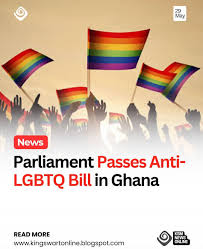
Ghana’s Parliament has, for the second time in just over two years, passed the controversial Human Sexual Rights and Family Values Bill, 2025 — legislation widely referred to as the anti-LGBTQ bill — reigniting one of the country’s most polarising national debates over constitutional freedoms, religious values, foreign relations and economic risk.
The bill, passed on Friday, May 29, 2026, revives a legislative battle that has drawn sharp reactions from religious groups, lawmakers, human rights organisations, legal scholars, international development partners and sections of Ghana’s civil society. The legislation seeks to criminalise LGBTQ activities, advocacy, sponsorship and promotion, while introducing fresh amendments that exempt journalists, lawyers and some professionals from prosecution under specific circumstances.
The renewed parliamentary approval comes after a previous version of the legislation was passed on February 28, 2024, during the administration of former President Nana Addo Dankwa Akufo-Addo but never received presidential assent before Parliament’s dissolution.
At the time, the Akufo-Addo administration suspended action on the bill pending the outcome of constitutional challenges filed before Ghana’s Supreme Court. The presidency argued it would be inappropriate for the president to act while the matter remained before the courts.
What the New Bill Contains
The newly passed legislation substantially expands criminal liability related to LGBTQ identity and advocacy in Ghana. According to parliamentary reports and international media accounts, the law imposes prison terms of up to three years for same-sex sexual relations and harsher penalties for individuals accused of promoting or sponsoring LGBTQ activities.
The revised version also introduces controversial reporting obligations requiring individuals to report alleged LGBTQ-related activities or risk criminal penalties themselves. Reuters reported that the bill additionally amends Ghana’s Extradition Act of 1960 to classify offences under the law as extraditable crimes.
However, Parliament introduced significant exemptions during the latest debates.
Under the amended provisions, lawyers who offer legal representation or legal advice to persons identified as LGBTQ will not face punishment. Journalists and media organisations covering LGBTQ-related issues as part of their professional duties are similarly exempted. Medical professionals providing counselling or healthcare services are also protected under the amended clauses.
The exemptions triggered fierce disagreements inside Parliament, particularly from sections of the Minority Caucus, which argued the amendments exposed weaknesses in the original draft legislation previously presented to former President Akufo-Addo.
The bill was reintroduced by a bipartisan group of Members of Parliament led by Rev. John Ntim Fordjour and Samuel Nartey George, long-time supporters of the legislation.
Supporters insist the legislation is necessary to protect Ghanaian cultural identity, religious beliefs and traditional family values.
“This bill seeks to define human sexual rights, reinforce Ghanaian family values, and explicitly prohibit LGBTQ+ activities, including advocacy, promotion and funding,” parliamentary reports stated following the passage.
International Alarm Over Human Rights Concerns
The legislation has, however, generated strong international criticism from global human rights organisations and international observers who argue the law violates constitutional freedoms and international human rights obligations.
Human Rights Watch described the revived legislation as “dangerous,” warning it threatens rights to non-discrimination, free expression and privacy. The organisation said the bill could expose not only LGBTQ persons but also journalists, teachers, doctors, parents and civil society actors to prosecution.
Larissa Kojoué, a researcher at Human Rights Watch, warned that the bill “significantly expands criminal sanctions related to same-sex conduct” and risks deepening discrimination against already vulnerable communities.
Similarly, Amnesty International previously described the legislation as “one of the most draconian in Africa.”
Responding to the earlier 2024 version of the bill, Amnesty International Ghana Country Director Genevieve Partington stated:
«“The bill is one of the most draconian in Africa and seeks to further criminalize lesbian, gay, bisexual and transgender people.”»
She further warned that the legislation would punish “human rights defenders, medical professionals, journalists, teachers, and landlords” in ways that undermine freedom of expression and association.
Public health experts have also raised concerns.
During debates surrounding the earlier version of the legislation, Winnie Byanyima cautioned that punitive anti-LGBTQ laws could undermine efforts to combat HIV/AIDS across Africa by discouraging vulnerable groups from accessing health services. Reuters reported that Byanyima warned such laws “obstruct efforts to end AIDS” and could fuel violence and discrimination.
Economic Risks and International Financing Concerns
Beyond the human rights debate, Ghana’s anti-LGBTQ legislation has also become a major economic and diplomatic issue.
During the 2024 controversy, Ghana’s Finance Ministry warned the country risked losing substantial international financial support if the bill became law. International reports indicated Ghana could jeopardise access to approximately $3.8 billion in World Bank financing as well as its $3 billion International Monetary Fund support programme.
The concerns emerged as Ghana continued efforts to stabilise its economy following debt restructuring, inflationary pressures and fiscal challenges.
International investors and development partners have closely monitored Ghana’s governance and human rights record, particularly after Uganda faced financial consequences following the enactment of similar legislation in 2023.
Analysts say the renewed passage of the bill places President John Dramani Mahama under intense domestic and international pressure as he decides whether to assent to the legislation.
Reuters reported that Mahama, who returned to office in January 2025, now faces competing pressure from religious conservatives demanding immediate assent and rights groups urging rejection of the bill.
Deep Social and Political Divisions
The legislation has exposed deep divisions within Ghanaian society.
Religious bodies and traditional leaders have overwhelmingly supported the bill, arguing Ghana must resist what supporters describe as foreign attempts to impose LGBTQ rights on African societies. Parliamentary consultations over the years received strong backing from churches, Islamic groups and conservative advocacy organisations.
However, some prominent national figures have urged caution and dialogue.
Human Rights Watch noted that influential Ghanaian voices, including Cardinal Peter Turkson and politician Samia Nkrumah, have called for more inclusive national conversations rather than punitive legislation.
Ghana’s Commission on Human Rights and Administrative Justice (CHRAJ) has also reportedly warned that aspects of the legislation may infringe constitutional protections guaranteed under Ghana’s 1992 Constitution.
On social media and online forums, the debate has become increasingly emotional and polarised, reflecting growing tension between conservative cultural values and rights-based advocacy.
Some Ghanaians view the legislation as necessary protection of national identity and morality. Others fear it could encourage abuse, false accusations, social vigilantism and discrimination.
Legal Uncertainty Still Looms
Although Parliament has passed the bill again, legal and constitutional uncertainty remains.
The earlier legislation faced multiple court challenges, including petitions questioning whether Parliament complied with constitutional procedures and whether certain provisions violated protected rights. Ghana’s Supreme Court previously postponed hearings over procedural disputes and controversial language used in court filings.
While reports later indicated the Supreme Court dismissed some legal objections to the earlier bill, legal experts say fresh constitutional challenges are likely if the current version proceeds toward presidential assent.
For now, Ghana finds itself once again at the centre of an international debate balancing sovereignty, culture, religion, constitutional rights and economic diplomacy.
As pressure mounts on President Mahama to either sign or reject the bill, the outcome could shape Ghana’s democratic image, international partnerships and human rights reputation for years to come.