

By Alex Ababio
SUAME, KUMASI, Ghana – On a Tuesday morning in late March, the air above Suame Magazine shimmered with heat and hanging particulates. Metal hammers rang against chassis. Welding arcs flickered like trapped lightning. And in the narrow corridors between makeshift workshops, men in oil‑blackened overalls coughed.
By noon, they had had enough.
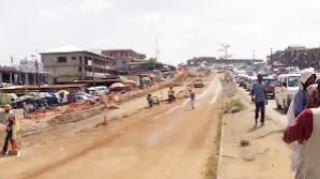
Hundreds of artisans and traders poured onto the Suame Post Office road, blocking traffic with tyres, tables and their own bodies. For more than two hours, one of Kumasi’s busiest arteries was paralysed. Police officers rushed to restore order, but the demonstrators refused to disperse. “Excessive dust is taking a toll on us,” one protester told journalists. “The dust is killing us,” another said – a phrase that would ricochet across Ghana’s news outlets within hours.
Behind the blockade was a health emergency that has been building for decades, largely ignored. Suame Magazine is not just a garage. It is West Africa’s largest artisanal engineering enclave, a dense 180‑hectare sprawl of more than 12,000 repair shops and small metal‑works where an estimated 200,000 people weld, grind, spray‑paint and dismantle vehicle parts. The Ghanaian National Association of Garages (GNAG) was established in 1982 with Rawlings’ direct support, creating the zone system that still organises the area, while the Suame Magazine Industrial Development Organisation (SMIDO) was formed in 2006 as an umbrella NGO to advocate for better conditions and eventual relocation.
Yet for the men, women and children who live and work inside its labyrinthine corridors, basic occupational health does not exist. Respiratory illness has become a silent epidemic, driven by three inseparable sources: the daily hazard of metal fabrication, the chronic dust of a stalled construction megaproject, and a succession of government pledges that have failed to produce meaningful change.
This is an investigation into the price of West Africa’s industrial heartbeat.
The Burn of Every Breath
Inside Zone 21, 28‑year‑old welder Issah Mohammed leans over an engine block, his face inches from a roaring acetylene torch. He wears no respirator. Safety glasses dangle unused around his neck. “I have been here since I was 15,” he says, wiping sweat from his eyes. “The cough started maybe five years ago. At night, I wake up and cannot breathe properly. The clinic gives me medicine, but two weeks later, it comes back.”
His story is not unusual. A 2020 KNUST occupational‑health study of 400 auto‑artisans at Suame Magazine found that 45.8 per cent reported suffering from inhaling dust particles on a regular basis, alongside burns and injuries from sharp objects. Dust is not a minor inconvenience. The WHO’s global air‑quality guidelines set an annual mean for PM2.5 – the fine particulate matter that penetrates deep into lung tissue – at 5 micrograms per cubic metre. Earlier research at Suame’s Zone 21 documented levels that routinely far exceed that threshold; a 2019 thesis measured PM10 concentrations of 211 µg/m³ compared to the WHO guideline of 50 µg/m³ for coarse particles.
That research was not published in a vacuum. KNUST’s College of Engineering has repeatedly described Suame as “the biggest informal sector clustered with an estimated population of over 200,000 trading shop owners” and has partnered with German development agencies to try to raise standards. But for most artisans, those efforts have not yet reached their workshops.
In November 2025, when construction on the Suame four‑tier interchange stalled again, traders’ health complaints moved from whispered resignation to open fury. A trader, Lizbeth Nyame, told reporters: “I sell water and bread. Patronage has gone down because the dust covers the items, creating doubts in the minds of customers. This is threatening our livelihoods and our health.” Another artisan, Kankani Dramani, was blunter: “The dust emanating from the road is affecting our health”.
The interchange project had been announced in 2022 as a flagship intervention to ease congestion in one of Kumasi’s most critical industrial corridors. Phase one involved a four‑tier interchange, drainage upgrades and local road improvements. By late 2025, however, the contractor – Rango Construction Limited – had reportedly vacated the site, leaving behind open pits, exposed earth and a fine grey dust that settled on every surface. The artisan protests that November and again in March 2026 were the result not of impatience, but of physical suffering.
In April 2026, the government announced that $29.5 million in outstanding arrears had been settled and that work would resume. The completion date for the main interchange structure was pushed to October 2028. For the mechanics and traders who must live through three more dry seasons of open‑cut construction, that timeline offers little comfort.
A Fire and an Explosion: When Neglect Turns Deadly
Respiratory illness is only one part of the crisis. The daily working environment at Suame Magazine is so hazardous that serious injury and death are routine.
On 1 September 2025, a 40‑year‑old commercial‑vehicle mate arrived at a workshop in Zone 18 for a routine repair. A liquid oxygen cylinder exploded. The man lost his left hand and suffered severe injuries to other parts of his body. Another welder, Kwame Appiah, described the aftermath: “We are living in fear as welders, and this is the first time such an explosion has happened. We are all scared. … The mistake that led to the unfortunate incident is the fact that the gas cylinder was very close to the mate. The welder should have placed the gas cylinder metres away from where he was working”.
That explosion was not an isolated freak accident. On 31 January 2025, a late‑night fire swept through Suame Magazine, destroying 25 shops and 34 vehicles worth millions of cedis. Witnesses described narrow access routes and low water pressure that hampered firefighters. Later that year, on 10 November 2025, another blaze gutted a two‑bedroom apartment and approximately five shops in Zone 4. The Ghana National Fire Service responded promptly, but residents admitted that they had tried to fight the first flames with buckets of water. “We plead with the government to help us in any way they can,” said Emmanuel Otoo, a resident who lost property.
An environmental audit of Suame Magazine conducted for a master’s thesis at KNUST and published in 2012 reached a stark conclusion: “Health and safety standards simply did not exist at Suame Magazine.” The audit noted that obsolete vehicles, obsolete machinery, and human solid waste were major sources of pollution; that corrosion was a common feature; that noise, dust, vehicle exhaust emissions and metal vapour were “identified as other sources of environmental problems.” The audit also found that less than 5 per cent of the artisans had been educated beyond middle school form four. Environmental legislation was largely unknown.
‘They See Us When Elections Come’
If the physical environment is brutal, the political environment is one of repeated abandonment.
Suame Magazine sits on land that belongs to the Asantehene, the King of the Ashanti region. The Magazine Mechanical Association, an informal workers’ organisation set up in 1957, originally kept track of property parcelling and collected leases on behalf of the traditional authority. When GNAG was formed in 1982, it created additional administrative zones, but definitions of “lease” and “ownership” remained ambiguous. Newcomers erected workshops illegally in makeshift shacks, worsening congestion.
SMIDO was formed in 2006 with funding from DANIDA and the Business Sector Advocacy Challenge (BUSAC) fund specifically to advocate for relocation to a modern “industrial village” with clean roads, waste management and proper equipment. SMIDO has been unchallenged in its ability to create international awareness about Suame Magazine’s challenges, but the organisation’s founders soon discovered a dispiriting pattern: “Time and again, politicians expressed their support for SMIDO’s projects, but none of them followed through when in power”.
The relationship with the Kumasi Metropolitan Assembly (KMA) is also fraught. Artisans often refuse to pay taxes because they believe the government will not help them, while the government is reluctant to intervene precisely because workers neglect paying their taxes. KMA has previously asked both SMIDO and GNAG to collect taxes on its behalf, retaining a percentage. Tax collection increased only marginally – but it was more than the KMA had ever managed to collect on its own. As a result, some within the KMA are “not in a hurry” to see the workers relocate to a site outside the assembly’s jurisdiction, as that would mean a loss of revenue.
One artisan who has worked in Suame for 27 years put it more simply. “They see us when elections come. They bring rice, they bring T‑shirts, they promise the interchange will be finished. Then they go away, and we are left with the dust and the coughing.” He asked not to be named, fearing his landlord – a local political figure – would evict him.
A 2021 study on occupational health among auto‑artisans at Suame Magazine found that orientation on health and safety influenced awareness of workplace hazards but did not significantly change safety practices. Organisational factors were associated with safety practices, but they were “not found to be associated with willingness to pay” for occupational health services. In other words, even when artisans know they are dying slowly, they cannot afford to do anything about it.
Small Solutions, Big Obstacles
Yet Suame Magazine is not a place of passive victims. SMIDO has for nearly two decades been building partnerships that offer a glimpse of what could be. In June 2023, the German Agency for International Development Cooperation (GIZ) inaugurated an auto diagnostics training centre inside Suame Magazine, in collaboration with SMIDO and the Technology Consulting Centre (TCC) of KNUST. The same week, GIZ also launched the first ever female‑led scrap dealer’s association in Ghana – the Ladies in E‑Waste and Scraps Association (LEWSA) – which has since registered over 350 new members, developed a safe trade guideline for women in business and purchased tricycle fleets.
The Country Director of GIZ Ghana, Regina Bauerochse Barbosa, said at the inauguration that Suame Magazine “harbours the largest group of female scrap collectors and traders in the country but lack of organisational development and administrative setup had incapacitated their proper involvement in the business.” The e‑waste project is commissioned by the German Ministry of Economic Cooperation and Development (BMZ) and implemented in partnership with Ghana’s Ministry of Environment, Science, Technology and Innovation.
Those are significant achievements, but they remain isolated. The auto diagnostics centre is expected to equip over 200 auto technicians with modern digital skills – a tiny fraction of the 200,000‑strong workforce. The female scrap dealers’ association, while genuinely empowering, does not address the respiratory crisis that affects every welder, grinder and painter in the Magazine.
The KNUST‑led Centre for Capacity Development in Automobile and Manufacturing (CECADEM) was launched to bring academia closer to industry and train traditional mechanics to be “ready for change” in automotive technology. The provost of the College of Engineering, Professor Mark Adom‑Asamoah, noted that Suame Magazine “carries significant innovation and collaboration among artisans,” but that the work of artisans in the country is “widely viewed as without standards with no means of measurement”. That perception gap is precisely what allows the health crisis to continue. If your work is never measured, your cough is never counted.
‘I Used to See My Father Cough Until He Stopped’
I first walked into Suame Magazine when I was eight years old, holding my father’s hand. He was a mechanic. For 27 years, he woke before dawn to walk 15 minutes from our home in Suame Tarkwa Maakrro to his metal booth. In the dry season, he came home with grey dust lining his nostrils and a cough that started as soon as he walked through the door.
I did not know then what PM2.5 was, or that the WHO sets safe limits for fine particulates. I only knew that my father’s voice grew rougher each year, that he sometimes woke in the night struggling for breath, that the clinic in South Suntreso gave him antibiotics and told him to rest. He never rested. There were cars to fix, apprentices to train, school fees to pay.
He died in 2020. The death certificate did not mention 27 years of dust and diesel. It mentioned a respiratory infection complicated by underlying chronic lung disease.
After his death, I started reporting on Suame Magazine systematically. The first story I published, in April 2024, was titled “Suame’s Silent Crisis: The Health Cost of Dust and Diesel.” It was based on 15 interviews with mechanics who described the same symptoms my father had: persistent cough, shortness of breath, recurrent chest infections, money spent on hospital visits instead of savings. The piece was picked up by Oyerepa FM and other local radio stations, and for a few weeks, people talked about Suame’s air.
Then the news cycle moved on.
The March 2026 protest brought the issue back, but only as a road‑blockage story, not a public‑health story. “Excessive dust” was reported as a nuisance, not as a cause of occupational disease. One resident told Citi News: “We’ve had to go to the hospital several times because of the dust. We’re always sick, and it’s also draining us financially.” Another said: “The excessive dust is killing us”.
Neither of those quotes appeared in any government white paper.
What the Numbers Don’t Show
Official statistics are difficult to obtain. Ghana’s Environmental Protection Agency (EPA) has set national ambient air quality standards, but monitoring stations are concentrated in Accra and a few industrial zones; there is no permanent air‑quality monitor inside Suame Magazine. The country is in the process of establishing a national Occupational Health and Safety Authority under a new OSH Bill, but the authority is still in development. In the absence of enforcement, the informal sector continues to operate with no safety net.
What does exist is a growing body of academic research that confirms what artisans already know. A study on particulate matter exposure among artisans at Suame‑Magazine, conducted by KNUST and available in its institutional repository, sampled three different spots within Zone 21 over eight‑hour periods and found consistently elevated levels. Another study assessed the levels of polycyclic aromatic hydrocarbons – toxic compounds produced by incomplete combustion of fuels and oils – in soils of artisanal shops and concluded that “significant health risks” were present. Heavy metals including lead, iron and copper have also been found in elevated concentrations in the organs of artisans.
In 2017, researchers examining heavy metal concentrations in artisans at Suame Magazine found that “many of them have been found to have high concentration of heavy metals including lead, iron and copper in their internal organs.” The goal of that study was “to assess the health risk posed to the artisans by the heavy metal concentrations at the magazine and the immediate environment and how to promote the safety and health of the people”. The same year, a separate investigation into the environmental impact of the small‑scale enterprise centre noted that typical pollutants from industrialisation included “contaminated sediments, oil, gasoline, heavy metals, pesticides and bacteria”.
With each passing year, the evidence accumulates. And each year, the cough continues.
A Path Forward
None of this is inevitable. Low‑cost interventions exist that could transform workshop conditions at Suame Magazine. Reflective roof coatings – simple white paint – have been shown in climate‑adaptation research to reduce indoor surface temperatures by 3°C to 6°C during peak afternoon hours. Strategic tree planting, particularly native dust‑trapping species such as Ficus varieties, can capture airborne particulates and reduce ambient PM levels. Passive ventilation redesign, using low‑cost roof vents and wall louvers, can expel diesel fumes without requiring expensive mechanical systems.
Small‑scale pilots have worked elsewhere. In May 2026, a proof‑of‑concept project in Asafo, a Kumasi suburb with a similar mechanic cluster, tested reflective tarpaulin over a workshop roof and recorded average surface temperature reductions of 5.6°C during the hottest afternoon hours. That is not a miracle. It is paint and tarpaulin, applied by mechanics themselves.
What is missing is not technology. It is the will to scale.
The Suame MCE, Hon. Frank Owusu Ansah, has engaged stakeholders and discussed fire‑safety measures and emergency‑response plans. The Ashanti Regional Minister, Frank Amoakohene, announced the clearance of debts to the interchange contractor. The Roads Minister, Kwame Agbodza, has promised that the interchange will be completed by 2028. These are necessary steps, but they do not address the underlying health crisis.
Last week, after the March protest, the Suame Municipal Assembly distributed a few dust masks to roadside traders. By the following morning, most of the masks had disappeared, reused beyond their intended lifespan or simply lost in the chaos of daily commerce. “A mask does not fix the problem,” one mechanic told me. “It just moves the dust from my lungs to a piece of paper.”
‘We Are Not Asking for Much’
SMIDO’s president for nearly two decades, Mr George Asamoah Amankwaa, has consistently argued that Suame Magazine should be relocated to a purpose‑built industrial village. The organisation has pursued financial support from BUSAC (which initially provided more than 1.2 million Euros) and from international partners. But SMIDO’s estimate of membership dues proved too optimistic, and relocation remains exactly where it was in 2006: a good idea with no funding and no political champion.
In the absence of relocation, the 200,000 men, women and children inside Suame Magazine will continue to breathe what the men who work there already call “the Magazine lung.” It is not a formal diagnosis. The Komfo Anokye Teaching Hospital has no billing code for it. But it is real.
We have the evidence. We have the low‑cost solutions. We have the community organisations – SMIDO, GNAG, the Association of Garages – ready to act. What we do not have is a political calculus that prioritises respiratory health over ribbon‑cutting ceremonies.
When the March 2026 protest ended and the tyres stopped burning, police reopened the road. The next morning, the welders fired up their torches. The apprentices returned to their oily benches. And the dust rose again, finding its way into every throat, every lung, every household that depends on Suame Magazine for its daily bread.
My father worked there for 27 years. He died of a respiratory infection. His friends and my relatives still work there. They cough the same way he coughed.
They are not asking for a miracle. They are asking for a roof that reflects heat, for trees that catch dust, for air that does not choke them while they work.
That is not too much. That is simply dignity.