

By Alex Ababio
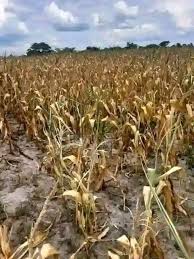
Katiu, Upper East Region – The dawn sky over Katiu is a pale, bleached white, promising heat before the morning has even begun. Waida Papawu stands at the edge of her parched field, her youngest child balanced on her hip. She squints at the horizon, looking for something the satellites cannot see.
“There is a specific wind that comes before the first rain,” she says, shifting the child to her other hip. “It carries the smell of the earth from far away. My grandmother taught me to recognise it. The apps on the phone, they tell me a percentage. But the wind tells me the truth.”
For generations, the people of this remote corner of Ghana, near the border with Burkina Faso, have read the natural world like a sacred text. The flowering of the shea tree. The direction of the harmattan dust. The behaviour of the termites building their mounds. These signs told farmers when to plant, when to wait, and when to pray.
But the text is changing. Climate change has rewritten the seasons, and the old signs are no longer reliable. For Waida, who has farmed this land since she was a girl, the uncertainty is not an abstraction. It is the difference between feeding her children and watching them go hungry.
The Sky Is Lying: What the 2025 Harmattan Revealed
The Ghana Meteorological Agency confirmed what farmers already knew in their bones. In a public weather advisory issued on December 30, 2025, the Agency announced that the 2025 to 2026 Harmattan season had been characterised by an unusual delay, with many parts of southern Ghana still experiencing rainfall as late as December, a phenomenon described as statistically rare. Even northern regions, which typically face peak dryness by this time, have recorded occasional rainfall.
The Agency attributed the delay to significant fluctuations in the position of the Inter-Tropical Boundary, which has remained further north than usual, coupled with warm Sea Surface Temperatures in the Gulf of Guinea. This has allowed moisture to persist over the country, causing these unseasonable rains.
For a farmer in the Upper East Region, unseasonable rain is not a blessing. It is a deception. It can trick seeds into sprouting too early, only to wither when the true rains fail to follow. Waida has seen this happen to neighbours who planted after an early shower, only to watch their seedlings crisp under a sun that returned with no follow-up rain for weeks.
“We used to know,” she says, looking at the sky. “Now the sky is lying to us.”
The Price of a Broken Season: Ghana’s Food Crisis by the Numbers
The stakes could not be higher. Agriculture is the backbone of northern Ghana, but climate change is breaking that backbone. At the Sustainable Food Systems Summit in Accra on September 10, 2025, Ghanaian Minister for Food and Agriculture, Honourable Eric Opoku, delivered a stark assessment. He highlighted the paradox of Ghana’s over USD 3 billion annual food import bill despite its vast agricultural potential, coupled with an estimated 30 percent post-harvest loss due to weak storage, logistics, and processing systems.
Rising food inflation, which peaked at 61 percent in 2023, was noted as a major threat to livelihoods and poverty reduction, the Minister told the gathering of more than 135 stakeholders from across the agricultural value chain.
In response, the government plans to rehabilitate and expand irrigation systems covering more than 229,000 hectares of farmland. But for Waida in Katiu, irrigation is a distant promise. What she has right now is a piece of land, a bag of seeds, and a decision that could determine whether her children eat next year.
This is where two worlds of knowledge are beginning to collide. The old ways. And the new data.
Who Decides What the Sky Will Do? The Savannah Climate Conference
At the Savannah Climate Conference held in Tamale on June 25, 2025, stakeholders from across northern Ghana convened to address this exact challenge. The event was organised by Youth Empowerment for Life in partnership with the Faculty of Sustainable Development at the University for Development Studies, with funding from Oxfam in Ghana.
Madam Vera Jawol Magan, Executive Director of Youth Empowerment for Life, highlighted the urgent need for “collaborative, inclusive and evidence-based solutions” to tackle climate challenges such as erratic rainfall, land degradation, and deforestation.
“Our partnership with the University for Development Studies underscores the need to translate scientific research into practical community-level solutions that reflect the lived realities of rural populations,” she said.
For Waida, who was not at the Tamale conference, the phrase “lived realities” carries weight she did not ask for. Her reality is a cracked field. Her reality is a child who cried from hunger last year when the millet harvest failed. Her reality is watching the sky and wondering if the scientists in Accra have ever stood where she is standing.
## The Digital Cropping Calendar: A Tool Built With Farmers, Not For Them
One of the major tools emerging from this push is the digital cropping calendar. On July 2, 2025, researchers, farmers, and partners met in Kumasi to refine this digital tool, which delivers timely, tailored advice to help smallholders adapt to climate change. The initiative, led by the Alliance of Bioversity International and the International Center for Tropical Agriculture, represents a new frontier in climate adaptation: one that does not replace indigenous knowledge but attempts to complement it.
The calendar integrates real-time weather forecasts, crop phenology, soil data, and location-specific agronomy. It delivers guidance aligned with each growth stage from land preparation to harvesting, ensuring that the right message reaches the right farmer at the right time.
Dr. Kingsley Ofosu-Ampofo from the Alliance opened the workshop by emphasizing the urgency of relevance: “We are not here to build tools for farmers. We’re here to build tools with farmers tools that reflect how they think, act, and adapt to change.”
Initially focused on maize and soybean, the calendar has now been expanded to include cowpea, thanks to farmer-led demand voiced during stakeholder consultations. “Cowpea isn’t just another crop,” said a workshop participant from Northern Ghana. “It’s how we balance income, nutrition, and risk. Including it in the calendar shows this system listens.”
But for Waida, who does not own a smartphone, the question remains: how does a digital tool reach hands that have never touched a screen?
The Bridge Between Satellite and Soil: Radio and the Language of Rain
Dr. Emmanuel Abeere-inga, Chief Executive Officer of the Northern Development Authority, warned at the Tamale conference that land and forest resources, the backbone of the savannah region, were under severe threat. He noted that government programmes such as the Tree for Life initiative were working to restore degraded lands through agroforestry and reforestation.
“Forest conservation should not only be an environmental priority, but also a strategy for sustainable livelihoods,” he said.
But on the ground, the integration of satellite data into daily farming decisions remains uneven. The Ghana Meteorological Agency produces monthly Drought and Flood Monitoring Bulletins, using the Standardized Precipitation Index to assess rainfall conditions. This index is a widely recognised tool that quantifies precipitation anomalies by comparing observed rainfall over a specific accumulation period with the long-term historical average.
For a climatologist, the SPI is invaluable. For a farmer in Bawku who cannot read, it is meaningless.
The challenge is one of translation. Not just from English to local languages, but from probability to practice. What does a 40 percent chance of below-normal rainfall mean for a woman who must decide tomorrow whether to plant her entire season’s savings?
This is where Waida’s radio becomes her most important farm tool. Through a community radio programme broadcast from a station in Navrongo, she receives weekly weather updates produced by the Ghana Meteorological Agency in partnership with agricultural extension officers.
“They tell us when the wind is coming,” she says. “They tell us if we should wait.”
The radio is the bridge. It takes the satellite data, the probability indexes, the climate models generated in Accra and even in European capitals, and translates them into Twi and Gurene. It tells a farmer in simple language: the rain will be late this year. Plant your drought-resistant variety. Store more water.
But even the radio has limits. Last year, the forecast said the rains would come in May. They came in June. Waida had already planted. She lost half her crop.
The Health of the Land Is the Health of the People: Climate Change as a Medical Emergency
Dr. Frank Lule, World Health Organization Officer in Charge in Ghana, speaking at a workshop on climate change and health vulnerability assessment in Accra in December 2025, emphasized the interconnected nature of the climate crisis. “This assessment is a vital tool that helps us understand how climate change is affecting the health of Ghanaians from increased disease burden to impact on service delivery and how we can adapt.”
The health impacts of erratic farming seasons are profound. Malnutrition rises when harvests fail. Waterborne diseases spike when drought is followed by sudden floods. The WHO has warned that between 2030 and 2050, climate change is expected to cause approximately 250,000 additional deaths per year globally from undernutrition, malaria, diarrhoea, and heat stress alone.
For Waida, these numbers are not statistics. They are the neighbour’s child who was hospitalised for severe malnutrition last year. They are the family who drank from a contaminated well after the water table dropped. They are the grandmother who did not survive the heatwave.
“Health is not just about medicine,” Waida says. “Health is about food. Health is about water. Health is about the land. When the land is sick, we become sick.”
The Women Who Are Growing Their Own Future
In the villages of Katiu, Kayoro, and Basisam, the women of the Community Resource Management Committee are trying to fight back on multiple fronts. Led by Waida Papawu as their president, a group of 25 women and five men have been working to restore the forests that once protected their soil and water.
“We started with just a few seedlings,” Waida says. “Now we have thousands dawa dawa, shea, and more. We are growing our own future.”
The initiative, supported by the Food and Agriculture Organization and the local non-governmental organisation Link Ghana, operates across 69,000 hectares of semi-arid savanna. It promotes sustainable beekeeping as an alternative to destructive honey harvesting methods that involved burning trees, and trains local eco-guards to patrol forest reserves and prevent wildfires.
“We noticed that it had become very hard to find shea or dawa dawa trees,” Waida says. “That is why we decided to act, so our children and grandchildren will still have them.”
But even as she speaks, the sky offers no guarantees. The community still struggles with water scarcity. Women often walk long distances to fetch water to keep young seedlings alive. Some seedlings have been lost to drought.
One older resident of Kayoro, watching the women work in the seedling nursery, recalled how past generations planted trees along the roads to provide shade, fruit, and cooler air. That tradition felt lost for a while. Now, with the data and the old knowledge trying to work together, he sees it returning.
“The seasons have changed,” he says. “But the land is still here. And we are still here. That is something.”
What the Policy Papers Miss: Indigenous Knowledge as Survival, Not Folklore
A study published in the journal Marine Policy in June 2025 evaluated coastal resilience policies across six Anglophone West African countries, including Ghana. The research found that Ghana has the most extensive policy supporting coastal resilience in the region. However, it also identified a critical gap: policy was found to be strong on themes of data gathering and conservation but weak on the themes of alternative livelihoods and inclusion of indigenous knowledge.
This finding resonates deeply in the northern savannah, where indigenous knowledge is not folklore but a survival toolkit. The challenge is not that the old knowledge is useless. It is that the climate the old knowledge was calibrated to no longer exists.
Waida’s grandmother taught her to read the wind. But the wind has changed. The grandmother never saw a harmattan delayed until January. She never experienced rain in December. The old signs still work, but the book they are reading from has been rewritten.
“The termites used to build their mounds in a certain direction before the rains,” Waida says. “Now the termites are confused too. I see their mounds pointing everywhere. They do not know which way the rain will come.”
The Data That Does Not See Poverty
Professor Daniel K. Dodoo of the Noguchi Memorial Institute for Medical Research, whose work on malaria immunity uses predictive modelling frameworks, has noted that the same principles of mathematical prediction applied to disease can be applied to agriculture. The question is always the same: what data do you feed the model? For malaria, it is parasite prevalence and net distribution. For farming, it is rainfall patterns, soil moisture, and temperature.
The difference is that the farmer cannot afford to be wrong.
The cropping calendar advisory system is designed to deliver digital, location-specific advisories aligned with the physiological and management stages of key crops. The validation workshop held on July 2, 2025, at the CSIR-Crops Research Institute represented a critical step in the tool’s development. The goal was to refine and validate the advisory content to ensure its technical accuracy, contextual relevance, and usability for a broad range of end-users, including farmers, extension agents, digital service providers, and research institutions.
But one critical user group was not in that room: the farmer who cannot afford a smartphone. The farmer who walks two hours to the nearest market. The farmer who, like Waida, has a simple phone that makes calls and plays the radio.
Key feedback from farmers themselves has called for simplifying language and visualising content for low-literacy users, replacing rigid dates with responsive triggers like first effective rainfall, allowing farmers to input their activity dates to customise advice, and delivering content via multiple platforms such as radio, SMS, WhatsApp, and mobile apps.
“Advisories should not just be accurate,” one extension officer said at the workshop. “They must be actionable. A farmer should hear it and know exactly what to do next.”
The Silence Before the Rain
As the harmattan season of early 2026 gives way to the long dry months before the spring rains, the women of Katiu will continue to watch the sky. They will check their phones. They will listen to the radio. They will look at the termites and the shea trees. And then, when the wind carries that specific smell of earth from far away, they will make a decision.
It is the same decision their grandmothers made. It is just harder now.
Waida Papawu smiles at that, adjusting her daughter on her hip. It is a small smile, tired but not defeated.
“The satellites will keep watching from space,” she says. “The scientists will keep making their models. But in the end, it is my hand that puts the seed in the ground. It is my children who will eat or go hungry. So I will use everything. The phone. The radio. The wind. And I will pray.”
Behind her, the dry field stretches to the horizon. Somewhere beyond that horizon, the rain is gathering, or not. She will find out soon enough.
The Ghana Meteorological Agency will continue to monitor these atmospheric changes closely and issue updates when significant changes are expected. The researchers will refine their models. The policymakers will draft their plans. But in Katiu, the most important forecast is the one Waida makes herself, standing at the edge of her field, her child on her hip, reading a sky that no longer speaks the language her grandmother taught her.
She is learning a new language now. One word at a time. One season at a time. One prayer at a time.
Key Statistics from the Article
Ghana’s annual food import bill exceeds USD 3 billion
Post-harvest losses estimated at 30 percent of agricultural output
Food inflation peaked at 61 percent in 2023
Government plans to rehabilitate and expand irrigation across 229,000 hectares of farmland
Between 2030 and 2050, climate change expected to cause approximately 250,000 additional deaths per year globally from undernutrition, malaria, diarrhoea, and heat stress alone
The Community Resource Management Committee initiative operates across 69,000 hectares of semi-arid savanna
The group started with a few seedlings and has now propagated thousands of dawa dawa, shea, and other indigenous trees
Ghana has the most extensive policy supporting coastal resilience in Anglophone West Africa, but policy is weak on alternative livelihoods and inclusion of indigenous knowledge