

By Alex Ababio
The Government of Ghana has announced a sweeping policy to make special education free for persons with disabilities beginning July 1, 2026—a move officials describe as a landmark step toward inclusive education. But as the policy gains national attention, questions are emerging over funding sustainability, implementation capacity, and whether the initiative can deliver meaningful change beyond political promise.
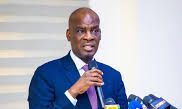
At the centre of the announcement is the Minister for Education, Haruna Iddrisu, who unveiled the policy during the launch of the 150th anniversary celebrations of Mfantsipim School on April 11. Framing the initiative as a cornerstone of President John Dramani Mahama’s “reset agenda,” the Minister declared:
“From the first of July, special education for vulnerable persons with disabilities will be free in Ghana.”
The policy, according to Mr. Iddrisu, aims to dismantle financial barriers that have long excluded children with disabilities from accessing quality education. It will be implemented under the leadership of President Mahama and Vice President Jane Naana Opoku-Agyemang, herself a former Minister for Education and long-time advocate for equitable access to schooling.
A Policy Rooted in Longstanding Gaps
Ghana’s commitment to inclusive education is not new. The country is a signatory to the UN Convention on the Rights of Persons with Disabilities and has, over the years, adopted policies intended to mainstream children with special needs into the national education system. Yet, implementation has often lagged behind policy ambition.
According to data from the Ghana Education Service (GES), children with disabilities remain significantly underrepresented in school enrolment figures. A 2021 report by the Ministry of Education acknowledged that infrastructure deficits, lack of trained teachers, and social stigma continue to hinder access.
Education policy analyst and former Director-General of the Ghana Education Service, Professor Kwasi Opoku-Amankwa, has previously emphasized the systemic challenges confronting inclusive education. In public lectures and policy discussions, he has consistently argued that “access without support systems will not deliver real inclusion,” pointing to gaps in teacher training and learning materials.
The new policy appears to recognize these challenges. Mr. Iddrisu disclosed that GH¢100 million has been earmarked under the Ghana Education Trust Fund (GETFund) formula approved by Parliament to finance the programme.
The Money Question: Is GH¢100 Million Enough?
While the allocation signals political commitment, education finance experts say the figure raises questions about adequacy.
GETFund, established to support infrastructure and educational development, has historically faced competing demands—from tertiary education projects to basic school infrastructure. Public financial reports from the GETFund Secretariat show that disbursement delays and funding constraints have occasionally slowed project execution.
Speaking in various policy forums, education economist Dr. Peter Quartey, Director of the Institute of Statistical, Social and Economic Research (ISSER), has cautioned that “education financing in Ghana must be aligned with realistic cost projections and long-term sustainability planning.”
Although Dr. Quartey has not publicly commented specifically on this new policy, his broader analysis of Ghana’s education financing suggests that earmarked funds often fall short when programmes expand beyond initial projections.
In the case of special education, costs extend beyond tuition. They include assistive technologies, specialized teaching staff, adapted infrastructure, and transportation support—components that significantly increase per-student expenditure.
Mr. Iddrisu acknowledged this reality, noting that the government has “structured a specific fiscal strategy to ensure the programme’s sustainability, moving beyond mere tuition waivers to include comprehensive support systems.” However, details of this strategy remain limited in the public domain.
From Announcement to Implementation
The Minister’s remarks follow an earlier declaration in January 2026 that special needs education would be entirely free. He reiterated this commitment during the commissioning of the Gloria Boatema Dadey–Nifa Basic School in Adukrom—a project spearheaded by the KGL Foundation.
At that event, Mr. Iddrisu described the initiative as a “flagship programme designed to lift the financial burden from thousands of vulnerable families.”
Yet, stakeholders in Ghana’s education sector warn that policy announcements often face bottlenecks at the implementation stage.
A 2020 UNICEF Ghana report on inclusive education highlighted that many schools lack basic accessibility features such as ramps, accessible washrooms, and specialized learning materials. The report also noted a shortage of trained special education teachers, particularly in rural areas.
Similarly, the World Bank’s education sector analyses have consistently pointed out that inclusive education requires not just policy shifts, but “system-wide reforms, including teacher training, curriculum adaptation, and sustained financing.”
Voices from the Disability Community
Advocacy groups for persons with disabilities have welcomed the policy but remain cautiously optimistic.
The Ghana Federation of Disability Organisations (GFD), in past statements on inclusive education reforms, has emphasized that affordability is only one barrier among many. Issues such as stigma, transportation challenges, and limited institutional capacity continue to restrict access.
Disability rights advocates have long argued that free education must be accompanied by targeted interventions to address these structural barriers. Without them, they say, enrolment gains may not translate into meaningful learning outcomes.
Political Context and the “Reset Agenda”
The policy is being rolled out under President Mahama’s broader “reset agenda,” which seeks to reposition Ghana’s socio-economic development framework following years of fiscal challenges.
Education has featured prominently in this agenda, with a focus on equity and access. Vice President Jane Naana Opoku-Agyemang, a respected academic and former Education Minister, brings significant experience to the initiative. During her tenure, she championed policies aimed at expanding access to underserved communities.
Political analysts note that the free special education policy could also carry electoral significance, particularly as governments increasingly prioritize social protection programmes that directly impact vulnerable populations.
Learning from Past Policies
Ghana’s education sector has a history of ambitious programmes, including the Free Senior High School (Free SHS) policy introduced in 2017. While widely praised for expanding access, Free SHS has also faced criticism over funding gaps, overcrowding, and infrastructure strain.
Experts suggest that the success of the new special education policy will depend on whether lessons from Free SHS are applied—particularly in areas of planning, funding, and stakeholder engagement.
Professor George K.T. Oduro, former Pro Vice-Chancellor of the University of Cape Coast and an education policy expert, has in academic discussions stressed the importance of “evidence-based implementation and continuous monitoring” in large-scale education reforms.
The Role of GETFund
The Ghana Education Trust Fund will serve as the financial backbone of the initiative. Parliamentary approval of the GH¢100 million allocation signals legislative backing, but oversight will be critical.
Public accounts and audit reports have previously highlighted inefficiencies in fund utilization across various sectors. Ensuring transparency in the disbursement and use of funds for special education will be key to maintaining public trust.
What Happens Next?
With less than three months to the July 1 rollout date, attention is now shifting to operational readiness.
Key questions remain:
Are schools equipped to accommodate an influx of students with special needs?
Is there a sufficient number of trained special education teachers?
How will funds be disbursed and monitored?
What mechanisms are in place to evaluate impact?
For families of children with disabilities, the policy offers hope—but also uncertainty.
Conclusion: A Promise Worth Watching
The government’s plan to roll out free special education marks a significant policy shift in Ghana’s education landscape. By targeting one of the most marginalized groups, the initiative aligns with global commitments to inclusive education and social equity.
However, as past experience shows, the success of such policies lies not in their announcement but in their execution.
If adequately funded, transparently managed, and supported by systemic reforms, the programme could transform the lives of thousands of children with disabilities. If not, it risks becoming another well-intentioned policy constrained by the realities of implementation.
For now, the July 1 deadline stands as both a promise—and a test of Ghana’s commitment to leaving no child behind.