

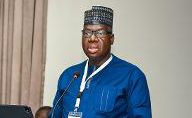
By Dr. Robert Ochola, CEO, AfricaNenda Foundation and Premier Oiwoh, Managing Director/CEO, NIBSS
Africa is undergoing a digital transformation, marked by rising mobile phone adoption even in remote regions, rapid fintech innovation, and the steady growth of digital public infrastructure such as interoperable payment systems and digital ID frameworks. These trends are laying a critical foundation for inclusive economic growth.
Yet, a staggering 400 million Africans remain financially excluded; unable to access even the most basic formal financial services. This contradiction is not just unacceptable and unsustainable; it risks reinforcing inequality and limiting the impact of innovation. Bridging this gap is essential not only for economic development but also for empowering communities, unlocking productivity, and ensuring the digital revolution reaches everyone, everywhere.
As highlighted during the recent peer learning visit hosted by the AfricaNenda Foundation in collaboration with the Nigeria Inter-bank Settlement System (NIBSS), held in Lagos, the time has come to move beyond reliance on imported systems and to champion African-built, African-owned payment solutions that respond to our local realities. The event brought together senior stakeholders from across the continent to learn, reflect, and act.

One message that echoed consistently throughout the five-day forum was the fact that the path to financial inclusion in Africa must be paved with homegrown innovation rooted in local realities. While global technologies offer useful tools, they cannot replace the deep understanding of Africa’s diverse economic, social, and regulatory landscapes. Real progress requires solutions designed for Africans, by Africans; tailored to informal traders, local languages, rural connectivity, and the needs of underbanked communities.
Why Homegrown Matters
Imported technologies might offer speed, but do not necessarily guarantee fit. Africa’s financial systems must account for our informal economies, our language diversity, our infrastructure gaps, and our shared ambition for equity. As Dr. Robert Ochola, CEO of AfricaNenda Foundation, reminded us: “Africa can build its own systems and make them world-class.”
The goal is not simply to digitize; it is to include. That means designing systems from the margins inward and ensuring they work for the most vulnerable including women, and youth, and for the unbanked. Real inclusion also means providing access through USSD for those without smartphones. It means deploying agent networks to remote areas, providing offline solutions and pricing structures that protect the poor. Real Inclusion also means building trust, not just technology.
NIBSS: A Blueprint for Scalable, Inclusive African Innovation
The Nigeria Inter-Bank Settlement System (NIBSS) has long been a pioneer in Africa’s digital payments landscape and its journey just reached a major new milestone.
Processing nearly a billion transactions every month, NIBSS is a 100% homegrown payment system that operates 24/7 with real-time clearing, robust security, and inclusive features that serve banks, fintechs and other financial service providers.
Intrinsically, NIBSS platforms are robust in design and allow for integration by banks, fintechs, mobile operators, agent networks, and other financial service providers; thereby ensuring access for the unbanked.
What makes NIBSS model uniquely inspiring for other African countries is its homegrown design, deep regulatory alignment, and scalability across formal and informal sectors.
During the peer learning visit, NIBSS unveiled the National Payment Stack (NPS), a next-generation, homegrown payment infrastructure that builds on the proven success of the NIBSS Instant Payments (NIP) system.
Mr. Premier Oiwoh, the Managing Director & CEO of NIBSS, described the NPS as more than just a new platform, emphasizing that it is a foundational investment in Nigeria’s financial future. He stressed the importance of building African-led solutions that move beyond legacy frameworks and support free trade through seamless financial movement.

He also underscored the value of regulatory collaboration, crediting NIBSS’ close partnership with the Central Bank of Nigeria as a key factor in delivering a trusted, efficient and future-ready payment infrastructure.
More than just a new platform, the NPS is designed to deepen financial inclusion, enhance the efficiency of public sector payments, and accelerate Nigeria’s progress toward a $1 trillion digital economy.
The National Payment Stack (NPS) enables real-time payments with instant settlement and ISO 20022-compliant messaging for enhanced data exchange and interoperability. It provides a sandbox-enabled API environment that allows seamless integration by banks, fintechs and other financial service providers. Key features include Request-to-Pay, Direct Debit, and an integrated Know Your Customer (KYC) validation framework. Currently, the Bank Verification Number (BVN) serves as the primary trusted identifier; with potentials for other identifiers such as (NIN) powered by the National Identity Management Commission (NIMC), Tax Identification Number (TIN) and Registered Company Number (RC) to further strengthen user authentication and regulatory compliance.
Central to the success of inclusive digital financial services is the ability to reliably identify and verify users. The integration of identity frameworks such as (NIN) into the National Payment Stack (NPS) marks a critical step in expanding access to financial services. By enabling seamless and secure (KYC) validation, this synergy helps to bring more Nigerians into the formal financial ecosystem, particularly those in underserved or informal sectors, thereby supporting national goals on financial inclusion and economic participation.
By integrating payments, identity, and data into one intelligent platform, the NPS enables a more secure, transparent, and inclusive financial experience for everyday Nigerians; from merchants and micro-entrepreneurs to civil servants and rural consumers.
NPS is also multi-currency ready, cross-border capable, and equipped with automated dispute resolution and fraud detection tools combining speed, security, and user trust.
NPS is a prime example of how local skills can be developed and harnessed to create economic value and also underscores the fact that the decision to build in-house deserves serious consideration, especially considering its long-term benefits.
Mr. Premier Oiwoh’s challenge to the industry was clear – “When it comes to uptime, 99.9% isn’t good enough. That 0.1% can be critical, even life-altering. For us, the only acceptable KPI is 100%.”
That level of ambition demands not just digital access, but digital reliability and echoes the mission of AfricaNenda Foundation.
AfricaNenda Foundation: Partnering for Impact
AfricaNenda Foundation exists to walk with countries as they build Inclusive Instant Payment Systems (IIPS). We do not come with blueprints, but with consideration, experience, and commitment. Our role is to support technical design, strengthen regulatory frameworks, and convene communities of practice where countries can learn from each other.
The Peer Learning Visit in Lagos convened leaders who represented over 20 African countries, including Eswatini, Somalia, Togo, Guinea, Liberia, Madagascar, South Sudan, and others. But this was more than a technical visit; it was the start of something bigger.
The gathering marked a collective commitment to a Pan-African vision: building scalable, interoperable, and inclusive instant payment systems that serve the real needs of people across the continent. From sharing national experiences to exploring common challenges, the energy in the room reflected a shared belief that Africa can and must lead its own digital financial future.
A Call to Action
Both AfricaNenda Foundation and NIBSS agree that it is time to dismantle artificial barriers and jurisdictional silos. To that end, we re-echo the proposal by Mr. Musa Jimoh, the Director, Payment System Policy at the Central Bank of Nigeria (CBN), for an Africa Regulators Forum on Instant Payment Systems. Such a platform would enable the alignment of standards, foster trust and catalyze collaborative innovation across borders.
Let us not confuse digitization with inclusion. Let us not accept 99.9% when 100% is the standard our people deserve. Let us build systems that reflect our realities, respect our diversity, and respond to our ambitions.
As Chinua Achebe once wrote, “The world is like a Mask dancing. If you want to see it well, you do not stand in one place.”
Let us move together. Let us build boldly. Let us go far.
Dr. Robert Ochola is the CEO, AfricaNenda Foundation, and Premier Oiwoh is the Managing Director/CEO, NIBSS