

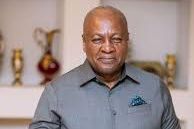
By Alex Ababio
Accra — President John Dramani Mahama has firmly ruled out any attempt to seek a third presidential term, quelling weeks of internal speculation within the ruling National Democratic Congress (NDC) and sections of the Ghanaian political landscape that had begun to interrogate the possibility of an extended tenure beyond constitutional limits.
The clarification, according to sources familiar with high-level party deliberations, was delivered during a closed-door meeting with the NDC Council of Elders held last Friday at the Jubilee House (Flagstaff House), where concerns over succession politics, internal lobbying, and premature campaigning dominated discussions.
The meeting, chaired by veteran statesman Alhaji Mahama Iddrisu, reportedly provided a platform for senior party figures to confront growing unease over alleged covert lobbying by some government and party officials positioning themselves for succession ahead of the 2028 elections.
Constitutional Line Drawn: Article 66(2) at the Center of Debate
At the heart of the matter is Article 66(2) of the 1992 Constitution of Ghana, which clearly stipulates that a person elected as President shall not serve more than two terms in office.
Legal and constitutional analysts have consistently interpreted this provision as one of the strongest safeguards of Ghana’s democratic stability, designed to prevent executive overreach and entrenchment of power.
Although no formal constitutional amendment proposal has been tabled, speculation around a possible third term bid had gained traction in political discourse over the past year, fueled largely by online debates, partisan commentary, and misinterpretations of transitional constitutional clauses.
Within political science literature on African democracies, term-limit adherence is widely considered a key indicator of democratic consolidation. Ghana, often cited among stable democracies in West Africa, has historically maintained respect for presidential term limits since the start of the Fourth Republic.
Mahama’s Position: A Firm Rejection of Extension Politics
Sources present at the Council of Elders meeting indicate that President John Dramani Mahama reiterated his commitment to constitutional limits and explicitly dismissed any suggestion that he would pursue an additional term beyond what is legally permitted.
According to accounts shared with local media, the President used the opportunity to reaffirm a stance he has previously communicated publicly, including remarks attributed to his earlier engagements during a state visit to Singapore last year, where he emphasized respect for constitutional governance and orderly political transitions.
While no direct public transcript of the Flagstaff House meeting has been released, insiders describe the President’s message as “unequivocal” and intended to shut down internal lobbying narratives that had begun to create factional tension within the party.
Internal NDC Tensions: Succession Politics Surface Early
The Council of Elders meeting also reportedly addressed concerns over growing internal maneuvering within the NDC, with allegations that some officials are informally campaigning or aligning themselves for post-Mahama succession.
These concerns reflect a broader pattern in Ghanaian politics where ruling parties often experience internal recalibration well before general elections, especially when an incumbent or former president is perceived as nearing the end of a constitutional cycle.
However, the meeting notably took place without some key national executives of the party, including General Secretary Fifi Fiavi Kwetey and National Chairman Johnson Asiedu Nketia.
While no official reason was provided for their absence, party insiders suggest it may have been due to scheduling constraints rather than deliberate exclusion.
“Sycophants and Bootlickers”: Kwetey’s Earlier Warning Still Resonates
The third-term speculation had previously been publicly rejected by senior party leadership.
At the 31st December Revolution anniversary event last year, Fifi Fiavi Kwetey strongly condemned individuals advocating for a third-term agenda for President Mahama.
He described such individuals as: “sycophants” and “bootlickers”
According to him, those promoting the idea were not acting in the genuine interest of either the President or the party, but were instead pursuing personal political survival strategies.
Kwetey’s remarks were widely circulated within party circles and interpreted as an attempt to discipline internal messaging while reinforcing the NDC’s official adherence to constitutional order.
He further emphasized that the NDC would not support any effort to manipulate or amend constitutional provisions on term limits, stressing that the party’s focus should remain on strengthening its electoral competitiveness ahead of the 2028 general elections.
Political Strategy or Misreading of Constitutional Space?
Despite the President’s categorical rejection of a third-term bid, political analysts note that speculation often emerges in African democracies when incumbent leaders or influential former presidents maintain significant political visibility.
In Ghana’s case, constitutional clarity appears strong, but political narratives can sometimes outpace legal reality, particularly on social media platforms where misinformation and speculative commentary often circulate without verification.
Governance experts argue that Ghana’s institutional framework—particularly the judiciary, Parliament, and Electoral Commission—remains a key stabilizing force against unconstitutional tenure extensions.
However, analysts also caution that internal party dynamics can still generate uncertainty, especially when succession planning is not clearly managed or publicly communicated.
The Role of Party Elders and Internal Discipline
The involvement of the NDC Council of Elders in addressing the issue highlights the continuing influence of traditional party structures in moderating internal political behavior.
Chaired by Alhaji Mahama Iddrisu, the Council reportedly used the meeting to caution against premature campaigning and to reinforce party discipline ahead of the next electoral cycle.
Such interventions are not uncommon in Ghanaian party politics, where elder councils often serve as mediating institutions during periods of internal tension.
Broader Implications for Ghana’s Democratic Stability
Ghana’s democratic reputation in West Africa has often been linked to peaceful transitions of power and respect for constitutional term limits. The reaffirmation by John Dramani Mahama is therefore seen as politically significant beyond internal party dynamics.
It sends a broader signal to both domestic stakeholders and international observers that constitutional continuity remains intact.
Political governance experts note that adherence to term limits is one of the most important safeguards against democratic backsliding, particularly in regions where executive power has historically been concentrated.
While Ghana has not faced recent constitutional crises over term extensions, the recurring public debate underscores the importance of continuous civic education on constitutional provisions.
What Comes Next for the NDC and 2028 Politics
With the third-term debate now explicitly dismissed at the highest level of the party, attention is expected to shift toward internal restructuring, candidate positioning, and policy messaging ahead of 2028.
The NDC’s challenge will be balancing internal ambition with disciplined messaging to avoid factional divisions that could weaken its electoral competitiveness.
For now, however, the President’s position appears clear: constitutional boundaries remain non-negotiable.
Conclusion
The controversy surrounding a potential third term for John Dramani Mahama reflects more about internal political anxieties than legal reality.
With Article 66(2) of Ghana’s Constitution firmly in place and senior party leadership publicly rejecting any attempt to alter it, the debate appears to have been decisively closed—at least for now.
But as Ghana edges closer to the 2028 election cycle, the episode reveals an enduring feature of its political landscape: the early and often intense struggle over succession, even long before the ballot boxes are opened.