

By Alex Ababio
When John Dramani Mahama announced that the government had procured 2,500 transformers to stabilize Ghana’s electricity supply, the message was clear: relief is on the way. But behind the headline figure lies a more complex story—one that raises critical questions about infrastructure gaps, financing pressures, and whether this intervention can meaningfully end the persistent threat of power instability.
A Bold Intervention Amid Persistent Grid Stress
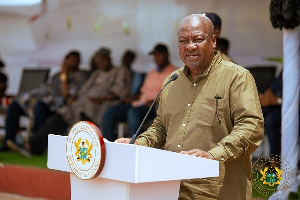
Speaking during an inspection exercise at the Northern Electricity Distribution Company yard in Tamale, President Mahama stated that Cabinet approval and support from the Ministry of Finance (Ghana) had enabled the procurement of the transformers.
He emphasized that the first phase of installations is expected to improve power stability nationwide, while acknowledging that the process would be gradual.
“The first phase of installations is expected to improve power stability, with plans to continue replacing old transformers over time,” he said.
However, sector analysts say the announcement must be assessed within the broader context of Ghana’s fragile power distribution network—where aging infrastructure, technical losses, and underinvestment continue to undermine reliability.
“Not Dumsor”—But What Do the Numbers Say?
President Mahama was quick to reject comparisons to the country’s infamous power crisis.
“Recent outages linked to the exercise should not be described as ‘dumsor.’”
The term “dumsor,” synonymous with Ghana’s prolonged blackouts between 2012 and 2016, carries heavy political and economic weight. Yet recent data suggests that while Ghana is not in a full-blown generation crisis, the distribution segment remains under severe strain.
According to reports by the Energy Commission of Ghana, distribution losses—both technical and commercial—still hover around 20–25%, far above global best practice levels of under 10%. These losses are often linked to overloaded or obsolete transformers, illegal connections, and poor maintenance regimes.
Energy economist Dr. Ishmael Ackah of the Public Utilities Regulatory Commission has previously warned in public forums that:
“Even when generation is sufficient, inefficiencies in distribution can create localized outages that feel like dumsor to consumers.”
This distinction is crucial. While Ghana’s installed generation capacity exceeds peak demand, bottlenecks in transmission and distribution continue to trigger outages across urban and peri-urban areas.
Transformer Deficits: A Known but Underreported Crisis
Industry data indicates that transformer shortages and failures have been a longstanding issue for utilities such as the Electricity Company of Ghana and NEDCo.
Internal audits and parliamentary committee discussions over the years have pointed to:
Thousands of overloaded transformers operating beyond capacity
Delayed maintenance cycles due to funding constraints
Rapid urban expansion outpacing infrastructure upgrades
In many fast-growing communities, a single transformer designed for 50 households may end up serving over 150—leading to frequent breakdowns and voltage fluctuations that damage appliances and disrupt businesses.
Power engineer and policy analyst Dr. Elikplim Apetorgbor, CEO of the Independent Power Generators Ghana, has noted in industry discussions:
“Distribution infrastructure is the weakest link in Ghana’s power value chain. Without sustained investment, new generation capacity alone will not solve reliability issues.”
Temporary Outages: Necessary Disruption or Poor Planning?
President Mahama acknowledged that the installation exercise will require temporary power cuts but assured residents of prior notification.
“Residents will be notified in advance whenever power is to be switched off to allow for installation works.”
Yet this assurance has often been a sticking point. Consumer advocacy groups argue that unannounced or poorly communicated outages remain a recurring challenge.
The Public Utilities Regulatory Commission has, in multiple public statements, urged utilities to improve communication with consumers, especially during planned maintenance and upgrades.
For businesses—particularly SMEs and manufacturers—these interruptions come at a cost. The Association of Ghana Industries has consistently highlighted how unreliable power supply increases operational expenses, forcing companies to rely on diesel generators and reducing competitiveness.
Local Manufacturing: Promise vs Capacity
One of the more notable aspects of the President’s announcement was his emphasis on local production.
“The local production of many of the transformers supports the economy and creates additional benefits for the country.”
Ghana has made strides in developing local electrical equipment manufacturing capacity, with firms assembling distribution transformers domestically. However, industry insiders caution that full-scale production—including core components—still relies heavily on imports.
Energy sector reports indicate that while local assembly can reduce costs and create jobs, challenges remain:
Limited access to high-grade electrical steel
Dependence on imported components
Currency volatility affecting production costs
Despite these constraints, experts agree that expanding local manufacturing is a strategic move—particularly in reducing lead times and foreign exchange exposure.
Financing the Grid: The Unspoken Constraint
While the government has secured Cabinet and Finance Ministry backing, the broader question is how sustained investments in power infrastructure will be financed.
Ghana’s energy sector has long struggled with debt accumulation, driven by:
Tariff shortfalls
High cost of power purchase agreements
Inefficiencies in revenue collection
The Ministry of Finance (Ghana) has repeatedly acknowledged the need for structural reforms to restore financial sustainability in the sector.
The World Bank and International Monetary Fund, in various program documents, have also emphasized the importance of reducing technical losses and improving operational efficiency as part of Ghana’s broader economic recovery efforts.
Growing Demand: A Race Against Time
President Mahama’s call for continuous investment reflects a deeper reality—Ghana’s electricity demand is rising rapidly.
Urbanization, industrialization, and digitalization are driving increased consumption, particularly in regions like Ashanti, Greater Accra, and Northern Ghana.
According to the Energy Commission of Ghana, peak demand is expected to continue growing steadily, placing additional pressure on already stretched infrastructure.
Without parallel investments in transmission lines, substations, and smart grid technologies, experts warn that transformer upgrades alone may offer only temporary relief.
The Bigger Question: Will 2,500 Transformers Be Enough?
The procurement of 2,500 transformers is significant—but whether it is sufficient remains unclear.
Energy analysts point out that:
The actual national deficit of functional transformers has not been publicly disclosed
Replacement cycles for aging equipment are ongoing and resource-intensive
Population growth and electrification projects continue to expand demand
In other words, the intervention may be necessary—but not sufficient.
What Comes Next?
For consumers, the immediate concern is simple: will the lights stay on?
For policymakers, however, the stakes are higher. The success of this initiative will depend on:
Transparent deployment and monitoring of the transformers
Improved maintenance systems to prevent future breakdowns
Stronger financial management within utilities
Continued investment across the entire power value chain
As Ghana navigates its energy future, the 2,500-transformer project could either mark a turning point—or become another short-term fix in a long-running structural challenge.
What is clear is that power stability is no longer just a technical issue. It is an economic imperative, a political test, and a measure of institutional effectiveness.
And for millions of Ghanaians who have lived through “dumsor,” promises alone will not be enough—they will be watching the grid.