

By Alex Ababio
Introduction
Let me clear up a confusion I see all the time. Many US entrepreneurs think a business visa lets them work freely in Ghana. Others believe they need a work permit just to attend a one-day meeting. Both assumptions are wrong, and both can get you into serious trouble.
Choosing the wrong document can lead to denied entry at the airport, deportation, or even a ban from re-entering Ghana. That is not a risk you want to take with your business or your freedom.
This guide explains exactly what a Ghana Business Visa is, what a Ghana Work Permit is, how they differ, and most importantly, which one you need based on your specific business activities. Let me walk you through it.
What Is a Ghana Business Visa? (Definition, Purpose, Allowed Activities)
A Ghana Business Visa is a short-term entry permit for US citizens who need to conduct business activities that do not amount to local employment. Think of it as a visitor pass for business purposes.
Here is what you are allowed to do on a business visa:
Attending conferences or trade shows in Accra. Meeting with potential clients or business partners. Negotiating contracts. Conducting market research for a future investment. Attending training sessions. Giving short-term consultations that last less than 30 days.
Here is what you cannot do on a business visa. You cannot receive a salary or any income from a Ghanaian source. You cannot manage a local office. You cannot work as an employee for a Ghanaian company. You cannot actively run daily operations of a business.
Let me give you a clear example. James is a US software consultant. He flies to Accra for two weeks to meet with a Ghanaian client, review their systems, and sign a contract. That is a business visa. Now imagine James stays for six months to manage that client’s IT department. That requires a work permit. Same person, same client, different duration and level of activity.
What Is a Ghana Work Permit? (Definition, Purpose, Allowed Activities)
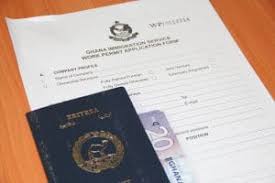
A Ghana Work Permit is a long-term authorization for US citizens who want to work for a Ghanaian employer, run a local business, or engage in paid employment in Ghana. Unlike a business visa, a work permit is usually tied to a specific employer and a specific job role.
Here is what you are allowed to do with a work permit:
Working as an employee for a Ghanaian company. Serving as a director or manager of a Ghanaian company. Engaging in paid consulting for more than 30 days. Running a local business that employs Ghanaians. Receiving a salary or income from a Ghanaian source.
Here is a real example. Maria is a US entrepreneur. She registered a tech startup in Ghana. She plans to live in Accra and serve as CEO for two years. She will receive a salary from her Ghanaian company. Maria needs a work permit. A business visa would not cover her activities.
Side-by-Side Comparison
Let me compare the two documents across eight important criteria.
Duration: A business visa is valid for 30 to 90 days per entry. You can extend it once or twice, but total stay is limited. A work permit is valid for 1 to 2 years and is renewable.
Allowed activities: On a business visa, you can attend meetings, negotiate contracts, and do short consulting under 30 days. On a work permit, you can do full employment, manage a business, and receive a Ghanaian salary.
Income from Ghanaian source: On a business visa, this is prohibited. On a work permit, it is allowed.
Application location: For a business visa, you apply at the Embassy of Ghana in Washington, D.C., before you travel. For a work permit, you apply through the Ghana Immigration Service (GIS), and usually your employer or your Ghanaian company applies on your behalf from within Ghana.
Processing time: A business visa takes 5 to 10 business days. Expedited service can take 2 to 3 days. A work permit takes 2 to 4 months. There is no expedited service.
Cost: A business visa single entry costs $160. Multiple entry costs $200. Expedited processing adds $100. A work permit application fee ranges from $500 to $1,500 depending on the industry. Legal fees add another $300 to $800. A residence permit after approval costs about $1,000 annually.
Required documents: For a business visa, you need an invitation letter from your Ghanaian partner, a letter from your US company, your passport, photos, flight itinerary, and proof of accommodation. For a work permit, you need an employment contract, proof that the job was advertised locally with no qualified Ghanaian found, your educational certificates, and a police clearance.
Path to residence permit: A business visa does not lead to a residence permit. A work permit does. Once you have a work permit, you can apply for a residence permit to stay in Ghana for the duration of your work.
Who Needs a Business Visa? (Scenarios for US Entrepreneurs)
Let me give you specific scenarios where a business visa is the right choice.
You are attending a trade conference or industry event in Accra. You are meeting with potential Ghanaian partners or clients for a few days. You are conducting due diligence for a potential investment. You are giving a short training or workshop that lasts under 30 days. You are inspecting a property or business asset you plan to buy. You are negotiating a contract that will be signed outside Ghana.
Here is a real example. James, the US real estate investor I mentioned earlier, flew to Accra for 10 days. He inspected three properties and met with a local agent. He did not receive any income from Ghana. He used a business visa. That was completely legal.
Who Needs a Work Permit? (Scenarios for US Entrepreneurs)
Now let me give you scenarios where a work permit is required.
You are opening and actively managing a business in Ghana, such as a restaurant, retail store, or manufacturing operation. You are working as a paid employee for a Ghanaian company. You are providing paid consulting services for more than 30 days. You are serving as a director or officer of a Ghanaian company and receiving a salary. You are working as a teacher, nurse, engineer, or any professional in a Ghanaian institution. You are engaging in any activity where you receive income from a Ghanaian source.
Here is a real example. Maria, the tech entrepreneur, registered her startup in Ghana. She planned to live in Accra and serve as CEO for two years. She needed a work permit. She could not do that on a business visa.
Application Process for a Ghana Business Visa (Step-by-Step)
Let me walk you through the business visa application process.
Step 1: Obtain an invitation letter from your Ghanaian business partner or host company. This letter should state the purpose and duration of your visit.
Step 2: Get a letter from your US employer or your own US company. This letter should state your position, the purpose of your trip, and confirm that you will not be employed in Ghana.
Step 3: Complete the online visa application at the Embassy of Ghana portal. The website is https://www.embassyofghana.org.
Step 4: Gather all required documents. You need your passport with at least 6 months validity, two passport photos, your flight itinerary, and proof of accommodation in Ghana.
Step 5: Pay the fee. Single entry is $160. Multiple entry is $200. Use a money order or cashier’s check payable to Embassy of Ghana.
Step 6: Submit your application to the Embassy of Ghana in Washington, D.C., either in person or by mail through their designated visa service. The address is 3512 International Drive NW, Washington, D.C. 20008.
Step 7: Wait for processing. Standard processing takes 5 to 10 business days. Expedited takes 2 to 3 business days.
Application Process for a Ghana Work Permit (Step-by-Step)
The work permit process is more complex. Let me break it down.
Step 1: Your Ghanaian employer or your own Ghanaian company must submit a job description to the Ghana Immigration Service (GIS). This description must show why a foreigner is needed for the role.
Step 2: GIS requires proof that the position was advertised locally and that no qualified Ghanaian citizen was found. This is called the labor market test.
Step 3: Submit the work permit application along with your employment contract, educational certificates, and a police clearance certificate from the US.
Step 4: Pay the work permit fee. This varies by industry but typically ranges from $500 to $1,500.
Step 5: Wait for processing. This takes 2 to 4 months. There is no expedited service.
Step 6: Once approved, you receive a work permit. You then apply for a residence permit, which takes another 1 to 2 months and costs about $1,000 annually.
Here is an important note for entrepreneurs. If you are starting your own business, your Ghanaian company must sponsor your work permit. You cannot sponsor yourself as an individual. You need to register your company in Ghana first, then have that company apply for your work permit.
Costs Comparison
Let me give you specific dollar amounts so you can budget.
A single entry business visa costs $160. A multiple entry business visa costs $200. If you need expedited processing, add $100.
A work permit application fee ranges from $500 to $1,500 depending on your industry. If you use an immigration lawyer, add $300 to $800 for legal and filing fees. After approval, a residence permit costs about $1,000 per year.
So for a short business trip using a business visa, your total cost is $160 to $300. For a first year work permit including legal assistance, your total cost is $1,800 to $3,500.
Processing Times Comparison
A business visa takes 5 to 10 business days. Expedited service takes 2 to 3 business days.
A work permit takes 2 to 4 months. No expedited service.
After work permit approval, a residence permit takes an additional 1 to 2 months.
So if you are planning to work in Ghana long-term, start the process at least 6 months before you plan to move.
Common Mistakes and How to Avoid Them
Let me share the most common mistakes I see US entrepreneurs make.
Mistake 1: Working on a business visa. I have seen US entrepreneurs stay in Ghana for three months and actively run their business every day on a business visa. That is illegal. The consequence can be deportation and a ban from re-entering Ghana. If you are managing daily operations, you need a work permit.
Mistake 2: Applying for a work permit when a business visa is sufficient. Some entrepreneurs spend thousands of dollars and wait months for a work permit just to attend a one-week meeting. That is a waste of time and money. Use a business visa for short trips with no Ghanaian income.
Mistake 3: Assuming a business visa allows remote work for a US company. This is a gray area. Technically, any work performed while physically in Ghana could require a permit. In practice, Ghana immigration does not actively enforce against digital nomads working remotely for US clients on short stays. But for long stays over 90 days, you should consult an immigration lawyer.
Mistake 4: Not having a local sponsor for a work permit. You cannot simply apply for a work permit on your own. You need a Ghanaian employer or your own registered Ghanaian company to sponsor you. Many entrepreneurs try to apply as individuals and are rejected.
Frequently Asked Questions
Can I convert a business visa into a work permit while in Ghana?
No. You cannot convert a business visa to a work permit from within Ghana. You must leave Ghana and apply for a work permit from outside the country, or your employer must apply before you enter.
Can I volunteer in Ghana on a business visa?
No. Volunteering, even if unpaid, requires a volunteer visa or a work permit if it involves ongoing activity. A business visa is for business meetings and negotiations, not for volunteering at a school or clinic.
Can I start a business in Ghana on a business visa?
You can register a company and attend meetings. But you cannot actively manage daily operations or receive a salary. For that, you need a work permit.
How long can I stay on a business visa?
The initial stay is usually 30 to 90 days. You can apply for one or two extensions at the Ghana Immigration Service in Accra. But you must leave after the total allowed period. You cannot stay indefinitely on a business visa.
Do I need a work permit if my US company pays me and I work remotely from Ghana?
This is a gray area. Officially, any work performed while physically in Ghana could require a permit. In practice, many digital nomads work remotely on a business visa for short stays of a few weeks. For long stays over 90 days, you should consult an immigration lawyer. The safe answer is to get a work permit if you plan to live in Ghana for months while working.
What happens if I am caught working on a business visa?
Ghana immigration can deport you, fine you, and ban you from re-entering for several years. I have seen it happen. Do not risk your business or your freedom.
Conclusion and Next Steps
Let me give you the key decision rule. If you are coming to Ghana for short meetings, conferences, or negotiations and you will not receive any income from a Ghanaian source, use a business visa. It is cheaper, faster, and simpler.
If you plan to actively work, manage a business, or receive a salary from a Ghanaian source, you need a work permit. It takes longer and costs more, but it is the only legal way to work in Ghana long-term.
Assess your situation honestly. When in doubt, consult an immigration lawyer in Ghana. The cost of a consultation is small compared to the cost of deportation.
Before you book your flight or register your company, determine which document you need. A wrong choice could cost you your business and your ability to enter Ghana.
For more information, visit the Embassy of Ghana website at https://www.embassyofghana.org or contact the Ghana Immigration Service. And if you have not already, read our other guides on Ghana Visa for US Citizens, Ghana Citizenship by Descent, Right of Abode in Ghana, and Ghana Travel Insurance.
This guide was last updated in April 2026. Immigration laws and fees change. Always verify with the Embassy of Ghana or Ghana Immigration Service before applying.