

By Alex Ababio
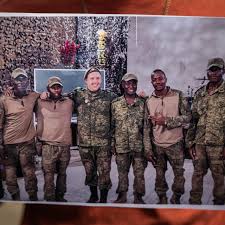
When young African men boarded flights to Moscow, St. Petersburg, or Rostov-on-Don, many believed they were heading toward construction jobs, security contracts, or university placements. Instead, some found themselves in military fatigues, thrust into one of the deadliest conflicts in Europe since World War II: Russia’s invasion of Ukraine.
A newly released evidence dossier by the African Digital Democracy Observatory (ADDO), compiled by investigators at Code for Africa (CfA), sheds light on what it describes as a growing but under-documented pattern: the recruitment—often deceptive or coercive—of African nationals into Russia’s military campaign in Ukraine.
The dossier, described as a resource kit for researchers and regulators, attempts to move beyond anecdotal reporting. “Evidence-based analysis of the growing recruitment of Africans into Russia’s war in Ukraine has to date been fragmented and largely anecdotal,” the press release states. African authorities, it notes, are only now beginning to quantify or respond to the mobilisation, but “their reports offer only local statistics.”
What emerges from the consolidated evidence is a troubling picture of cross-border recruitment networks, economic vulnerability, and geopolitical denial.
—
A Patchwork of Data, Now Consolidated
Until recently, accounts of Africans fighting in Ukraine largely surfaced through sporadic media reports, viral social media videos, or grieving family testimonies. The ADDO resource kit seeks to provide what it calls “a more holistic analytical approach” by compiling publicly verified factual evidence into one consolidated framework.
The dossier includes:
A fact sheet summarising notable trends and insights.
A consolidated summary of credible publicly reported evidence from watchdog media and specialist research institutions.
A baseline database of Africans named as war recruits or casualties.
Among its most sobering figures:
316 Africans believed to have been killed in action, based on European research.
25 Africans confirmed killed in action.
15 Africans confirmed as currently prisoners of war in Ukraine.
While these figures are based on publicly verifiable sources, the dossier warns that the true scale may be far higher.
Ukrainian officials estimate that at least 1,436 African nationals have been identified within Russian ranks. Independent researchers in France suggest the real number could range between 3,000 and 4,000 African fighters.
Military analysts contacted for this report caution that in a conflict characterised by opaque casualty reporting and propaganda from both sides, precise figures are difficult to verify. However, the convergence of estimates from multiple sources indicates that African recruitment is not isolated.
—
Kenya, Nigeria, and Rising Alarm
Some African governments are beginning to respond publicly.
In Kenya, intelligence agencies told parliament this week that over 1,000 locals had been recruited for the war, with 67 either missing in action or injured. The disclosure marked one of the most explicit acknowledgments by an African government of the scale of the problem.
Kenya’s revelations prompted diplomatic friction. The Russian embassy in Nairobi described the parliamentary report as “dangerous and misleading propaganda.”
Meanwhile, Nigeria’s government issued public warnings against deceptive recruitment schemes that are reportedly leaving its citizens stranded on the battlefield. Nigerian officials have cautioned citizens against offers promising lucrative employment or study visas that later morph into military contracts.
Russia’s Ambassador to Nigeria, Andrey Podyolyshev, denied state involvement, blaming “independent actors” for any recruitment activity. Such denials mirror previous Russian statements distancing the state from the actions of private military contractors.
Yet security researchers say the distinction between state and non-state actors in Russia’s military ecosystem is often blurred. Since the early stages of the war, Moscow has relied on a mix of regular forces, regional battalions, and private or semi-private recruitment pipelines to sustain manpower.
—
Deception, Coercion, and Exploitation
The ADDO dossier highlights recurring patterns in how African nationals are recruited.
According to the press release, “African nationals are often recruited through deceptive, coercive, or exploitative schemes, driven by profiteering agents who act covertly and often illegally.”
Interviews conducted by journalists and civil society groups across Africa reveal several recruitment pathways:
1. False Job Offers: Agents advertise construction, security, or factory jobs in Russia with promises of high wages. Upon arrival, passports are confiscated, and recruits are pressured into signing military contracts.
2. Student Visa Traps: Young Africans seeking education opportunities are reportedly redirected into military service after their visas are processed.
3. Debt Leverage: Travel costs and “processing fees” create debt burdens that recruiters use to coerce compliance.
4. Contractual Ambiguity: Some recruits sign documents in Russian without full understanding of the terms, only to discover they have enlisted in the armed forces.
In countries grappling with high youth unemployment, such schemes exploit economic desperation. According to African Development Bank data, youth unemployment and underemployment remain persistent challenges across sub-Saharan Africa, making foreign job offers particularly attractive.
Human rights advocates argue that even when contracts are signed, informed consent is questionable if deception or economic coercion is involved.
—
Casualty Lists and Prisoners of War
The dossier’s database of named recruits and casualties represents one of the most concrete elements of the investigation. It compiles identities from European research institutions, media investigations, and public records.
Among the documented cases are Africans confirmed killed in action and at least 15 confirmed as prisoners of war in Ukraine. Ukrainian authorities have, at times, publicised foreign prisoners captured while fighting for Russian forces.
Under international humanitarian law, prisoners of war are entitled to protections under the Geneva Conventions. However, families in Africa often struggle to obtain clear information about the status of detained relatives.
Independent conflict researchers note that foreign fighters in modern wars occupy a legally complex space. Whether classified as mercenaries, contract soldiers, or volunteers, their rights and legal standing can differ significantly.
—
Diplomatic Silence and Information Gaps
ADDO and CfA researchers say they contacted both Russian and Ukrainian authorities for comment but received no responses at the time of publication.
This silence reflects a broader information gap. While Ukraine has occasionally publicised the presence of foreign fighters within Russian ranks, Russia rarely releases nationality breakdowns of its forces.
European investigative outlets and open-source intelligence groups have filled some of the void by analysing social media posts, obituaries, and leaked military data. Yet African regulators often lack the technical capacity or cross-border cooperation frameworks to track recruitment networks operating across multiple jurisdictions.
The ADDO initiative aims to bridge this gap by offering technical support to African-based newsrooms and research civil society organisations investigating the phenomenon in their regions.
“ADDO will update the resource kit on a regular basis, and offer support for African researchers investigating the issue,” the press release states.
—
The Broader Geopolitical Context
Africa has become an increasingly important arena in Russia’s foreign policy. Diplomatic outreach, military cooperation agreements, and energy deals have expanded over the past decade.
Analysts argue that the recruitment of African nationals—whether through state-sanctioned channels or rogue intermediaries—risks straining these relationships.
Public opinion across African countries has been divided over the Ukraine war. While some governments have adopted neutral positions in United Nations votes, citizens confronted with casualty reports may view the conflict differently when it directly affects their communities.
Furthermore, the mobilisation of African nationals into a European war raises concerns about regional security. Returning fighters, particularly those exposed to combat trauma, could present reintegration challenges similar to those seen in other conflict zones.
—
Quantifying the Crisis
One of the dossier’s central contributions is methodological: it attempts to systematise disparate data points into a baseline.
However, researchers acknowledge significant limitations:
Underreporting: Families may avoid publicising cases due to stigma or fear.
Documentation Barriers: Casualty verification in an active war zone is inherently difficult.
Propaganda Risks: Both sides in the conflict have incentives to shape narratives about foreign fighters.
Despite these challenges, the steady growth of documented names and confirmed cases suggests that recruitment is not slowing.
The Kenyan intelligence briefing—citing over 1,000 recruits—signals that at least some African governments now recognise the scale of mobilisation.
—
What Comes Next?
Experts say a coordinated response will require action on multiple fronts:
1. Stronger Regulation of Recruitment Agencies: Governments must investigate and prosecute agents operating illegally.
2. Public Awareness Campaigns: Clear communication about the risks of overseas contracts linked to conflict zones.
3. Consular Support Mechanisms: Rapid response systems for citizens detained or injured abroad.
4. Regional Cooperation: Intelligence-sharing among African states to track cross-border recruitment networks.
The ADDO resource kit represents an early step toward that coordination. By centralising verified evidence, it provides policymakers, journalists, and civil society actors with a foundation for deeper inquiry.
As the war in Ukraine grinds on into its fourth year, manpower pressures remain acute. Analysts say foreign recruitment—whether from Asia, the Middle East, or Africa—has become one of several strategies used to replenish ranks.
For the young men who boarded planes with dreams of employment or education, the consequences have been irreversible. Some have returned in coffins. Others remain missing. Still others are prisoners in a distant land.
Behind the statistics—316 believed killed, 25 confirmed dead, 15 prisoners of war—are families navigating grief, uncertainty, and diplomatic opacity.
The ADDO dossier does not claim to have the final word. Instead, it positions itself as a living database, one that will be updated as new evidence emerges.
In a conflict defined by contested narratives and disinformation, the simple act of naming—and counting—may be one of the most powerful tools available.