

By Alex Ababio
Ghana’s cocoa sector—long the backbone of the national economy—is facing its most far-reaching accountability reckoning in decades after Cabinet directed a criminal investigation into the operations of the Ghana Cocoa Board (COCOBOD) covering the past eight years.
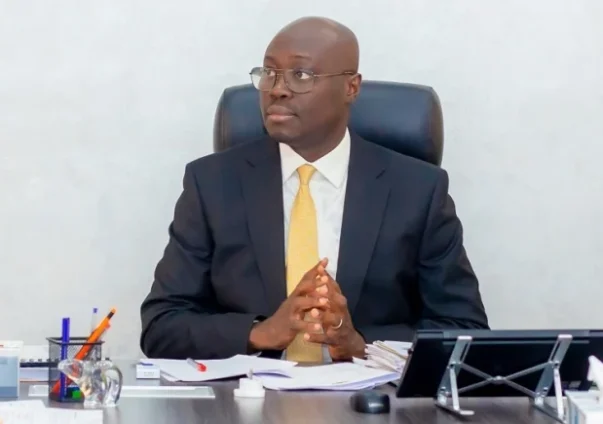
At a high-stakes press conference in Accra on Thursday, 12 February 2026, the Minister for Finance, Dr Cassiel Ato Forson, announced what he described as a sweeping crackdown on the board, ordering both a forensic audit and a criminal probe into decisions that have left the institution saddled with a staggering GH¢32.9 billion debt stock.
“Cabinet has directed the Ministry of Finance to initiate immediate reforms at COCOBOD to streamline operations and cap costs. Wasteful and uncontrolled expenditure practices must be curtailed immediately,” Dr Forson declared, signalling a dramatic policy shift in a sector already rocked by liquidity shortages and declining output.
Eight Years Under the Microscope
According to Dr Forson, Cabinet has sanctioned the Attorney-General’s Department to spearhead the probe, with a mandate to uncover the root causes of COCOBOD’s mounting liabilities since 2017.
The investigation will examine financial commitments, procurement decisions, syndicated loan arrangements, cocoa road contracts and legacy forward sales agreements that critics say have exposed Ghana to billions of cedis in losses.
The timing of the probe comes amid what industry insiders describe as a structural crisis in the cocoa sector. Over 50,000 metric tonnes of cocoa beans are reportedly stranded at ports and warehouses due to liquidity constraints, while Licensed Buying Companies (LBCs) owe commercial banks more than GH¢10 billion.
Banking sector sources say the exposure of domestic banks to cocoa purchasing arrangements has become a systemic risk issue, prompting quiet consultations between the Bank of Ghana and the Finance Ministry.
A Legacy of “Uncontrolled” Spending
A central focus of the criminal and forensic audit will be what the Finance Minister called “wasteful and uncontrolled expenditure practices” that have allegedly persisted since 2017.
Among the key issues flagged:
The Jute Sack Scandal
Reports indicate that 80,000 bales of jute sacks valued at $48 million were ordered in 2024 despite a pre-existing stockpile of 150,000 bales sitting at the ports. Procurement experts say such duplication suggests either inventory mismanagement or deeper contractual irregularities.
If verified, the purchase could represent millions in avoidable foreign exchange outflows at a time when Ghana’s external reserves remain fragile.
Cocoa Road Contracts
Dr Forson revealed that the government inherited cocoa road contracts totalling GH¢26 billion, with over GH¢21 billion incurred without budgetary allocations between 2018 and 2021.
Public finance analysts argue that off-budget contracting—particularly in infrastructure—can mask the true fiscal position of state agencies. Documents from parliamentary finance committee hearings in previous years have repeatedly flagged concerns about COCOBOD’s cocoa roads programme, which was initially justified as essential to improve bean evacuation but ballooned into a major capital expenditure pipeline.
Rollover Contract Losses
Perhaps the most financially consequential issue involves “legacy contracts” for 333,767 tonnes of cocoa sold forward at $2,600 per tonne—well below prevailing international prices during the recent global cocoa rally.
Industry data from the International Cocoa Organization show that global cocoa prices surged above $4,000 per tonne in 2024 and 2025 amid supply shortages in West Africa.
Selling at $2,600 per tonne under rollover arrangements meant that Ghana incurred substantial opportunity losses on every tonne delivered.
“These forward sales structures are meant to hedge risk, not institutionalise losses,” said a former COCOBOD risk manager who requested anonymity. “If pricing models are misaligned or poorly timed, the state pays the price.”
The Collapse of the Syndicated Loan Model
For nearly three decades, COCOBOD has relied on annual syndicated loans from international banks to finance cocoa purchases at the start of each crop season. The model allowed Ghana to pay farmers promptly while awaiting export revenues.
However, the 2024/2025 season reportedly witnessed a catastrophic breakdown in this system after lenders lost confidence in COCOBOD’s ability to honour supply contracts amid falling production and delayed shipments.
International banking sources confirm that appetite for Ghana’s cocoa-backed facilities weakened sharply after rating downgrades and restructuring uncertainties linked to Ghana’s broader debt crisis.
In response, the Finance Ministry is moving to implement a new “domestic funding model” aimed at ending Ghana’s 30-year reliance on expensive syndicated loans from foreign banks.
Economists warn that while domestic financing could reduce foreign currency exposure, it may crowd out private sector credit unless carefully structured.
Emergency Reform Package
The government’s emergency reform package includes several immediate measures:
Administrative Spending Caps
Dr Forson announced a total prohibition on non-essential procurement, including high-end vehicle fleets and discretionary spending.
Public procurement analysts say such caps are common in state-owned enterprise restructuring programmes, but enforcement remains key.
LBC Liquidity Injection
The government plans to address the $185 million owed to private buyers to ensure farmers are paid promptly. Delayed payments have strained relationships between LBCs and commercial banks, threatening the entire cocoa purchasing chain.
Audit of ‘Coco Rehab’
A probe has been launched into the $350 million rehabilitation fund—known as “Coco Rehab”—intended to rehabilitate 156,000 hectares of aged cocoa farms. Only 40,000 hectares were allegedly delivered.
Agricultural economists note that ageing farms and swollen shoot disease have significantly reduced Ghana’s output in recent years. If rehabilitation funds were misapplied or poorly executed, the long-term productivity implications could be severe.
The “Too Expensive” Cocoa Problem
Compounding governance concerns is a troubling cost competitiveness issue.
While international cocoa prices have moderated to approximately $4,000 per tonne after peaking higher, Ghana’s internal production and logistics costs have ballooned to about $6,300 per tonne, according to sector estimates presented at the press conference.
This mismatch has rendered Ghanaian cocoa “uncompetitive,” with buyers increasingly sourcing from countries such as Ecuador and Nigeria, where cost structures are lower.
Trade analysts say Ghana’s premium reputation for quality remains strong, but pricing realities in a volatile global market leave little room for inefficiency.
Farmers on the Edge
At the grassroots level, farmer distress is mounting.
The cocoa farmers’ association COCOSHE has warned that payment delays are pushing some farmers to sell land to illegal miners—commonly known as galamsey operators.
Dr Forson described such a development as “national suicide.”
Environmental experts echo that warning. Cocoa landscapes in the Western North and Ashanti Regions overlap with forest reserves already under pressure from illegal mining. If cocoa farming collapses financially, land-use conversion could accelerate.
Data from the Forestry Commission show rising deforestation rates linked to small-scale mining. The loss of cocoa farms to galamsey would compound both economic and environmental crises.
Accountability or Political Theatre?
The criminal probe is likely to reverberate politically. COCOBOD has historically operated with significant autonomy, and previous administrations have faced criticism over transparency in cocoa pricing, contract awards and debt accumulation.
Governance experts say the credibility of the investigation will depend on whether findings are made public and whether prosecutions, if warranted, proceed without political interference.
“Criminal investigations into state enterprises often begin loudly and end quietly,” said a governance analyst at a leading Accra-based think tank. “The real test is institutional reform, not press conferences.”
A Sector at a Crossroads
Ghana remains the world’s second-largest cocoa producer after Côte d’Ivoire. Cocoa contributes significantly to export earnings and supports the livelihoods of over 800,000 farm households.
Yet declining yields, disease outbreaks, climate variability, and financial mismanagement have converged into what some insiders call a “perfect storm.”
Dr Forson’s directive marks the most aggressive accountability move in the sector in recent memory. Whether it leads to structural reform or becomes another chapter in Ghana’s cyclical cocoa crises will depend on transparency, prosecutorial independence and sustained political will.
For now, the message from Cabinet is unequivocal: eight years of COCOBOD’s financial decisions are under criminal scrutiny.
As Dr Forson put it, accountability is no longer optional.