

By Alex Ababio
Workers of the Tema-based Volta Aluminium Company (VALCO) have intensified pressure on the government, demanding the resignation of the Chief Executive Officer of the Ghana Integrated Aluminium Development Corporation (GIADEC), Reindorf Twumasi Ankrah, citing what they describe as incompetence in managing VALCO’s affairs and concerns over plans to attract strategic investment into the state-owned aluminium smelter.
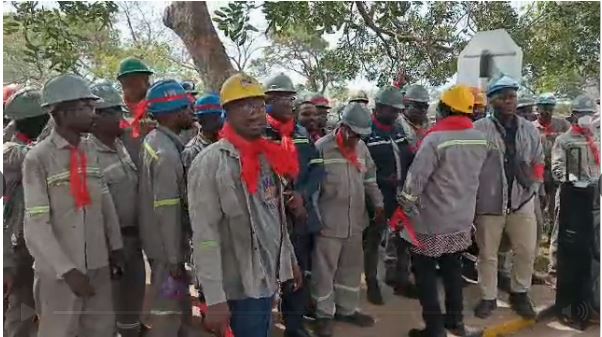
The call was made during a protest on Monday, February 9, where union leaders accused GIADEC leadership of undermining the company’s viability through what they claim are exaggerated portrayals of financial losses and debt levels, raising fresh tensions over Ghana’s broader ambition to develop an integrated aluminium industry.
Union Accuses Leadership of Misrepresenting VALCO’s Financial Position
According to the union, VALCO possesses significant operational potential and technical capacity to function sustainably without external investment. Workers argue that repeated claims of losses and mounting debt cited by the GIADEC CEO are overstated and deliberately framed to justify the introduction of external investors, which they fear could lead to privatization.
The union insists that the company’s production challenges are largely linked to structural constraints, including power supply costs, ageing infrastructure, and inconsistent policy support rather than inherent operational inefficiencies.
“The so-called strategic investment plans being sourced by the government amount to the sale of the company and must be halted to allow for a thorough review of VALCO’s true prospects,” union representatives said in a statement during the protest.
Speaking at the demonstration, the Local Union Chairman, Samuel Tetteh Agyeman, directly called on the President to remove the GIADEC CEO from office, arguing that his leadership style has alienated workers and weakened dialogue mechanisms.
“He doesn’t take any advice from anybody, and nothing concerns him. What he says he wants to do, whether good or bad, is what he wants to do. We wrote him a letter on the 18th of December, and he hasn’t replied. So we do not know what he is up to. He also doesn’t talk to anybody,” he stated.
Strategic Importance of VALCO to Ghana’s Industrialisation Agenda
VALCO occupies a central role in Ghana’s long-standing ambition to develop an integrated aluminium industry, linking the country’s vast bauxite deposits to downstream aluminium processing and manufacturing.
Established in the 1960s as part of Ghana’s industrialisation drive under the Volta River Project, VALCO was designed to process alumina into primary aluminium using hydroelectric power from the Akosombo Dam. Over the decades, the smelter has faced persistent operational and financial challenges, including global aluminium price volatility, high power tariffs, and underinvestment in modernisation.
Government policy efforts to revive the aluminium value chain gained renewed momentum following the establishment of GIADEC in 2018. The corporation was tasked with developing Ghana’s integrated aluminium industry by coordinating bauxite mining, refining, smelting, and downstream manufacturing.
Policy documents and government investment frameworks position VALCO as a critical anchor within this strategy, with authorities estimating that a fully integrated aluminium sector could generate billions of dollars in revenue and create thousands of jobs.
However, industry analysts caution that achieving this vision requires significant capital investment, modern technology upgrades, and stable power supply arrangements.
Government Push for Strategic Investors Sparks Labour Resistance
GIADEC has repeatedly signaled the need for strategic investment partnerships to revive VALCO’s production capacity and reduce the financial burden on the state. Officials have previously argued that external investors can provide critical capital injections, technical expertise, and access to global aluminium markets.
Public financial reports indicate that VALCO’s operational performance has fluctuated over the years due to intermittent production shutdowns linked to energy constraints and rising operational costs. Industry experts note that aluminium smelting is energy-intensive, often consuming up to 14 megawatt-hours of electricity per tonne of aluminium produced, making power pricing a major determinant of profitability.
Energy economists have consistently highlighted that Ghana’s relatively high industrial electricity tariffs place domestic smelters at a competitive disadvantage compared to producers in regions with subsidised power or cheaper energy sources.
Despite these challenges, labour unions argue that government narratives focusing on losses fail to capture the long-term strategic value of maintaining national control over aluminium production.
Labour analysts warn that workers’ fears are rooted in historical precedents where state-owned industrial assets underwent restructuring or privatisation, sometimes resulting in job losses and weakened local participation.
Expert Perspectives on Ghana’s Aluminium Development Strategy
Industrial policy researchers suggest that Ghana’s aluminium development ambitions remain achievable but require careful balancing between attracting foreign capital and safeguarding national interests.
Resource governance experts stress that transparency in investment negotiations is essential to maintain public trust and avoid political controversy.
“Integrated mineral value chains are capital-intensive and require strong governance frameworks,” said an industrial economist familiar with Ghana’s extractive sector policies. “Strategic partnerships are not inherently negative, but they must ensure technology transfer, local participation, and long-term economic benefits.”
Mining sector reports also indicate that Ghana holds an estimated 900 million metric tonnes of bauxite reserves, positioning the country among Africa’s significant resource holders. However, limited refining capacity has historically forced Ghana to export raw bauxite rather than capturing value through local processing.
GIADEC’s long-term master plan proposes the development of bauxite mines in areas such as Nyinahin, Awaso, and Kyebi, alongside alumina refineries and enhanced smelting capacity at VALCO. Government feasibility assessments suggest that the full value chain could significantly boost Ghana’s industrial output and export earnings if successfully implemented.
Concerns Over Worker Engagement and Corporate Governance
Beyond financial and strategic disagreements, labour unions have raised concerns about corporate governance and stakeholder engagement within GIADEC’s leadership structure.
Workers claim that attempts to initiate dialogue with management have been unsuccessful, raising fears that key decisions affecting VALCO’s future are being taken without adequate consultation.
Industrial relations experts emphasise that large-scale restructuring initiatives typically require strong labour-management cooperation to avoid operational disruptions and reputational risks for investors.
Labour economists warn that unresolved worker grievances could escalate into industrial actions capable of disrupting aluminium production and affecting Ghana’s broader manufacturing supply chains.
Government Silence and Political Implications
As of the time of reporting, government officials had not publicly responded to the union’s demand for the resignation of the GIADEC CEO. The issue is likely to attract political scrutiny, particularly as Ghana continues to prioritise industrial transformation and job creation as key economic policy objectives.
Public policy analysts note that disputes surrounding state-owned enterprises often carry political implications, especially when they involve natural resource governance and public asset management.
Transparency advocacy organisations have also called for greater disclosure regarding VALCO’s financial performance, debt levels, and investment proposals to ensure informed public debate.
Future of VALCO Hangs in Balance
The unfolding dispute highlights the complex challenges facing Ghana’s efforts to revitalise legacy industrial assets while adapting to modern economic realities.
While government agencies emphasise the need for investment and restructuring to ensure sustainability, labour unions remain concerned about potential loss of national control and job security.
Industry watchers believe the resolution of the VALCO standoff could shape investor confidence in Ghana’s aluminium sector and influence the trajectory of the country’s integrated mineral development strategy.
For workers at the Tema-based smelter, however, the immediate concern remains leadership accountability and clarity about the company’s future direction.
As tensions between labour unions and GIADEC leadership persist, the fate of VALCO continues to reflect broader national debates about resource governance, industrial transformation, and the balance between public ownership and private investment in Ghana’s strategic sectors.